Clinical Focus ›› 2025, Vol. 40 ›› Issue (10): 910-917.doi: 10.3969/j.issn.1004-583X.2025.10.006
Previous Articles Next Articles
Clinical study of endoscopic retrograde appendicitis therapy of acute uncomplicated appendicitis
Zhang Yihan, Liu Tianyu, Jiao Li, Meng Xia, Hao Yurong, Liang Yulong, Wang Junmin( )
)
Department of Gastroenterology; b.Department of General Surgery ,Hebei Medical University Third Hospital Shijiazhuang 050000, China
-
Received:2025-07-02Online:2025-10-20Published:2025-10-31 -
Contact:Wang Junmin E-mail:teacher2021@hebmu.edu.cn

CLC Number:
Cite this article
Zhang Yihan, Liu Tianyu, Jiao Li, Meng Xia, Hao Yurong, Liang Yulong, Wang Junmin. Clinical study of endoscopic retrograde appendicitis therapy of acute uncomplicated appendicitis[J]. Clinical Focus, 2025, 40(10): 910-917.
share this article
Add to citation manager EndNote|Ris|BibTeX
URL: https://www.lchc.cn/EN/10.3969/j.issn.1004-583X.2025.10.006
| 组别 | 例数 | 初始治疗 成功率[例(%)] | 复发率 [例(%)] | 发热 [例(%)] | 首次体温下降时间 (h) | 住院时间 (d) | 治疗期间不良事件 [例(%)] |
|---|---|---|---|---|---|---|---|
| ERAT组 | 26 | 25(96.2) | 3(11.5) | 20(76.9) | 8.25(7.25, 10.50) | 4.50(4.00, 6.00) | 1(3.8) |
| LA组 | 63 | 63(100) | 1(1.6)* | 58(92.1) | 10.00(7.75, 16.25) | 5.00(4.00, 7.00) | 5(7.9) |
| NOM组 | 37 | 34(91.9) | 11(29.7)# | 32(86.4) | 14.00(10.00, 22.75)* | 7.00(5.00, 8.00)*# | 3(8.1) |
| F/Z/χ2值 | 4.919 | 17.607 | 9.000 | 12.721 | 11.921 | 0.476 | |
| P值 | 0.054 | <0.01 | 0.342 | 0.002 | 0.003 | 0.816 |
Tab.1 Therapeutic and follow-up outcomes of the three groups
| 组别 | 例数 | 初始治疗 成功率[例(%)] | 复发率 [例(%)] | 发热 [例(%)] | 首次体温下降时间 (h) | 住院时间 (d) | 治疗期间不良事件 [例(%)] |
|---|---|---|---|---|---|---|---|
| ERAT组 | 26 | 25(96.2) | 3(11.5) | 20(76.9) | 8.25(7.25, 10.50) | 4.50(4.00, 6.00) | 1(3.8) |
| LA组 | 63 | 63(100) | 1(1.6)* | 58(92.1) | 10.00(7.75, 16.25) | 5.00(4.00, 7.00) | 5(7.9) |
| NOM组 | 37 | 34(91.9) | 11(29.7)# | 32(86.4) | 14.00(10.00, 22.75)* | 7.00(5.00, 8.00)*# | 3(8.1) |
| F/Z/χ2值 | 4.919 | 17.607 | 9.000 | 12.721 | 11.921 | 0.476 | |
| P值 | 0.054 | <0.01 | 0.342 | 0.002 | 0.003 | 0.816 |
| 组别 | 例数 | 手术耗时(min) | 首次下床时间(h) |
|---|---|---|---|
| ERAT组 | 26 | 48.50(38.75, 63.75) | 4.00(3.75, 6.00) |
| LA组 | 63 | 634.00(3.75, 6.00) | 11.00(8.00, 16.00) |
| Z值 | 1.144 | 6.709 | |
| P值 | 0.252 | <0.01 |
Tab.2 Operative and procedure-related outcomes
| 组别 | 例数 | 手术耗时(min) | 首次下床时间(h) |
|---|---|---|---|
| ERAT组 | 26 | 48.50(38.75, 63.75) | 4.00(3.75, 6.00) |
| LA组 | 63 | 634.00(3.75, 6.00) | 11.00(8.00, 16.00) |
| Z值 | 1.144 | 6.709 | |
| P值 | 0.252 | <0.01 |
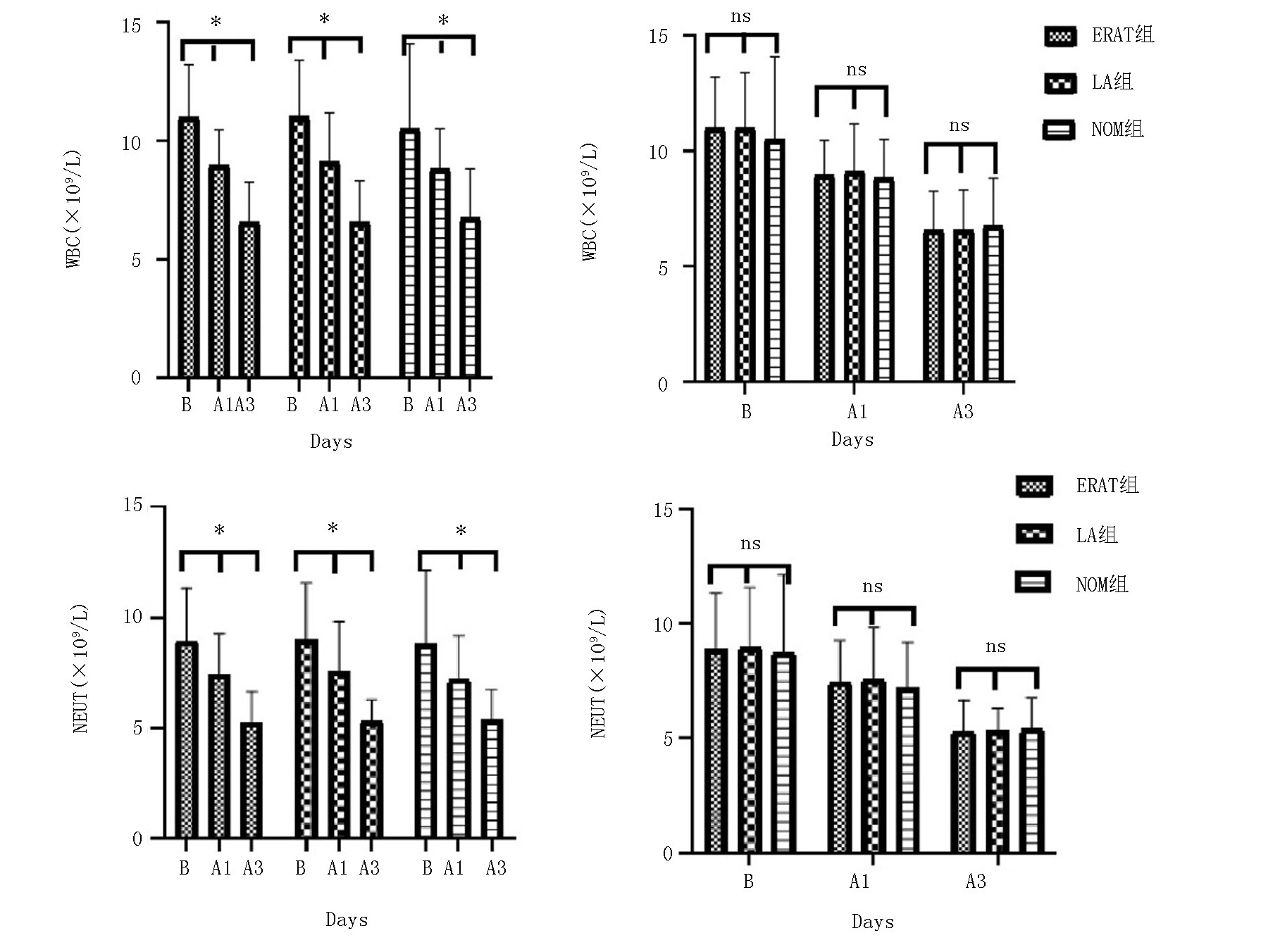
Fig.1 Dynamic changes in WBC and NEUT B: Pre-treatment values; A1: Values on 1 day after treatment; A3: Values on 3 days after treatment
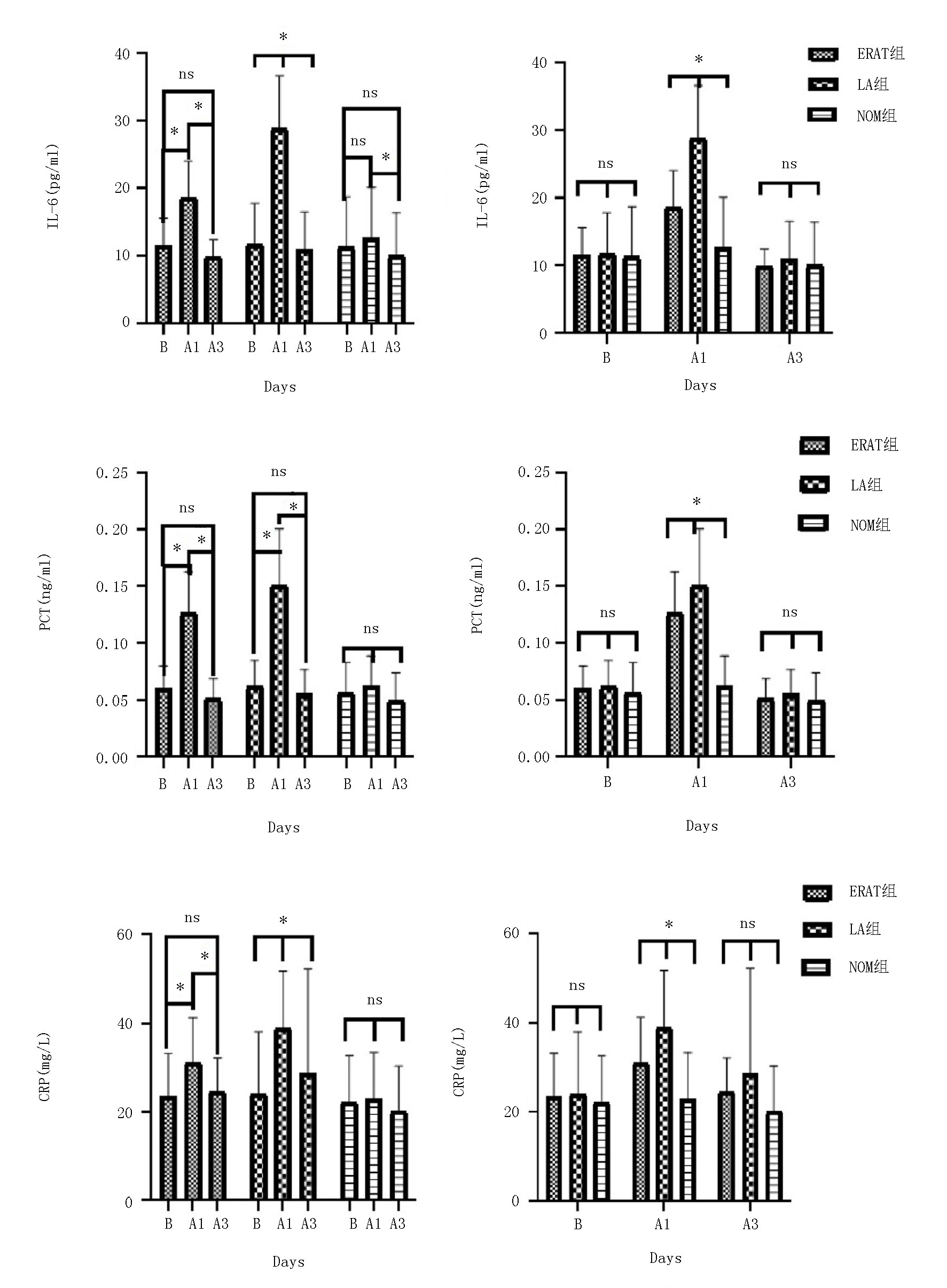
Fig.2 Dynamic changes in IL-6, PCT and CRP B: Pre-treatment values; A1: Values on 1 day after treatment; A3: Values on 3 days after treatment
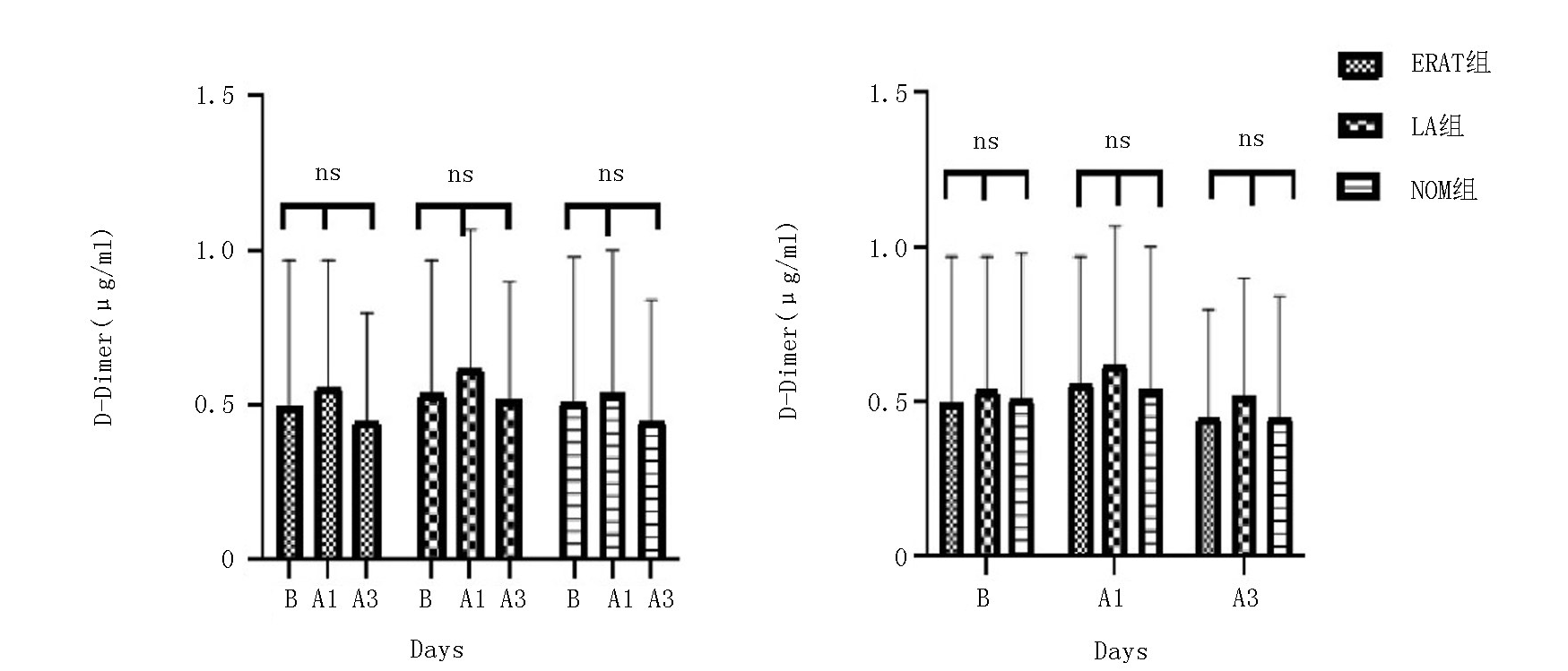
Fig.3 Dynamic changes in D-dimer. B: Pre-treatment values; A1: Values on 1 day after treatment; A3: Values on 3 days after treatment
| 组别 | 例数 | 治疗前 | 治疗后1 d | Z值 | P值 |
|---|---|---|---|---|---|
| ERAT组 | 26 | 5.00(3.75, 6.00) | 2.00(1.00, 2.25) | -4.406 | <0.01 |
| LA组 | 63 | 5.00(3.00, 7.00) | 2.00(1.00, 3.00) | -6.984 | <0.01 |
| NOM组 | 37 | 4.00(3.00, 5.00) | 2.00(1.00, 2.00) | -5.421 | <0.01 |
| χ2值 | 2.670 | 5.527 | |||
| P值 | 0.263 | 0.063 |
Tab.3 Comparison of VAS among the three groups (Point)
| 组别 | 例数 | 治疗前 | 治疗后1 d | Z值 | P值 |
|---|---|---|---|---|---|
| ERAT组 | 26 | 5.00(3.75, 6.00) | 2.00(1.00, 2.25) | -4.406 | <0.01 |
| LA组 | 63 | 5.00(3.00, 7.00) | 2.00(1.00, 3.00) | -6.984 | <0.01 |
| NOM组 | 37 | 4.00(3.00, 5.00) | 2.00(1.00, 2.00) | -5.421 | <0.01 |
| χ2值 | 2.670 | 5.527 | |||
| P值 | 0.263 | 0.063 |
| 组别 | 例数 | 住院费用 |
|---|---|---|
| ERAT组 | 26 | 8055.54(7833.35, 8499.67) |
| LA组 | 63 | 16558.94(13099.38, 19234.33)* |
| NOM组 | 37 | 5448.10(4143.45, 7229.90)*# |
| H值 | 89.252 | |
| P值 | <0.01 |
Tab.4 Comparison of economic indicators among the three groups (Yuan)
| 组别 | 例数 | 住院费用 |
|---|---|---|
| ERAT组 | 26 | 8055.54(7833.35, 8499.67) |
| LA组 | 63 | 16558.94(13099.38, 19234.33)* |
| NOM组 | 37 | 5448.10(4143.45, 7229.90)*# |
| H值 | 89.252 | |
| P值 | <0.01 |
| 指标 | 回归系数 | 标准误 | Wald χ2值 | P值 | OR值 | 95%CI | |
|---|---|---|---|---|---|---|---|
| 下限 | 上限 | ||||||
| 性别 | |||||||
| 男 女 | 0.129 | 0.563 | 0.053 | 0.818 | 1.138 | 0.378 | 3.428 |
| 年龄 | 0.006 | 0.018 | 0.108 | 0.742 | 1.006 | 0.971 | 1.043 |
| 肥胖 | 0.136 | 0.063 | 4.635 | 0.031 | 1.145 | 1.012 | 1.296 |
| 是否切除阑尾 | |||||||
| 是 否 | 2.874 | 1.053 | 7.457 | 0.006 | 17.714 | 2.251 | 139.411 |
| 是否存在粪石 | |||||||
| 是 否 | 1.926 | 0.783 | 6.051 | 0.014 | 6.861 | 1.479 | 31.829 |
| 手术耗时 | 0.010 | 0.019 | 0.278 | 0.598 | 1.010 | 0.973 | 1.049 |
| 术后首次下床时间 | -0.172 | 0.149 | 1.337 | 0.248 | 0.842 | 0.629 | 1.127 |
| 住院时间 | 0.071 | 0.073 | 0.971 | 0.324 | 1.074 | 0.932 | 1.238 |
| 体温恢复时间 | 0.018 | 0.030 | 0.353 | 0.553 | 1.018 | 0.960 | 1.080 |
Tab.5 Univariate logistic regression analysis of AUA recurrence
| 指标 | 回归系数 | 标准误 | Wald χ2值 | P值 | OR值 | 95%CI | |
|---|---|---|---|---|---|---|---|
| 下限 | 上限 | ||||||
| 性别 | |||||||
| 男 女 | 0.129 | 0.563 | 0.053 | 0.818 | 1.138 | 0.378 | 3.428 |
| 年龄 | 0.006 | 0.018 | 0.108 | 0.742 | 1.006 | 0.971 | 1.043 |
| 肥胖 | 0.136 | 0.063 | 4.635 | 0.031 | 1.145 | 1.012 | 1.296 |
| 是否切除阑尾 | |||||||
| 是 否 | 2.874 | 1.053 | 7.457 | 0.006 | 17.714 | 2.251 | 139.411 |
| 是否存在粪石 | |||||||
| 是 否 | 1.926 | 0.783 | 6.051 | 0.014 | 6.861 | 1.479 | 31.829 |
| 手术耗时 | 0.010 | 0.019 | 0.278 | 0.598 | 1.010 | 0.973 | 1.049 |
| 术后首次下床时间 | -0.172 | 0.149 | 1.337 | 0.248 | 0.842 | 0.629 | 1.127 |
| 住院时间 | 0.071 | 0.073 | 0.971 | 0.324 | 1.074 | 0.932 | 1.238 |
| 体温恢复时间 | 0.018 | 0.030 | 0.353 | 0.553 | 1.018 | 0.960 | 1.080 |
| 指标 | 回归系数 | 标准误 | Wald χ2值 | P值 | OR值 | 95%CI | |
|---|---|---|---|---|---|---|---|
| 下限 | 上限 | ||||||
| 肥胖 | 0.256 | 0.087 | 8.658 | 0.003 | 1.292 | 1.089 | 1.532 |
| 是否切除阑尾 | |||||||
| 否 是 | 3.379 | 1.140 | 8.789 | 0.003 | 29.337 | 3.142 | 273.888 |
| 是否存在粪石 | |||||||
| 否 是 | 2.612 | 0.972 | 7.222 | 0.007 | 13.623 | 2.028 | 91.519 |
Tab.6 Multivariate logistic regression analysis of AUA recurrence
| 指标 | 回归系数 | 标准误 | Wald χ2值 | P值 | OR值 | 95%CI | |
|---|---|---|---|---|---|---|---|
| 下限 | 上限 | ||||||
| 肥胖 | 0.256 | 0.087 | 8.658 | 0.003 | 1.292 | 1.089 | 1.532 |
| 是否切除阑尾 | |||||||
| 否 是 | 3.379 | 1.140 | 8.789 | 0.003 | 29.337 | 3.142 | 273.888 |
| 是否存在粪石 | |||||||
| 否 是 | 2.612 | 0.972 | 7.222 | 0.007 | 13.623 | 2.028 | 91.519 |
| [1] | Krzyzak M, Mulrooney SM. Acute appendicitis review: Background, epidemiology, diagnosis, and treatment[J]. Cureus, 2020, 12(6):e8562.doi:10.7759/cureus.8562. |
| [2] | Dai L, Shuai J. Laparoscopic versus open appendectomy in adults and children: A meta-analysis of randomized controlled trials[J]. United European Gastroenterol J, 2017, 5(4): 542-553.doi:10.1177/2050640616661931. |
| [3] |
Salminen P, Tuominen R, Paajanen H, et al. Five-year follow-up of antibiotic therapy for uncomplicated acute appendicitis in the APPAC randomized clinical trial[J]. JAMA, 2018, 320(12):1259-1265.doi:10.1001/jama.2018.13201.
pmid: 30264120 |
| [4] |
Di Saverio S, Podda M, De Simone B, et al. Diagnosis and treatment of acute appendicitis: 2020 update of the WSES Jerusalem guidelines[J]. World J Emerg Surg, 2020, 15(1):27.doi:10.1186/s13017-020-00306-3.
pmid: 32295644 |
| [5] |
Di Saverio S, Sibilio A, Giorgini E, et al. The NOTA study (non operative treatment for acute appendicitis): Prospective study on the efficacy and safety of antibiotics (amoxicillin and clavulanic acid) for treating patients with right lower quadrant abdominal pain and long-term follow-up of conservatively treated suspected appendicitis[J]. Ann Surg, 2014, 260(1):109-117.doi:10.1097/SLA.0000000000000560.
pmid: 24646528 |
| [6] | 刘冰熔. 内镜下逆行阑尾炎治疗技术介绍[J]. 中华结直肠疾病电子杂志, 2012, 1(2):37.doi:10.3969/cma.j.issn.2095-3224.2012.02.12. |
| [7] |
Andersson RE. The natural history and traditional management of appendicitis revisited: Spontaneous resolution and predominance of prehospital perforations imply that a correct diagnosis is more important than an early diagnosis[J]. World J Surg, 2007, 31(1):86-92. doi:10.1007/s00268-006-0056-y.
pmid: 17180556 |
| [8] | 刘冰熔, 王宏光, 孙相钊. 内镜逆行阑尾炎治疗术应用多中心回顾性分析[J]. 中华消化内镜杂志, 2016, 33(8): 514-518.doi:10.3760/cma.j.issn.1007-5232.2016.08.003. |
| [9] | 刘宗辉, 刘妍, 唐庆林. 注水肠镜联合锥形帽逆行阑尾炎治疗术治疗急性非复杂性阑尾炎初探[J]. 四川医学, 2022, 43(7):704-708. doi:10.16252/j.cnki.issn1004-0501-2022.07.014. |
| [10] | Zhang T, Cheng Y, Zhou Y, et al. Diagnostic performance of type I hypersensitivity-specific markers combined with CRP and IL-6 in complicated acute appendicitis in pediatric patients[J]. Int Immunopharmacol, 2023, 124(Pt B):110977. doi:10.1016/j.intimp.2023.110977. |
| [11] | 申艳敏. C反应蛋白、降钙素原及D-二聚体检测在急性阑尾炎患者中的评价价值[J]. 临床研究, 2023, 31(6):127-129.doi:10.12385/j.issn.2096-1278(2023)06-0127-03. |
| [12] |
Karatas T, Selcuk EB, Karatas M, et al. Evaluation of the performance of simple laboratory parameters used in the diagnosis of acute appendicitis[J]. Niger J Clin Pract, 2023, 26(4):478-484. doi:10.4103/njcp.njcp_588_22.
pmid: 37203113 |
| [13] |
Aslan A, Karaveli C, Ogunc D, et al. Does noncomplicated acute appendicitis cause bacterial translocation?[J]. Pediatr Surg Int, 2007, 23(6): 555-558.doi:10.1007/s00383-007-1899-5.
pmid: 17340160 |
| [14] | Patel TR, Jain A, Agarwal L, et al. Study of the association of serum procalcitonin with leukocytosis in predicting complicated acute appendicitis[J]. Int Surg, 7(7):2300-2304. |
| [15] | Dharwal V, Bharti R, Verma A, et al. Evaluation of procalcitonin as a predictor of severity of acute appendicitis[J]. Int Surg, 7(6):1879-1885. |
| [16] |
Kaya B, Sana B, Eris C, et al. The diagnostic value of D-dimer, procalcitonin and CRP in acute appendicitis[J]. Int J Med Sci, 2012, 9(10):909-915. doi:10.7150/ijms.4733.
pmid: 23236260 |
| [17] | Ding W, Du Z, Zhou X. Endoscopic retrograde appendicitis therapy for management of acute appendicitis[J]. Surg Endosc, 2022, 36(4):2480-2487.doi:10.1007/s00464-021-08533-8. |
| [18] |
Yang B, Kong L, Saif U, et al. Endoscopic retrograde appendicitis therapy vs. Laparoscopic appendectomy for uncomplicated acute appendicitis[J]. Endoscopy, 2022, 54(8): 747-754.
doi: 10.1055/a-1737-6381 pmid: 35021234 |
| [19] |
Bastakoti A, Khatiwada A, Luitel P, et al. Classic yet challenging case of stump appendicitis: A case report[J]. Ann Med Surg (Lond), 2024, 86(12):7427-7430.doi:10.1097/MS9.0000000000002694.
pmid: 39649854 |
| [20] | Shen Z, Sun P, Jiang M, el al. Endoscopie retrograde appendicilis therapy versus laparoscopie appendeetomy versus open appendectomy for acute appendicitis: A pilot study[J]. BMC gaslraenterology, 2022, 22(1):63.doi:10.1186/s12876-022-02139-7. |
| [21] | Zavras N, Vaou N, Zouganeli S, et al. The impact of obesity on perioperative outcomes for children undergoing appendectomy for acute appendicitis: A systematic review[J]. J Clin Med, 2023, 12(14):4811.doi:10.3390/jcm12144811. |
| [22] | CODA Collaborative, Flum DR, Davidson GH, et al. A randomized trial comparing antibiotics with appendectomy for appendicitis[J]. N Engl J Med, 2020, 383(20):1907-1919.doi:10.1056/NEJMoa2014320. |
| [23] |
Zheng R, Rios-Diaz AJ, Thibault DP, et al. A contemporary analysis of goiters undergoing surgery in the United States[J]. Am J Surg, 2020, 220(2):341-348.doi:10.1016/j.amjsurg.2020.01.005.
pmid: 31948703 |
| [24] |
Kırkıl C, Yiˇgit MV, Aygen E. Long-term results of nonoperative treatment for uncomplicated acute appendicitis[J]. Turk J Gastroenterol, 2014, 25(4):393-397. doi:10.5152/tjg.2014.7192.
pmid: 25254521 |
| [25] | Ramadan S, Olsson Å, Ekberg O, et al. Predictive factors for recurrent acute appendicitis after conservative treatment[J]. Scand J Gastroenterol, 2024, 59(8):933-938.doi:10.1080/00365521.2024.2359438. |
| [26] | 刘丹, 周洋洋, 刘冰熔. 内镜逆行阑尾炎治疗术的发展、现状及未来[J]. 中华消化内镜杂志, 2024, 41(9):685-689. doi:10.3760/cma.j.cn321463-20231205-00385. |
| No related articles found! |
| Viewed | ||||||
|
Full text |
|
|||||
|
Abstract |
|
|||||