Clinical Focus ›› 2026, Vol. 41 ›› Issue (8): 685-689.doi: 10.3969/j.issn.1004-583X.2026.08.002
Previous Articles Next Articles
Value of ST segment elevation in lead aVR and QRS duration on electrocardiogram for assessing the risk of cardiogenic shock in patients with acute anterior myocardial infarction
Zhou Lili1( ), Yan Xia1, Yan Jin2
- 1 Department of Electrocardiography,Taixing People's Hospital,Taixing 225400,China
2 Medical College of Nantong University,Nantong 226001,China
-
Received:2026-05-08Online:2026-08-20Published:2026-08-25 -
Contact:Zhou Lili E-mail:zhouli248@126.com

CLC Number:
Cite this article
Zhou Lili, Yan Xia, Yan Jin. Value of ST segment elevation in lead aVR and QRS duration on electrocardiogram for assessing the risk of cardiogenic shock in patients with acute anterior myocardial infarction[J]. Clinical Focus, 2026, 41(8): 685-689.
share this article
Add to citation manager EndNote|Ris|BibTeX
URL: https://www.lchc.cn/EN/10.3969/j.issn.1004-583X.2026.08.002
| 单因素 | CS组(n=46) | 非CS组(n=132) | χ2/t值 | P值 |
|---|---|---|---|---|
| 年龄(岁) | 63.52±10.73 | 62.69±10.37 | 0.463 | 0.644 |
| 性别[例(%)] | ||||
| 男 女 | 30(65.22) 16(34.78) | 84(63.64) 48(36.36) | ||
| BMI(kg/m2) | 24.79±3.08 | 24.48±3.31 | 0.557 | 0.579 |
| 高血压史[例(%)] | ||||
| 有 无 | 28(60.87) 18(39.13) | 76(57.58) 56(42.42) | 0.152 | 0.696 |
| 糖尿病史[例(%)] | ||||
| 有 无 | 15(32.61) 31(67.39) | 39(29.55) 93(70.45) | 0.152 | 0.697 |
| 血脂异常[例(%)] | ||||
| 有 无 | 26(56.52) 20(43.48) | 62(46.97) 70(53.03) | 1.245 | 0.264 |
| 吸烟史[例(%)] | ||||
| 有 无 | 23(50.00) 23(50.00) | 61(46.21) 71(53.79) | 0.196 | 0.658 |
| 收缩压(mmHg) | 120.74±16.59 | 125.62±19.58 | 1.511 | 0.133 |
| 舒张压(mmHg) | 74.66±12.81 | 77.46±13.53 | 1.225 | 0.222 |
| 心率(次/min) | 84.72±16.34 | 81.59±15.62 | 1.156 | 0.249 |
| Killip分级[例(%)] | ||||
| ≥Ⅲ级 <Ⅲ级 | 29(63.04) 17(39.96) | 40(30.30) 92(69.70) | 15.404 | 0.000 |
| 罪犯血管前降支[例(%)] | ||||
| 是 否 | 41(89.13) 5(10.87) | 115(87.12) 17(12.88) | 0.127 | 0.721 |
| 多支血管病变[例(%)] | ||||
| 是 否 | 28(60.87) 18(39.13) | 72(54.55) 60(45.45) | 0.554 | 0.457 |
| LVEF[例(%)] | ||||
| ≥50% <50% | 5(10.87) 41(89.13) | 65(49.24) 67(50.76) | 21.051 | 0.000 |
| cTnI(μg/L) | 11.95±2.73 | 11.26±2.38 | 1.629 | 0.105 |
| CK-MB(μg/L) | 81.36±26.75 | 75.65±23.29 | 1.377 | 0.170 |
| NT-proBNP(ng/L) | 1812.36±581.71 | 1776.53±533.79 | 0.383 | 0.702 |
| hs-CRP(mg/L) | 17.37±4.42 | 16.59±3.71 | 1.167 | 0.245 |
| aVR导联ST段抬高(mV) | 0.17±0.05 | 0.13±0.04 | 5.461 | 0.000 |
| QRS波时限(ms) | 112.81±14.77 | 97.82±10.59 | 7.419 | 0.000 |
Tab.1 Univariate analysis of CS in patients with AAMI
| 单因素 | CS组(n=46) | 非CS组(n=132) | χ2/t值 | P值 |
|---|---|---|---|---|
| 年龄(岁) | 63.52±10.73 | 62.69±10.37 | 0.463 | 0.644 |
| 性别[例(%)] | ||||
| 男 女 | 30(65.22) 16(34.78) | 84(63.64) 48(36.36) | ||
| BMI(kg/m2) | 24.79±3.08 | 24.48±3.31 | 0.557 | 0.579 |
| 高血压史[例(%)] | ||||
| 有 无 | 28(60.87) 18(39.13) | 76(57.58) 56(42.42) | 0.152 | 0.696 |
| 糖尿病史[例(%)] | ||||
| 有 无 | 15(32.61) 31(67.39) | 39(29.55) 93(70.45) | 0.152 | 0.697 |
| 血脂异常[例(%)] | ||||
| 有 无 | 26(56.52) 20(43.48) | 62(46.97) 70(53.03) | 1.245 | 0.264 |
| 吸烟史[例(%)] | ||||
| 有 无 | 23(50.00) 23(50.00) | 61(46.21) 71(53.79) | 0.196 | 0.658 |
| 收缩压(mmHg) | 120.74±16.59 | 125.62±19.58 | 1.511 | 0.133 |
| 舒张压(mmHg) | 74.66±12.81 | 77.46±13.53 | 1.225 | 0.222 |
| 心率(次/min) | 84.72±16.34 | 81.59±15.62 | 1.156 | 0.249 |
| Killip分级[例(%)] | ||||
| ≥Ⅲ级 <Ⅲ级 | 29(63.04) 17(39.96) | 40(30.30) 92(69.70) | 15.404 | 0.000 |
| 罪犯血管前降支[例(%)] | ||||
| 是 否 | 41(89.13) 5(10.87) | 115(87.12) 17(12.88) | 0.127 | 0.721 |
| 多支血管病变[例(%)] | ||||
| 是 否 | 28(60.87) 18(39.13) | 72(54.55) 60(45.45) | 0.554 | 0.457 |
| LVEF[例(%)] | ||||
| ≥50% <50% | 5(10.87) 41(89.13) | 65(49.24) 67(50.76) | 21.051 | 0.000 |
| cTnI(μg/L) | 11.95±2.73 | 11.26±2.38 | 1.629 | 0.105 |
| CK-MB(μg/L) | 81.36±26.75 | 75.65±23.29 | 1.377 | 0.170 |
| NT-proBNP(ng/L) | 1812.36±581.71 | 1776.53±533.79 | 0.383 | 0.702 |
| hs-CRP(mg/L) | 17.37±4.42 | 16.59±3.71 | 1.167 | 0.245 |
| aVR导联ST段抬高(mV) | 0.17±0.05 | 0.13±0.04 | 5.461 | 0.000 |
| QRS波时限(ms) | 112.81±14.77 | 97.82±10.59 | 7.419 | 0.000 |
| 变量 | â | 标准误 | Waldχ2值 | P值 | OR值 | 95%CI |
|---|---|---|---|---|---|---|
| Killip分级 | 1.016 | 0.364 | 7.770 | 0.005 | 2.762 | 1.352~5.642 |
| LVEF<50% | 0.913 | 0.314 | 8.466 | 0.004 | 2.491 | 1.347~4.607 |
| aVR导联ST段抬高 | 0.806 | 0.285 | 8.005 | 0.005 | 2.239 | 1.281~3.913 |
| QRS波时限 | 0.766 | 0.269 | 8.093 | 0.004 | 2.151 | 1.269~3.646 |
| 年龄 | 0.152 | 0.203 | 0.560 | 0.454 | 1.164 | 0.782~1.733 |
| 性别 | -0.087 | 0.315 | 0.076 | 0.783 | 0.917 | 0.495~1.699 |
Tab.2 Multivariate logistic regression analysis of CS in patients with AAMI
| 变量 | â | 标准误 | Waldχ2值 | P值 | OR值 | 95%CI |
|---|---|---|---|---|---|---|
| Killip分级 | 1.016 | 0.364 | 7.770 | 0.005 | 2.762 | 1.352~5.642 |
| LVEF<50% | 0.913 | 0.314 | 8.466 | 0.004 | 2.491 | 1.347~4.607 |
| aVR导联ST段抬高 | 0.806 | 0.285 | 8.005 | 0.005 | 2.239 | 1.281~3.913 |
| QRS波时限 | 0.766 | 0.269 | 8.093 | 0.004 | 2.151 | 1.269~3.646 |
| 年龄 | 0.152 | 0.203 | 0.560 | 0.454 | 1.164 | 0.782~1.733 |
| 性别 | -0.087 | 0.315 | 0.076 | 0.783 | 0.917 | 0.495~1.699 |
| 指标 | 曲线下面积 | 标准误 | P值 | 95%CI | 截断值 | 敏感度 | 特异度 |
|---|---|---|---|---|---|---|---|
| aVR导联ST段抬高 | 0.812 | 0.045 | 0.000 | 0.724~0.900 | 0.16 mV | 0.761 | 0.758 |
| QRS波时限 | 0.785 | 0.049 | 0.000 | 0.689~0.881 | 108.50 ms | 0.739 | 0.765 |
| 联合检测 | 0.935 | 0.024 | 0.000 | 0.888~0.982 | 0.637 | 0.848 | 0.886 |
Tab.3 ROC analysis of CS in patients with AAMI
| 指标 | 曲线下面积 | 标准误 | P值 | 95%CI | 截断值 | 敏感度 | 特异度 |
|---|---|---|---|---|---|---|---|
| aVR导联ST段抬高 | 0.812 | 0.045 | 0.000 | 0.724~0.900 | 0.16 mV | 0.761 | 0.758 |
| QRS波时限 | 0.785 | 0.049 | 0.000 | 0.689~0.881 | 108.50 ms | 0.739 | 0.765 |
| 联合检测 | 0.935 | 0.024 | 0.000 | 0.888~0.982 | 0.637 | 0.848 | 0.886 |
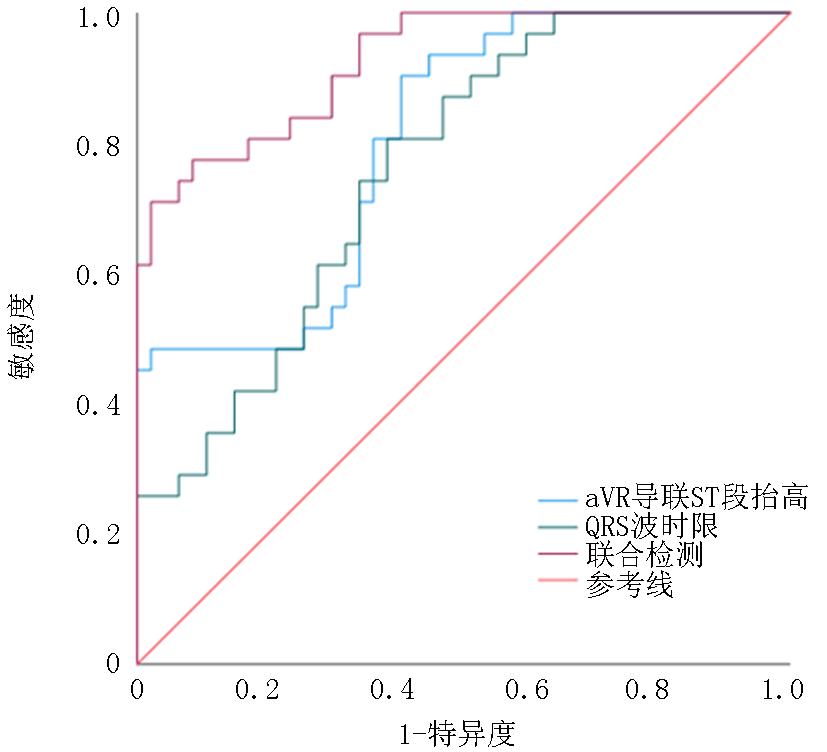
Fig.1 ROC curve for CS in patients with AAMI
| [1] | Somaschini A, Cornara S, Leonardi S, et al. Beneficial effects of IABP in anterior myocardial infarction complicated by cardiogenic shock[J]. Medicina (Kaunas), 2023, 59(10):1806.doi: 10.3390/medicina59101806. |
| [2] | 刘泽岩, 周姝, 张浩, 等. 孟德尔随机化法探究TGF-β与AAMI后左室舒张末容积的关系[J]. 安徽医学, 2023, 44(5):523-527. doi:10.3969/j.issn.1000-0399.2023.05.007. |
| [3] | 叶旭东, 彭瑜, 张钲. aVR导联T波直立与急性心肌梗死患者PCI后发生主要不良心血管事件的关系研究[J]. 实用心脑肺血管病杂志, 2023, 31(5):25-29.doi:10.12114/j.issn.1008-5971.2023.00.104. |
| [4] | 任晓敏, 于万德, 胡作英, 等. 心电图QRS波时限、左室射血分数与老年心力衰竭患者心功能的关系及对心功能恶化的预测价值研究[J]. 现代生物医学进展, 2024, 24(6):1095-1099, 1081.doi:10.13241/j.cnki.pmb.2024.06.017. |
| [5] | 急性ST段抬高型心肌梗死诊断和治疗指南(2019)[J]. 中华心血管病杂志, 2019, 47(10):766-783.doi:10.3760/cma.j.issn.0253?3758.2019.10.003. |
| [6] | van Diepen S, Katz JN, Albert NM, et al. Contemporary management of cardiogenic shock: A scientific statement from the American Heart Association[J]. Circulation, 2017, 136(16):e232-e268.doi: 10.1161/CIR.0000000000000525. |
| [7] | 张静, 敖家富, 方红义, 等. 急性ST段抬高型心肌梗死患者院内主要心血管不良事件的危险因素分析[J]. 安徽医学, 2023, 44(7):813-818.doi:10.3969/j.issn.1000-0399.2023.07.014. |
| [8] | Choi KH, Lee SY, Park TK, et al. Cardiogenic shock complicating acute myocardial infarction and multivessel disease: revascularization strategy according to ischemic territory[J]. Rev Esp Cardiol (Engl Ed), 2025, 78(2):97-106.doi: 10.1016/j.rec.2024.05.005. |
| [9] | 单和英, 王琴, 陈国英. aVR导联T波形态在预测三支病变NSTEMI患者冠状动脉病变程度、心功能及预后中的意义[J]. 浙江医学, 2021, 43(22):2437-2440.doi:10.12056/j.issn.1006-2785.2021.43.22.2021-1501. |
| [10] | 徐俊丽, 王文娟, 余南阳. QRS波时限与急性心肌梗死预后的相关性[J]. 临床心电学杂志, 2020, 29(5):350-352.doi:10.3969/j.issn.1005-0272.2020.05.006. |
| [11] | 周妍, 齐玥, 郝永臣, 等. 心源性休克高危的非ST段抬高型心肌梗死患者口服β受体阻滞剂与院内预后关联[J]. 心肺血管病杂志, 2025, 44(8):798-804.doi:10.3969/j.issn.1007-5062.2025.08.002. |
| [12] | 王杰, 李亚, 王健, 等. 急诊PCI急性心肌梗死并发心源性休克患者危险因素及在院结局分析[J]. 临床急诊杂志, 2025, 26(7):422-428.doi:10.13201/j.issn.1009-5918.2025.07.002. |
| [13] | 徐大鹏, 吴兆华, 黄晓勇. 构建急性前壁STEMI患者PCI术后心源性休克的列线图模型[J]. 中国急救复苏与灾害医学杂志, 2025, 20(5):569-573.doi:10.3969/j.issn.1673-6966.2025.05.003. |
| [14] | 申立波, 付美娇, 陈璟, 等. 急性心肌梗死合并心源性休克的临床特点和住院死亡影响因素分析[J]. 宁夏医科大学学报, 2022, 44(9):913-917.doi:10.16050/j.cnki.issn1674-6309.2022.09.009. |
| [15] | 张昭福, 郑晓斌. 急性下壁ST段抬高型心肌梗死病人心源性休克的临床特征与影响因素[J]. 中西医结合心脑血管病杂志, 2023, 21(18):3409-3413.doi:10.12102/j.issn.1672-1349.2023.18.023. |
| [16] | 屈丽娜, 闫生玲. aVR 导联的直立 T 波对非 ST 段抬高型心肌梗死患者的预后评估价值[J]. 中国心血管杂志, 2019, 24(3):223-226.doi:10.3969/j.issn.1007-5410.2019.03.005. |
| [17] | 武海燕, 郑晓斌, 张昭福. QRS波时限在下壁心肌梗死中的临床意义[J]. 临床心电学杂志, 2022, 31(3):172-177.doi:10.3969/j.issn.1005-0272.2022.03.004. |
| [18] | 孝俊, 李念, 柴晓莉. 心电图QRS波群时限和急性心肌梗死患者临床病理参数的关系及预后分析[J]. 中国医师杂志, 2021, 23(10):1533-1537.doi:10.3760/cma.j.cn431274-20200520-00641. |
| Viewed | ||||||
|
Full text |
|
|||||
|
Abstract |
|
|||||