Clinical Focus ›› 2026, Vol. 41 ›› Issue (10): 901-909.doi: 10.3969/j.issn.1004-583X.2026.10.005
Previous Articles Next Articles
Albumin-corrected anion gap and cognitive function in older adults
Wang Dongzea, Wang Xiaohanb, Wang Wenyuana, Zhang Shaorua, Wang Yanyonga( )
- a
Department of Psychosomatic Medicine ,the First Hospital of Hebei Medical University Shijiazhuang 050000, China
bDepartment of Autonomic Neuropathies ,the First Hospital of Hebei Medical University Shijiazhuang 050000, China
-
Received:2026-10-04Online:2026-10-20Published:2026-10-10 -
Contact:Wang Yanyong E-mail:57600267@hebmu.edu.cn

CLC Number:
Cite this article
Wang Dongze, Wang Xiaohan, Wang Wenyuan, Zhang Shaoru, Wang Yanyong. Albumin-corrected anion gap and cognitive function in older adults[J]. Clinical Focus, 2026, 41(10): 901-909.
share this article
Add to citation manager EndNote|Ris|BibTeX
URL: https://www.lchc.cn/EN/10.3969/j.issn.1004-583X.2026.10.005
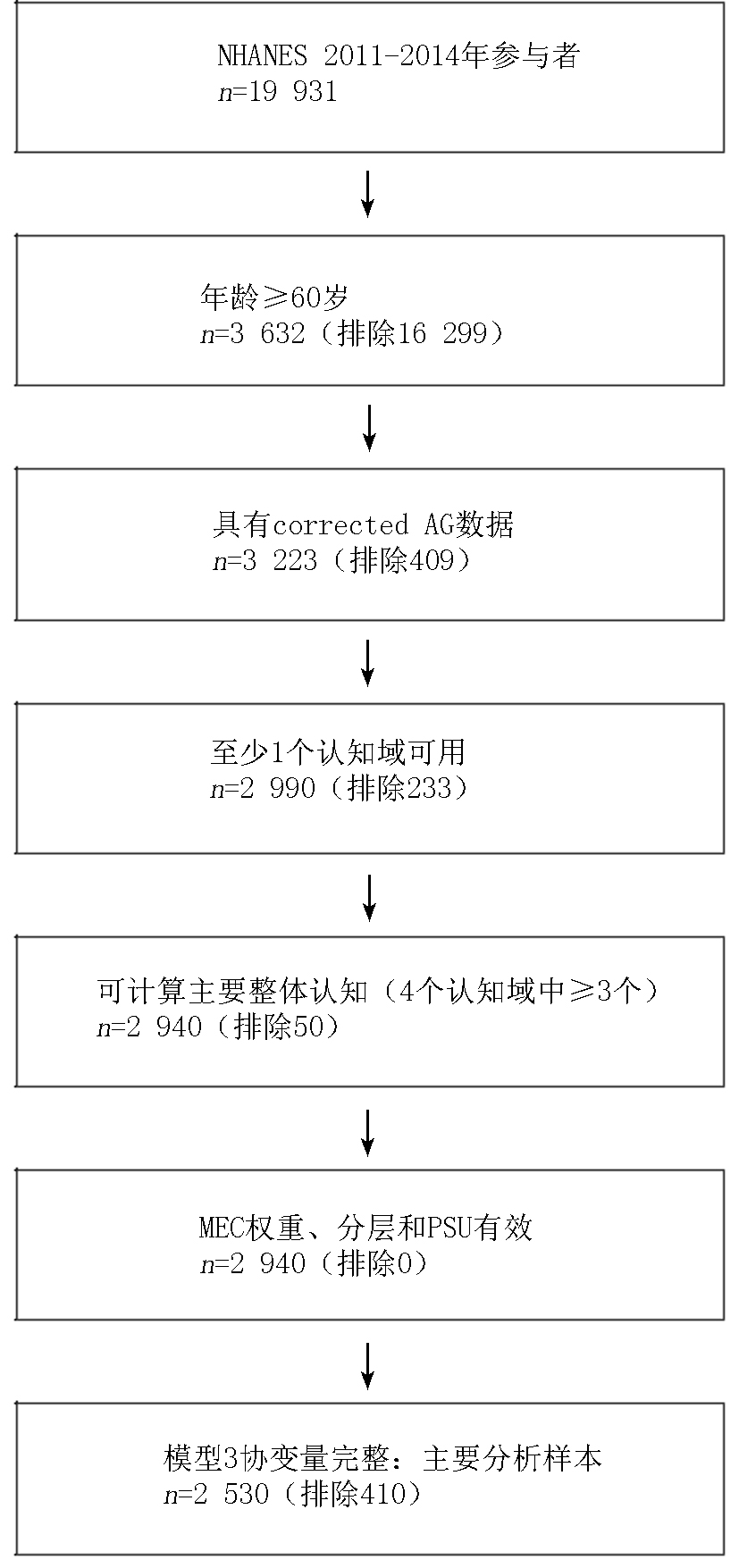
Fig.1 Flowchart of participant selection. A valid overall cognitive score required valid assessments in at least 3 of the 4 cognitive domains
| 变量 | Q1 | Q2 | Q3 | Q4 | F值 | P值 |
|---|---|---|---|---|---|---|
| 非加权样本量 | 669 | 594 | 645 | 622 | ||
| 加权代表人口(百万) | 12.99 | 11.18 | 12.02 | 10.69 | ||
| 年龄(岁) | 68.23±6.37 | 68.92±6.65 | 69.7±6.75 | 69.95±6.85 | 6.334 | 0.002 |
| PIR | 3.55±1.56 | 3.07±1.52 | 3.01±1.55 | 2.82±1.59 | 9.464 | <0.01 |
| BMI(kg/m2) | 27.79±5.55 | 28.83±5.71 | 29.43±6.57 | 30.5±7.03 | 6.880 | 0.001 |
| 体力活动(MET-min/周) | 1 577.74±2 771.25 | 1 541.51±3 000.77 | 1 342.92±2 558.77 | 1 195.82±2 614.45 | 1.982 | 0.139 |
| 平均收缩压(mmHg) | 130.58±17.8 | 130.87±18.62 | 131.52±19.02 | 133.03±19.54 | 1.579 | 0.216 |
| 平均舒张压(mmHg) | 69.96±12.18 | 67.67±13.74 | 68.19±12.44 | 66.89±14.47 | 2.592 | 0.072 |
| eGFR(ml·min-1·1.73 m-2) | 77.17±15.31 | 74.45±15.79 | 72.14±18.68 | 68.77±20.92 | 24.341 | <0.01 |
| log UACR | 2.41±0.88 | 2.47±1.03 | 2.58±0.98 | 2.90±1.30 | 14.551 | <0.01 |
| PHQ-9评分 | 2.42±3.39 | 2.47±3.39 | 3.03±4.16 | 3.56±4.63 | 11.570 | <0.01 |
| 白蛋白校正AG(mmol/L) | 7.66±0.80 | 9.13±0.28 | 10.22±0.35 | 12.29±1.28 | 3631.895 | <0.01 |
| 整体认知Z评分 | 0.46±0.76 | 0.26±0.75 | 0.26±0.76 | 0.07±0.78 | 16.335 | <0.01 |
| CERAD即刻回忆Z评分 | 0.40±0.91 | 0.22±0.93 | 0.21±0.95 | 0.01±0.94 | 12.444 | <0.01 |
| CERAD延迟回忆Z评分 | 0.30±0.92 | 0.19±0.99 | 0.17±0.94 | 0.03±0.99 | 7.975 | <0.01 |
| 动物命名流畅性Z评分 | 0.57±1.08 | 0.28±1.0 | 0.31±0.96 | 0.10±0.96 | 8.044 | <0.01 |
| DSST Z评分 | 0.59±0.94 | 0.39±0.89 | 0.40±0.94 | 0.17±0.97 | 11.553 | <0.01 |
| 性别(%)—男 | 50.5 | 49.2 | 44.8 | 39.3 | 4.332 | 0.008 |
| 性别(%)—女 | 49.5 | 50.8 | 55.2 | 60.7 | ||
| 种族/族裔(%)—墨西哥裔美国人 | 2.6 | 3.2 | 3.0 | 4.9 | 0.659 | 0.682 |
| 种族/族裔(%)—非西班牙裔亚裔 | 3.1 | 3.6 | 3.4 | 2.8 | ||
| 种族/族裔(%)—非西班牙裔黑人 | 7.7 | 7.6 | 7.9 | 9.2 | ||
| 种族/族裔(%)—非西班牙裔白人 | 82.1 | 79.4 | 80.4 | 77.7 | ||
| 种族/族裔(%)—其他西班牙裔 | 3.4 | 4.2 | 3.1 | 3.6 | ||
| 种族/族裔(%)—其他/多种族 | 1.1 | 2.1 | 2.2 | 1.9 | ||
| 教育水平(%)—低于高中 | 12.2 | 16.6 | 15.2 | 21.0 | 3.370 | 0.007 |
| 教育水平(%)—高中/GED | 18.2 | 20.9 | 24.7 | 22.3 | ||
| 教育水平(%)—大学及以上 | 69.6 | 62.5 | 60.1 | 56.7 | ||
| 婚姻状况(%)—已婚/同居 | 70.0 | 65.4 | 63.4 | 58.2 | 2.836 | 0.020 |
| 婚姻状况(%)—既往婚姻 | 25.5 | 28.7 | 33.2 | 37.9 | ||
| 婚姻状况(%)—从未结婚 | 4.5 | 5.9 | 3.4 | 3.9 | ||
| 吸烟状态(%)—从不 | 49.0 | 50.2 | 49.5 | 49.4 | 0.958 | 0.438 |
| 吸烟状态(%)—既往 | 42.6 | 38.1 | 38.0 | 37.5 | ||
| 吸烟状态(%)—当前 | 8.3 | 11.8 | 12.5 | 13.1 | ||
| 任一年度饮酒≥12杯史(%)—否 | 22.4 | 27.9 | 28.0 | 32.9 | 3.007 | 0.039 |
| 任一年度饮酒≥12杯史(%)—是 | 77.6 | 72.1 | 72.0 | 67.1 | ||
| 达到体力活动指南(%)—否 | 49.7 | 54.8 | 56.5 | 64.5 | 4.885 | 0.005 |
| 达到体力活动指南(%)—是 | 50.3 | 45.2 | 43.5 | 35.5 | ||
| 高血压(%)—否 | 42.6 | 37.1 | 26.2 | 23.4 | 12.083 | <0.01 |
| 高血压(%)—是 | 57.4 | 62.9 | 73.8 | 76.6 | ||
| 糖尿病(%)—否 | 88.1 | 85.5 | 79.3 | 70.4 | 16.497 | <0.01 |
| 糖尿病(%)—是 | 11.9 | 14.5 | 20.7 | 29.6 | ||
| 卒中史(%)—否 | 96.8 | 93.0 | 92.7 | 92.1 | 2.900 | 0.051 |
| 卒中史(%)—是 | 3.2 | 7.0 | 7.3 | 7.9 | ||
| 心血管疾病(%)—否 | 85.5 | 84.0 | 79.7 | 79.3 | 2.127 | 0.131 |
| 心血管疾病(%)—是 | 14.5 | 16.0 | 20.3 | 20.7 |
Tab.1 Baseline characteristics according to quartiles of albumin-corrected AG
| 变量 | Q1 | Q2 | Q3 | Q4 | F值 | P值 |
|---|---|---|---|---|---|---|
| 非加权样本量 | 669 | 594 | 645 | 622 | ||
| 加权代表人口(百万) | 12.99 | 11.18 | 12.02 | 10.69 | ||
| 年龄(岁) | 68.23±6.37 | 68.92±6.65 | 69.7±6.75 | 69.95±6.85 | 6.334 | 0.002 |
| PIR | 3.55±1.56 | 3.07±1.52 | 3.01±1.55 | 2.82±1.59 | 9.464 | <0.01 |
| BMI(kg/m2) | 27.79±5.55 | 28.83±5.71 | 29.43±6.57 | 30.5±7.03 | 6.880 | 0.001 |
| 体力活动(MET-min/周) | 1 577.74±2 771.25 | 1 541.51±3 000.77 | 1 342.92±2 558.77 | 1 195.82±2 614.45 | 1.982 | 0.139 |
| 平均收缩压(mmHg) | 130.58±17.8 | 130.87±18.62 | 131.52±19.02 | 133.03±19.54 | 1.579 | 0.216 |
| 平均舒张压(mmHg) | 69.96±12.18 | 67.67±13.74 | 68.19±12.44 | 66.89±14.47 | 2.592 | 0.072 |
| eGFR(ml·min-1·1.73 m-2) | 77.17±15.31 | 74.45±15.79 | 72.14±18.68 | 68.77±20.92 | 24.341 | <0.01 |
| log UACR | 2.41±0.88 | 2.47±1.03 | 2.58±0.98 | 2.90±1.30 | 14.551 | <0.01 |
| PHQ-9评分 | 2.42±3.39 | 2.47±3.39 | 3.03±4.16 | 3.56±4.63 | 11.570 | <0.01 |
| 白蛋白校正AG(mmol/L) | 7.66±0.80 | 9.13±0.28 | 10.22±0.35 | 12.29±1.28 | 3631.895 | <0.01 |
| 整体认知Z评分 | 0.46±0.76 | 0.26±0.75 | 0.26±0.76 | 0.07±0.78 | 16.335 | <0.01 |
| CERAD即刻回忆Z评分 | 0.40±0.91 | 0.22±0.93 | 0.21±0.95 | 0.01±0.94 | 12.444 | <0.01 |
| CERAD延迟回忆Z评分 | 0.30±0.92 | 0.19±0.99 | 0.17±0.94 | 0.03±0.99 | 7.975 | <0.01 |
| 动物命名流畅性Z评分 | 0.57±1.08 | 0.28±1.0 | 0.31±0.96 | 0.10±0.96 | 8.044 | <0.01 |
| DSST Z评分 | 0.59±0.94 | 0.39±0.89 | 0.40±0.94 | 0.17±0.97 | 11.553 | <0.01 |
| 性别(%)—男 | 50.5 | 49.2 | 44.8 | 39.3 | 4.332 | 0.008 |
| 性别(%)—女 | 49.5 | 50.8 | 55.2 | 60.7 | ||
| 种族/族裔(%)—墨西哥裔美国人 | 2.6 | 3.2 | 3.0 | 4.9 | 0.659 | 0.682 |
| 种族/族裔(%)—非西班牙裔亚裔 | 3.1 | 3.6 | 3.4 | 2.8 | ||
| 种族/族裔(%)—非西班牙裔黑人 | 7.7 | 7.6 | 7.9 | 9.2 | ||
| 种族/族裔(%)—非西班牙裔白人 | 82.1 | 79.4 | 80.4 | 77.7 | ||
| 种族/族裔(%)—其他西班牙裔 | 3.4 | 4.2 | 3.1 | 3.6 | ||
| 种族/族裔(%)—其他/多种族 | 1.1 | 2.1 | 2.2 | 1.9 | ||
| 教育水平(%)—低于高中 | 12.2 | 16.6 | 15.2 | 21.0 | 3.370 | 0.007 |
| 教育水平(%)—高中/GED | 18.2 | 20.9 | 24.7 | 22.3 | ||
| 教育水平(%)—大学及以上 | 69.6 | 62.5 | 60.1 | 56.7 | ||
| 婚姻状况(%)—已婚/同居 | 70.0 | 65.4 | 63.4 | 58.2 | 2.836 | 0.020 |
| 婚姻状况(%)—既往婚姻 | 25.5 | 28.7 | 33.2 | 37.9 | ||
| 婚姻状况(%)—从未结婚 | 4.5 | 5.9 | 3.4 | 3.9 | ||
| 吸烟状态(%)—从不 | 49.0 | 50.2 | 49.5 | 49.4 | 0.958 | 0.438 |
| 吸烟状态(%)—既往 | 42.6 | 38.1 | 38.0 | 37.5 | ||
| 吸烟状态(%)—当前 | 8.3 | 11.8 | 12.5 | 13.1 | ||
| 任一年度饮酒≥12杯史(%)—否 | 22.4 | 27.9 | 28.0 | 32.9 | 3.007 | 0.039 |
| 任一年度饮酒≥12杯史(%)—是 | 77.6 | 72.1 | 72.0 | 67.1 | ||
| 达到体力活动指南(%)—否 | 49.7 | 54.8 | 56.5 | 64.5 | 4.885 | 0.005 |
| 达到体力活动指南(%)—是 | 50.3 | 45.2 | 43.5 | 35.5 | ||
| 高血压(%)—否 | 42.6 | 37.1 | 26.2 | 23.4 | 12.083 | <0.01 |
| 高血压(%)—是 | 57.4 | 62.9 | 73.8 | 76.6 | ||
| 糖尿病(%)—否 | 88.1 | 85.5 | 79.3 | 70.4 | 16.497 | <0.01 |
| 糖尿病(%)—是 | 11.9 | 14.5 | 20.7 | 29.6 | ||
| 卒中史(%)—否 | 96.8 | 93.0 | 92.7 | 92.1 | 2.900 | 0.051 |
| 卒中史(%)—是 | 3.2 | 7.0 | 7.3 | 7.9 | ||
| 心血管疾病(%)—否 | 85.5 | 84.0 | 79.7 | 79.3 | 2.127 | 0.131 |
| 心血管疾病(%)—是 | 14.5 | 16.0 | 20.3 | 20.7 |
| 结局 | 例数 | 模型1 | 模型2 | 模型3 | BH- FDR q | ||||||||
|---|---|---|---|---|---|---|---|---|---|---|---|---|---|
| β | 95%CI | P | β | 95%CI | P | β | 95%CI | P | |||||
| 整体认知Z评分 | 2 530 | -0.108 | -0.137, -0.080 | <0.01 | -0.078 | -0.108, -0.048 | <0.01 | -0.055 | -0.083, -0.028 | <0.01 | |||
| CERAD即刻回忆Z评分 | 2 533 | -0.107 | -0.150, -0.065 | <0.01 | -0.083 | -0.130, -0.036 | 0.01 | -0.068 | -0.114, -0.021 | 0.006 | 0.023 | ||
| CERAD延迟回忆Z评分 | 2 530 | -0.073 | -0.116,-0.030 | 0.002 | -0.055 | -0.099, -0.011 | 0.016 | -0.043 | -0.083, -0.004 | 0.032 | 0.032 | ||
| 动物命名流畅性Z评分 | 2 520 | -0.126 | -0.184, -0.067 | <0.01 | -0.092 | -0.143, -0.040 | 0.001 | -0.064 | -0.114, -0.013 | 0.015 | 0.023 | ||
| DSST Z评分 | 2 463 | -0.126 | -0.165, -0.087 | <0.01 | -0.081 | -0.120, -0.042 | <0.01 | -0.045 | -0.081, -0.008 | 0.017 | 0.023 | ||
Tab.2 Survey-weighted linear regression analysis of the associations between each 1-SD (standard deviation) increase in corrected AG and cognitive outcomes
| 结局 | 例数 | 模型1 | 模型2 | 模型3 | BH- FDR q | ||||||||
|---|---|---|---|---|---|---|---|---|---|---|---|---|---|
| β | 95%CI | P | β | 95%CI | P | β | 95%CI | P | |||||
| 整体认知Z评分 | 2 530 | -0.108 | -0.137, -0.080 | <0.01 | -0.078 | -0.108, -0.048 | <0.01 | -0.055 | -0.083, -0.028 | <0.01 | |||
| CERAD即刻回忆Z评分 | 2 533 | -0.107 | -0.150, -0.065 | <0.01 | -0.083 | -0.130, -0.036 | 0.01 | -0.068 | -0.114, -0.021 | 0.006 | 0.023 | ||
| CERAD延迟回忆Z评分 | 2 530 | -0.073 | -0.116,-0.030 | 0.002 | -0.055 | -0.099, -0.011 | 0.016 | -0.043 | -0.083, -0.004 | 0.032 | 0.032 | ||
| 动物命名流畅性Z评分 | 2 520 | -0.126 | -0.184, -0.067 | <0.01 | -0.092 | -0.143, -0.040 | 0.001 | -0.064 | -0.114, -0.013 | 0.015 | 0.023 | ||
| DSST Z评分 | 2 463 | -0.126 | -0.165, -0.087 | <0.01 | -0.081 | -0.120, -0.042 | <0.01 | -0.045 | -0.081, -0.008 | 0.017 | 0.023 | ||
| 结局 | 例数 | 趋势P | Q2 vs Q1 | Q3 vs Q1 | Q4 vs Q1 | |||||||||
|---|---|---|---|---|---|---|---|---|---|---|---|---|---|---|
| β | 95%CI | P | β | 95%CI | P | β | 95%CI | P | ||||||
| 整体认知Z评分 | 2 530 | <0.01 | -0.090 | -0.206, 0.025 | 0.121 | -0.041 | -0.127, 0.045 | 0.337 | -0.169 | -0.253, -0.084 | <0.01 | |||
| CERAD即刻回忆Z评分 | 2 533 | 0.002 | -0.095 | -0.239, 0.049 | 0.187 | -0.069 | -0.188, 0.049 | 0.243 | -0.227 | -0.351, -0.103 | <0.01 | |||
| CERAD延迟回忆Z评分 | 2 530 | 0.025 | -0.048 | -0.217, 0.122 | 0.569 | -0.026 | -0.157, 0.104 | 0.683 | -0.134 | -0.251, -0.016 | 0.027 | |||
| 动物命名流畅性Z评分 | 2 520 | 0.034 | -0.169 | -0.320, -0.019 | 0.029 | -0.081 | -0.224, 0.061 | 0.253 | -0.202 | -0.357, -0.047 | 0.012 | |||
| DSST Z评分 | 2 463 | 0.152 | -0.062 | -0.185, 0.061 | 0.312 | 0.014 | -0.080, 0.109 | 0.761 | -0.104 | -0.210, 0.002 | 0.053 | |||
Tab.3 Fully adjusted associations between corrected AG quartiles and cognitive outcomes
| 结局 | 例数 | 趋势P | Q2 vs Q1 | Q3 vs Q1 | Q4 vs Q1 | |||||||||
|---|---|---|---|---|---|---|---|---|---|---|---|---|---|---|
| β | 95%CI | P | β | 95%CI | P | β | 95%CI | P | ||||||
| 整体认知Z评分 | 2 530 | <0.01 | -0.090 | -0.206, 0.025 | 0.121 | -0.041 | -0.127, 0.045 | 0.337 | -0.169 | -0.253, -0.084 | <0.01 | |||
| CERAD即刻回忆Z评分 | 2 533 | 0.002 | -0.095 | -0.239, 0.049 | 0.187 | -0.069 | -0.188, 0.049 | 0.243 | -0.227 | -0.351, -0.103 | <0.01 | |||
| CERAD延迟回忆Z评分 | 2 530 | 0.025 | -0.048 | -0.217, 0.122 | 0.569 | -0.026 | -0.157, 0.104 | 0.683 | -0.134 | -0.251, -0.016 | 0.027 | |||
| 动物命名流畅性Z评分 | 2 520 | 0.034 | -0.169 | -0.320, -0.019 | 0.029 | -0.081 | -0.224, 0.061 | 0.253 | -0.202 | -0.357, -0.047 | 0.012 | |||
| DSST Z评分 | 2 463 | 0.152 | -0.062 | -0.185, 0.061 | 0.312 | 0.014 | -0.080, 0.109 | 0.761 | -0.104 | -0.210, 0.002 | 0.053 | |||
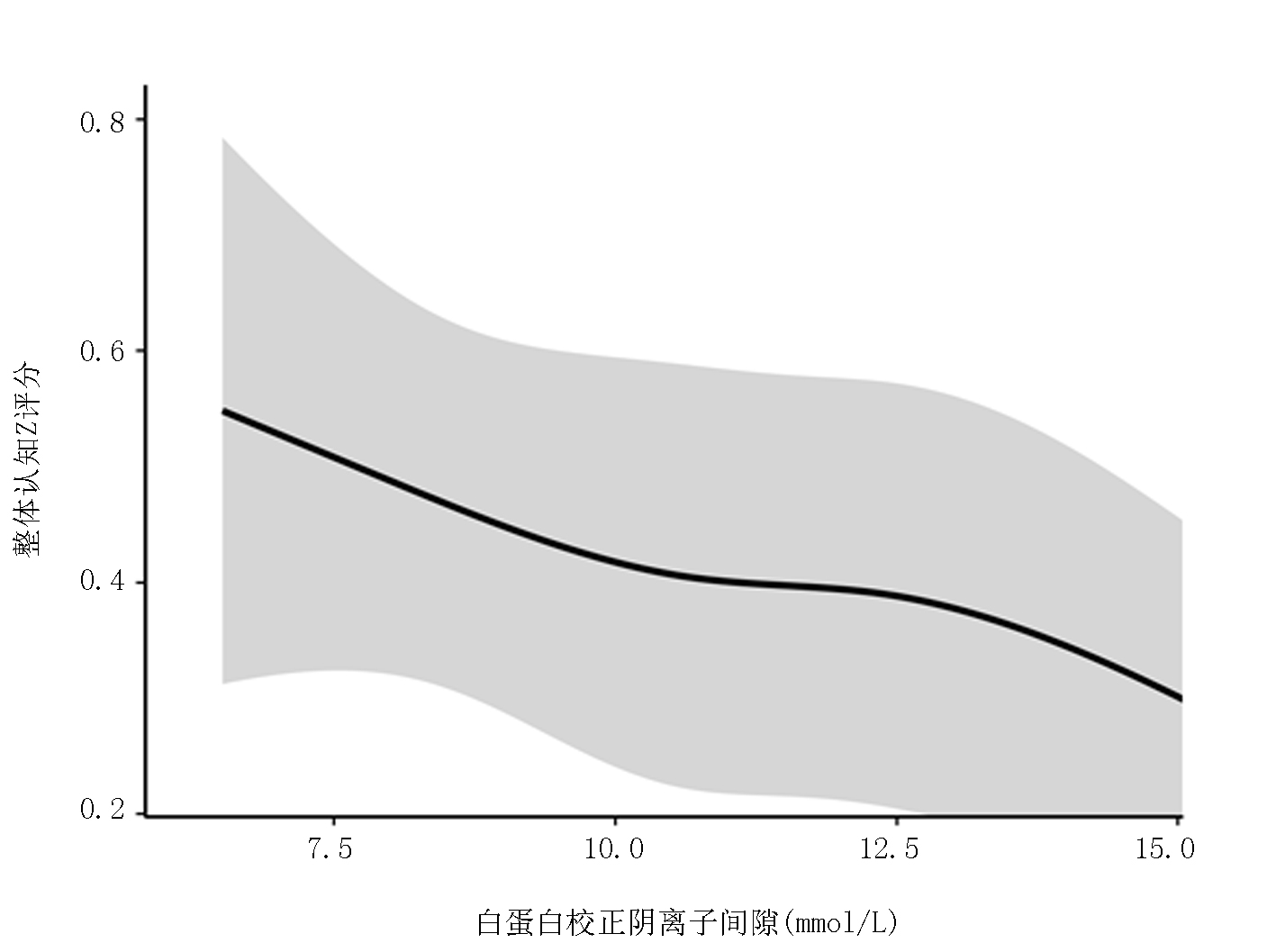
Fig.2 Survey-weighted restricted cubic spline analysis of the association between corrected AG and the global cognitive Z-score. The solid line represents the predicted value, and the shaded area represents the 95%CI; knots were placed at the weighted 5th, 35th, 65th, and 95th percentiles. Overall P=0.041; nonlinear P=0.595.
| 结局 | 总体P值 | 非线性P值 |
|---|---|---|
| 整体认知Z评分 | 0.041 | 0.595 |
| CERAD即刻回忆Z评分 | 0.092 | 0.832 |
| CERAD延迟回忆Z评分 | 0.234 | 0.698 |
| 动物命名流畅性Z评分 | 0.158 | 0.605 |
| DSST Z评分 | 0.085 | 0.129 |
Tab.4 Overall and nonlinear tests using restricted cubic splines with four knots
| 结局 | 总体P值 | 非线性P值 |
|---|---|---|
| 整体认知Z评分 | 0.041 | 0.595 |
| CERAD即刻回忆Z评分 | 0.092 | 0.832 |
| CERAD延迟回忆Z评分 | 0.234 | 0.698 |
| 动物命名流畅性Z评分 | 0.158 | 0.605 |
| DSST Z评分 | 0.085 | 0.129 |
| 分析 | 例数 | 效应类型 | 估计值(95%CI) | P值 |
|---|---|---|---|---|
| 核心协变量模型 | 2530 | β | -0.070 (-0.100, -0.040) | <0.01 |
| 排除卒中者 | 2352 | β | -0.050 (-0.080, -0.020) | 0.002 |
| 低整体认知Logistic模型 | 2530 | OR | 1.171 (1.063, 1.291) | 0.002 |
| 未校正AG每1 SD | 2530 | β | -0.040 (-0.067, -0.013) | 0.004 |
| 碳酸氢盐每1 SD | 2530 | β | 0.053 (0.018, 0.088) | 0.004 |
| 血清渗透压每1 SD | 2530 | β | 0.054 (0.016, 0.092) | 0.007 |
| 整体认知要求4域完整 | 2406 | β | -0.057 (-0.087, -0.028) | <0.01 |
| 调查加权成分Z评分 | 2530 | β | -0.056 (-0.085, -0.028) | <0.01 |
| 排除eGFR<30 | 2472 | β | -0.049 (-0.074, -0.024) | <0.01 |
| corrected AG限第1~99百分位 | 2483 | β | -0.058 (-0.085, -0.031) | <0.01 |
| 2021无种族系数CKD-EPI eGFR | 2530 | β | -0.055 (-0.083, -0.027) | <0.01 |
| corrected AG+血清白蛋白调整 | 2530 | β | -0.052 (-0.081, -0.023) | <0.01 |
| 未校正AG+血清白蛋白调整 | 2530 | β | -0.051 (-0.080, -0.023) | <0.01 |
| 血清白蛋白每1 SD | 2530 | β | 0.034 (-0.003, 0.071) | 0.068 |
Tab.5 Sensitivity analysis of the primary global cognitive outcome
| 分析 | 例数 | 效应类型 | 估计值(95%CI) | P值 |
|---|---|---|---|---|
| 核心协变量模型 | 2530 | β | -0.070 (-0.100, -0.040) | <0.01 |
| 排除卒中者 | 2352 | β | -0.050 (-0.080, -0.020) | 0.002 |
| 低整体认知Logistic模型 | 2530 | OR | 1.171 (1.063, 1.291) | 0.002 |
| 未校正AG每1 SD | 2530 | β | -0.040 (-0.067, -0.013) | 0.004 |
| 碳酸氢盐每1 SD | 2530 | β | 0.053 (0.018, 0.088) | 0.004 |
| 血清渗透压每1 SD | 2530 | β | 0.054 (0.016, 0.092) | 0.007 |
| 整体认知要求4域完整 | 2406 | β | -0.057 (-0.087, -0.028) | <0.01 |
| 调查加权成分Z评分 | 2530 | β | -0.056 (-0.085, -0.028) | <0.01 |
| 排除eGFR<30 | 2472 | β | -0.049 (-0.074, -0.024) | <0.01 |
| corrected AG限第1~99百分位 | 2483 | β | -0.058 (-0.085, -0.031) | <0.01 |
| 2021无种族系数CKD-EPI eGFR | 2530 | β | -0.055 (-0.083, -0.027) | <0.01 |
| corrected AG+血清白蛋白调整 | 2530 | β | -0.052 (-0.081, -0.023) | <0.01 |
| 未校正AG+血清白蛋白调整 | 2530 | β | -0.051 (-0.080, -0.023) | <0.01 |
| 血清白蛋白每1 SD | 2530 | β | 0.034 (-0.003, 0.071) | 0.068 |
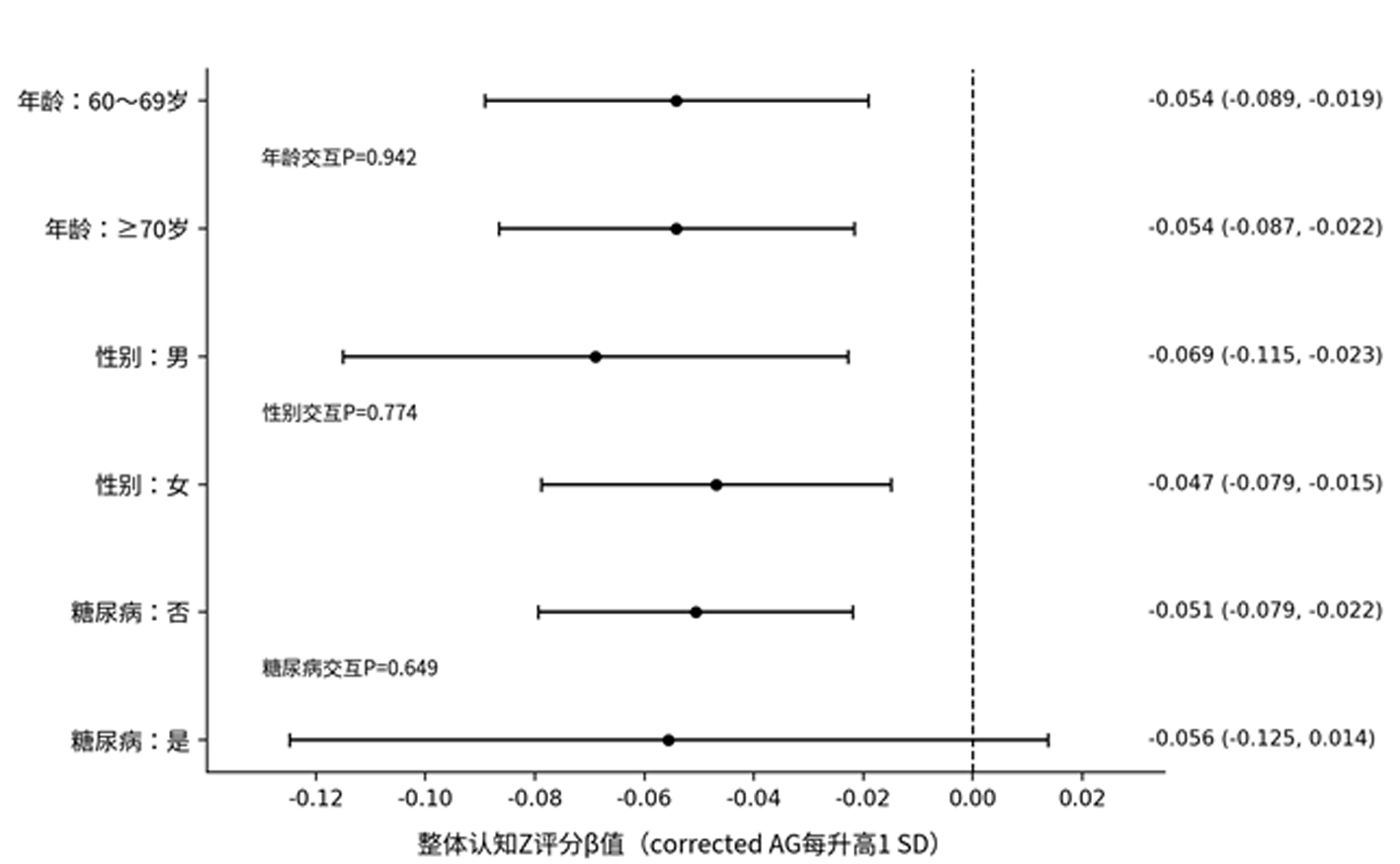
Fig.3 Subgroup analysis of the association between corrected AG and global cognition. The effect estimate represents the β coefficient and 95% CI per 1-SD increase in corrected AG; P values for interactions with age, sex, and diabetes were 0.942, 0.774, and 0.649, respectively.
| [1] |
Li T, Hu Z, Qiao L, et al. Chronic kidney disease and cognitive performance: NHANES 2011-2014[J]. BMC Geriatr, 2024, 24(1):351. doi: 10.1186/s12877-024-04917-2.
pmid: 38637739 |
| [2] | Zhang J, Wu L, Wang P, et al. Prevalence of cognitive impairment and its predictors among chronic kidney disease patients: A systematic review and meta-analysis[J]. PLoS One, 2024, 19(6):e0304762. doi: 10.1371/journal.pone.0304762. |
| [3] | Bolignano D, Simeoni M, Hafez G, et al. Cognitive impairment in CKD patients: A guidance document by the CONNECT network[J]. Clin Kidney J, 2025, 18(2):sfae294. doi: 10.1093/ckj/sfae294. |
| [4] | Merlino L, Rainone F, Chinnadurai R, et al. Health outcomes in chronic kidney disease patients with cognitive impairment or dementia: A global collaborative analysis[J]. Clin Kidney J, 2025, 18(1):sfae401. doi: 10.1093/ckj/sfae401. |
| [5] | Cheung KL, Arce Renteria M, Callas PW, et al. Kidney Function, cognitive impairment, and trajectories: A longitudinal biracial study[J]. J Gen Intern Med, 2025, 40(14):3403-3412. doi: 10.1007/s11606-025-09366-0. |
| [6] |
Otobe Y. Current status of the cognitive impairment in chronic kidney disease[J]. Phys Ther Res, 2024, 27(3):115-120.doi: 10.1298/ptr.R0033.
pmid: 39866390 |
| [7] | Yan Q, Liu M, Xie Y, et al. Kidney-brain axis in the pathogenesis of cognitive impairment[J]. Neurobiol Dis, 2024, 200:106626. doi: 10.1016/j.nbd.2024.106626. |
| [8] | Wagner CA, Massy ZA, Capasso G, et al. Translational research on cognitive impairment in chronic kidney disease[J]. Nephrol Dial Transplant, 2025, 40(4):621-631. doi: 10.1093/ndt/gfae229. |
| [9] | Andrews TD, Day GS, Irani SR, et al. Uremic toxins, CKD, and cognitive dysfunction[J]. J Am Soc Nephrol, 2025, 36(6):1208-1226. doi: 10.1681/ASN.0000000675. |
| [10] |
Bossola M, Picconi B. Uremic toxins and the brain in chronic kidney disease[J]. J Nephrol, 2024, 37(5):1391-1395. doi: 10.1007/s40620-024-01929-4.
pmid: 38625502 |
| [11] | Zimmermann S, Mathew A, Bondareva O, et al. Chronic kidney disease leads to microglial potassium efflux and inflammasome activation in the brain[J]. Kidney Int, 2024, 106(6):1101-1116. doi: 10.1016/j.kint.2024.06.028. |
| [12] |
Bobot M, Guedj E, Resseguier N, et al. Increased blood-brain barrier permeability and cognitive impairment in patients With ESKD[J]. Kidney Int Rep, 2024, 9(10):2988-2995. doi: 10.1016/j.ekir.2024.07.021.
pmid: 39430169 |
| [13] | Rački V, Vujičić B, Komen V, et al. The kidney-brain axis in chronic kidney disease: Uremic toxins, cognitive decline, mechanistic pathways, biomarkers and therapeutic perspectives[J]. Biomedicines, 2026, 14(7):1579. doi: 10.3390/biomedicines14071579. |
| [14] | Alter DN, Zha L. The anion gap as a predictive tool for morbidity and mortality[J]. Crit Rev Clin Lab Sci, 2025, 62(8):568-584. doi: 10.1080/10408363.2025.2526346. |
| [15] | Ni ZB, Zhang HB, Huang LZ, et al. Albumin-corrected anion gap and risk of mortality among US adults[J]. Arch Public Health, 2025, 83:263. doi: 10.1186/s13690-025-01752-8. |
| [16] |
Chen Y, You MY, Chu L. Association of albumin-corrected anion gap with severe consciousness disorders and outcomes in ischemic stroke: A retrospective MIMIC analysis[J]. Sci Rep, 2024, 14:26006. doi: 10.1038/s41598-024-76324-x.
pmid: 39472602 |
| [17] | Wang R, Rong J, Xu J, et al. A prognostic model incorporating the albumin-corrected anion gap in patients with aneurysmal subarachnoid hemorrhage[J]. Front Neurol, 2024, 15:1361888. doi: 10.3389/fneur.2024.1361888. |
| [18] |
Figge J, Jabor A, Kazda A, et al. Anion gap and hypoalbuminemia[J]. Crit Care Med, 1998, 26(11):1807-1810.doi: 10.1097/00003246-199811000-00019.
pmid: 9824071 |
| [19] | Dobre M, Gaussoin SA, Bates JT, et al. Serum bicarbonate concentration and cognitive function in hypertensive adults[J]. Clin J Am Soc Nephrol, 2018, 13(4):596-603. doi: 10.2215/CJN.07050717. |
| [20] |
Brody DJ, Kramarow EA, Taylor CA, et al. Cognitive performance in adults aged 60 and over: National Health and Nutrition Examination Survey, 2011-2014[J]. Natl Health Stat Report, 2019, (126):1-23.
pmid: 31751207 |
| [21] |
Morris JC, Heyman A, Mohs RC, et al. The Consortium to Establish a Registry for Alzheimer's Disease (CERAD). Part I. Clinical and neuropsychological assessment of Alzheimer's disease[J]. Neurology, 1989, 39(9):1159-1165. doi: 10.1212/WNL.39.9.1159.
pmid: 2771064 |
| [22] |
Jaeger J. Digit symbol substitution test: The case for sensitivity over specificity in neuropsychological testing[J]. J Clin Psychopharmacol, 2018, 38(5):513-519. doi: 10.1097/JCP.0000000000000941.
pmid: 30124583 |
| [23] |
Levey AS, Stevens LA, Schmid CH, et al. A new equation to estimate glomerular filtration rate[J]. Ann Intern Med, 2009, 150(9):604-612. doi: 10.7326/0003-4819-150-9-200905050-00006.
pmid: 19414839 |
| [24] | Inker LA, Eneanya ND, Coresh J, et al. New creatinine- and cystatin C-based equations to estimate GFR without race[J]. N Engl J Med, 2021, 385(19):1737-1749. doi: 10.1056/NEJMoa2102953. |
| [25] |
Kroenke K, Spitzer RL, Williams JBW. The PHQ-9: Validity of a brief depression severity measure[J]. J Gen Intern Med, 2001, 16(9):606-613. doi: 10.1046/j.1525-1497.2001.016009606.x.
pmid: 11556941 |
| [26] | Lumley T. Analysis of complex survey samples[J]. J Stat Softw, 2004, 9(8):1-19. doi: 10.18637/jss.v009.i08. |
| [27] | von Elm E, Altman DG, Egger M, et al. The Strengthening the Reporting of Observational Studies in Epidemiology (STROBE) statement: Guidelines for reporting observational studies[J]. Lancet, 2007, 370(9596):1453-1457. doi: 10.1016/S0140-6736(07)61602-X. |
| [28] | Lee KGR, Ghadge A, Raut B, et al. Cognitive impairment and health outcomes in non-dialysis chronic kidney disease: A systematic review and meta-analysis[J]. Clin Kidney J, 2025, 18(6):sfaf150.doi: 10.1093/ckj/sfaf150. |
| Viewed | ||||||
|
Full text |
|
|||||
|
Abstract |
|
|||||