Clinical Focus ›› 2026, Vol. 41 ›› Issue (10): 910-915.doi: 10.3969/j.issn.1004-583X.2026.10.006
Previous Articles Next Articles
Olanzapine combined with oxazepam in patients with schizophrenia and anxiety symptoms: A retrospective controlled study of dynamic changes in efficacy and safety
Cai Fancan, Wu Haiqiang( )
Neuro-Psychiatric Prevention and Treatment Hospital of Fuzhou Second General Hospital Fuzhou 350007, China
-
Received:2026-10-01Online:2026-10-10Published:2026-10-10 -
Contact:Wu Haiqiang E-mail:1349925359@qq.com

CLC Number:
Cite this article
Cai Fancan, Wu Haiqiang. Olanzapine combined with oxazepam in patients with schizophrenia and anxiety symptoms: A retrospective controlled study of dynamic changes in efficacy and safety[J]. Clinical Focus, 2026, 41(10): 910-915.
share this article
Add to citation manager EndNote|Ris|BibTeX
URL: https://www.lchc.cn/EN/10.3969/j.issn.1004-583X.2026.10.006
| 变量 | 例数 | 年龄(岁) | 病程(年) | 奥氮平最终剂量(mg) | 基线HAMA | 基线PANSS总分 |
|---|---|---|---|---|---|---|
| 单药组 | 32 | 40.69±11.32 | 6.84±2.38 | 10.94±1.98 | 36.50±7.34 | 82.28±6.66 |
| 联合组 | 32 | 40.94±10.47 | 7.01±3.09 | 10.16±2.00 | 34.09±8.61 | 80.59±6.94 |
| t值 | -0.092 | -0.247 | 1.569 | 1.203 | 0.993 | |
| P值 | 0.927 | 0.806 | 0.122 | 0.234 | 0.325 |
Tab.1 Comparison of baseline data between the two groups ($\stackrel{-}{\mathit{x}}$±s)
| 变量 | 例数 | 年龄(岁) | 病程(年) | 奥氮平最终剂量(mg) | 基线HAMA | 基线PANSS总分 |
|---|---|---|---|---|---|---|
| 单药组 | 32 | 40.69±11.32 | 6.84±2.38 | 10.94±1.98 | 36.50±7.34 | 82.28±6.66 |
| 联合组 | 32 | 40.94±10.47 | 7.01±3.09 | 10.16±2.00 | 34.09±8.61 | 80.59±6.94 |
| t值 | -0.092 | -0.247 | 1.569 | 1.203 | 0.993 | |
| P值 | 0.927 | 0.806 | 0.122 | 0.234 | 0.325 |
| 量表 | 效应 | F值 | P值 | η2P值 |
|---|---|---|---|---|
| HAMA | 组别主效应 | 8.410 | 0.005 | 0.119 |
| 时间主效应 | 598.533 | <0.01 | 0.906 | |
| 组别×时间交互 | 0.889 | 0.448 | 0.014 | |
| PANSS总分 | 组别主效应 | 34.609 | <0.01 | 0.358 |
| 时间主效应 | 1071.417 | <0.01 | 0.945 | |
| 组别×时间交互 | 22.705 | <0.01 | 0.268 |
Tab.2 Results of repeated-measures analysis of variance for HAMA and PANSS total scores
| 量表 | 效应 | F值 | P值 | η2P值 |
|---|---|---|---|---|
| HAMA | 组别主效应 | 8.410 | 0.005 | 0.119 |
| 时间主效应 | 598.533 | <0.01 | 0.906 | |
| 组别×时间交互 | 0.889 | 0.448 | 0.014 | |
| PANSS总分 | 组别主效应 | 34.609 | <0.01 | 0.358 |
| 时间主效应 | 1071.417 | <0.01 | 0.945 | |
| 组别×时间交互 | 22.705 | <0.01 | 0.268 |
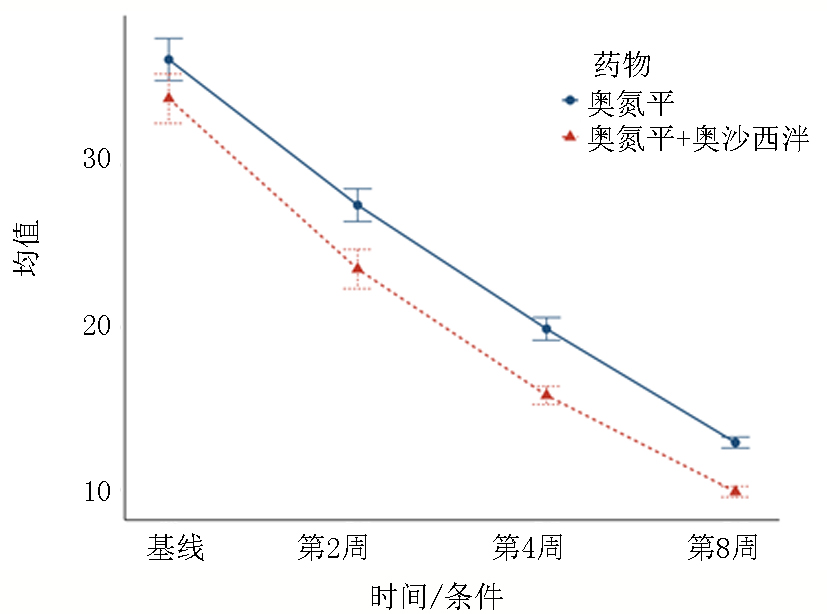
Fig.1 Profile plot of changes in HAMA scores over time in the two groups
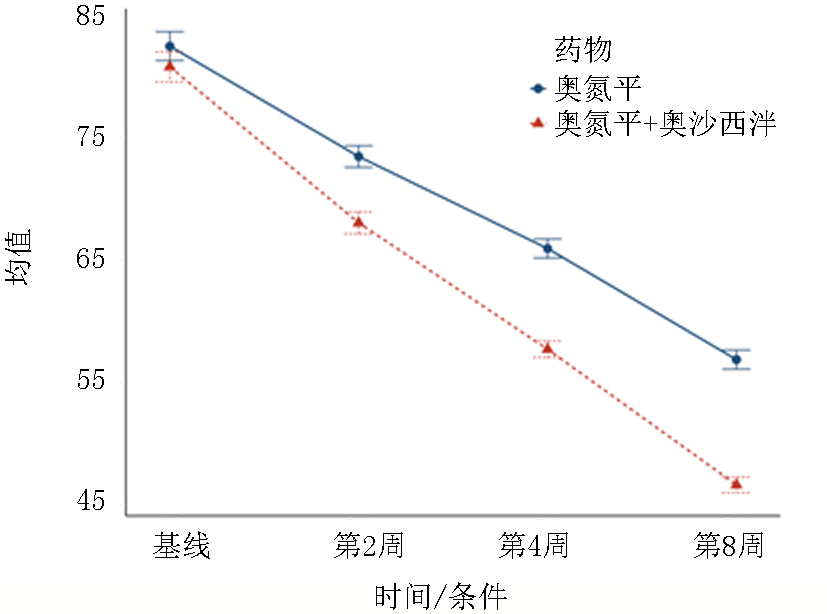
Fig.2 Profile plot of changes in PANSS total scores over time in the two groups
| 组别 | 例数 | HAMA | PANSS总分 | |||||||
|---|---|---|---|---|---|---|---|---|---|---|
| 基线 | 第2周 | 第4周 | 第8周 | 基线 | 第2周 | 第4周 | 第8周 | |||
| 单药组 | 32 | 36.50±7.34 | 27.53±5.72 | 19.91±3.95 | 12.91±1.91 | 82.28±6.66 | 73.28±4.99 | 65.78±4.38 | 56.72±4.42 | |
| 联合组 | 32 | 34.09±8.61 | 23.59±6.86 | 15.81±3.17 | 9.88±1.86 | 80.59±6.94 | 67.88±5.05 | 57.56±3.76 | 46.50±3.59 | |
| t值 | 1.203 | 2.493 | 4.571 | 6.434 | 0.993 | 4.308 | 8.060 | 10.145 | ||
| P值 | 0.234 | 0.015 | <0.01 | <0.01 | 0.325 | <0.01 | <0.01 | <0.01 | ||
Tab.3 Between-group comparisons of HAMA and PANSS total scores at different time points($\stackrel{-}{\mathit{x}}$±s)
| 组别 | 例数 | HAMA | PANSS总分 | |||||||
|---|---|---|---|---|---|---|---|---|---|---|
| 基线 | 第2周 | 第4周 | 第8周 | 基线 | 第2周 | 第4周 | 第8周 | |||
| 单药组 | 32 | 36.50±7.34 | 27.53±5.72 | 19.91±3.95 | 12.91±1.91 | 82.28±6.66 | 73.28±4.99 | 65.78±4.38 | 56.72±4.42 | |
| 联合组 | 32 | 34.09±8.61 | 23.59±6.86 | 15.81±3.17 | 9.88±1.86 | 80.59±6.94 | 67.88±5.05 | 57.56±3.76 | 46.50±3.59 | |
| t值 | 1.203 | 2.493 | 4.571 | 6.434 | 0.993 | 4.308 | 8.060 | 10.145 | ||
| P值 | 0.234 | 0.015 | <0.01 | <0.01 | 0.325 | <0.01 | <0.01 | <0.01 | ||
| 时间区间 | 变量 | r值 | P值 |
|---|---|---|---|
| 基线—第2周 | HAMA减分与PANSS总分减分 | 0.214 | 0.092 |
| HAMA减分PANSS阳性症状减分 | 0.253 | 0.045 | |
| HAMA减分与PANSS阴性症状减分 | -0.119 | 0.353 | |
| HAMA减分与PANSS一般精神病理减分 | 0.140 | 0.273 | |
| 第2周—第4周 | HAMA减分与PANSS总分减分 | -0.043 | 0.751 |
| HAMA减分与PANSS阳性症状减分 | -0.003 | 0.983 | |
| HAMA减分与PANSS阴性症状减分 | -0.002 | 0.989 | |
| HAMA减分与PANSS一般精神病理减分 | -0.075 | 0.557 | |
| 第4周—第8周 | HAMA减分与PANSS总分减分 | -0.010 | 0.937 |
| HAMA减分与PANSS阳性症状减分 | 0.053 | 0.680 | |
| HAMA减分与PANSS阴性症状减分 | -0.106 | 0.401 | |
| HAMA减分与PANSS一般精神病理减分 | 0.002 | 0.988 |
Tab.4 Correlations between reductions in HAMA scores and reductions in PANSS subscale scores during different treatment intervals(n=64)
| 时间区间 | 变量 | r值 | P值 |
|---|---|---|---|
| 基线—第2周 | HAMA减分与PANSS总分减分 | 0.214 | 0.092 |
| HAMA减分PANSS阳性症状减分 | 0.253 | 0.045 | |
| HAMA减分与PANSS阴性症状减分 | -0.119 | 0.353 | |
| HAMA减分与PANSS一般精神病理减分 | 0.140 | 0.273 | |
| 第2周—第4周 | HAMA减分与PANSS总分减分 | -0.043 | 0.751 |
| HAMA减分与PANSS阳性症状减分 | -0.003 | 0.983 | |
| HAMA减分与PANSS阴性症状减分 | -0.002 | 0.989 | |
| HAMA减分与PANSS一般精神病理减分 | -0.075 | 0.557 | |
| 第4周—第8周 | HAMA减分与PANSS总分减分 | -0.010 | 0.937 |
| HAMA减分与PANSS阳性症状减分 | 0.053 | 0.680 | |
| HAMA减分与PANSS阴性症状减分 | -0.106 | 0.401 | |
| HAMA减分与PANSS一般精神病理减分 | 0.002 | 0.988 |
| 组别 | 例数 | 有效 | 缓解 | |||||
|---|---|---|---|---|---|---|---|---|
| 第2周 | 第4周 | 第8周 | 第2周 | 第4周 | 第8周 | |||
| 单药组 | 32 | 0(0.00) | 8(25.00) | 32(100.00) | 0(0.00) | 0(0.00) | 0(0.00) | |
| 联合组 | 32 | 0(0.00) | 23(71.88) | 32(100.00) | 0(0.00) | 0(0.00) | 3(9.38) | |
| 统计值 | - | χ2=12.262 | - | - | - | Fisher | ||
| P值 | - | <0.01 | - | - | - | 0.238 | ||
Tab.5 Comparison of anxiety response and remission rates between the two groups(n, %)
| 组别 | 例数 | 有效 | 缓解 | |||||
|---|---|---|---|---|---|---|---|---|
| 第2周 | 第4周 | 第8周 | 第2周 | 第4周 | 第8周 | |||
| 单药组 | 32 | 0(0.00) | 8(25.00) | 32(100.00) | 0(0.00) | 0(0.00) | 0(0.00) | |
| 联合组 | 32 | 0(0.00) | 23(71.88) | 32(100.00) | 0(0.00) | 0(0.00) | 3(9.38) | |
| 统计值 | - | χ2=12.262 | - | - | - | Fisher | ||
| P值 | - | <0.01 | - | - | - | 0.238 | ||
| 组别 | 例数 | 嗜睡 | 头晕 | 体质量增加 | 便秘 |
|---|---|---|---|---|---|
| 单药组 | 32 | 2(6.25) | 1(3.12) | 4(12.50) | 1(3.12) |
| 联合组 | 32 | 3(9.38) | 2(6.25) | 4(12.50) | 0(0.00) |
| P值 | 1.000 | 1.000 | 1.000 | 1.000 |
Tab.6 Comparison of adverse events between the two groups(n, %)
| 组别 | 例数 | 嗜睡 | 头晕 | 体质量增加 | 便秘 |
|---|---|---|---|---|---|
| 单药组 | 32 | 2(6.25) | 1(3.12) | 4(12.50) | 1(3.12) |
| 联合组 | 32 | 3(9.38) | 2(6.25) | 4(12.50) | 0(0.00) |
| P值 | 1.000 | 1.000 | 1.000 | 1.000 |
| [1] | Fang X, Chen Y, Wang Y, et al. Depressive symptoms in schizophrenia patients: A possible relationship between SIRT1 and BDNF[J]. Prog Neuropsychopharmacol Biol Psychiatry, 2019, 95:109673. doi:10.1016/j.pnpbp.2019.109673. |
| [2] | Zhao M, Ma J, Wu Y, et al. Depressive and anxiety symptoms among schizophrenia patients[J]. J Affect Disord, 2024, 362:749-754.doi:10.1016/J.JAD.2024.07.130. |
| [3] | 于民权, 徐祥清. 5-HT2A/D2受体平衡拮抗剂NH809抗精神分裂症作用的初步研究[J]. 神经药理学报, 2022, 12(3): 1-4. doi:10.3969/j.issn.2095-1396.2022.03.001. |
| [4] | 章瑜, 薛志敏. 苯二氮卓类药物的神经影像学研究[J]. 中国临床心理学杂志, 2009, 17(2):197-199.doi:10.16128/j.cnki.1005-3611.2009.02.013 |
| [5] | 陈熙明, 魏辰, 苏中华. 苯二氮卓类药物对认知功能的影响及相关机制[J]. 中国药物滥用防治杂志, 2023, 29(12):2071-2076+2088.doi:10.15900/j.cnki.zylf1995.2023.12.001. |
| [6] | 吴海强, 蔡蕃灿, 朱美陈, 等. 奥氮平联合奥沙西泮治疗精神分裂症伴焦虑症状的效果[J]. 福建医药杂志, 2024, 46(7): 33-35. doi:10.20148/j.fmj.2024.07.010. |
| [7] | 中华人民共和国国家卫生健康委员会. 精神障碍诊疗规范(2020年版)[M]. 北京: 人民卫生出版社, 2020:118-132. |
| [8] | 吴旻熹, 洪语欣, 黄夏仪, 等. 精神分裂症的病理机制及治疗方法进展[J]. 广东药科大学学报, 2024, 40(6):136-143.doi:10.16809/j.cnki.2096-3653.2024040803. |
| [9] | 李雨濛, 王怡冰, 申华, 等. 抑郁焦虑障碍伴失眠发病机制的研究进展[J]. 中国医药, 2025, 20(6): 940-944. doi:10.3760/j.issn.1673-4777.2025.06.030. |
| [10] | 韦理强, 李坤. 焦虑和抑郁障碍的性别差异神经机制[J]. 科学通报, 2024, 69(30): 4470-4485. doi: 10.1360/TB-2024-0386. |
| [11] | 王毅群, 王之琳, 李清杨, 等. 奥沙西泮的药理作用及机制研究进展[J]. 中国临床药理学与治疗学, 2026, 31(3):352-361. doi:10.12092/j.issn.1009-2501.2026.03.007. |
| [12] | Takekita Y, Tani H, Kawamata Y, et al. Pharmacological treatment of schizophrenia: Japanese expert consensus 2025.[J]. Schizophrenia(Heidelb), 2026, 12(1):70.doi:10.1038/S41537-026-00770-X. |
| [13] | 王君, 修梅红, 王璇, 等. 1162例精神分裂症患者抗精神病药及镇静催眠药使用情况分析[J]. 中国药物依赖性杂志, 2024, 33(3):244-247+253.doi:10.13936/j.cnki.cjdd1992.2024.03.013. |
| [14] | 陶涛, 张博宇, 郑爽, 等. 不同剂量奥氮平治疗老年抑郁障碍伴焦虑痛苦患者的疗效[J]. 医学临床研究, 2024, 41(3):336-339. doi:10.3969/j.issn.1671-7171.2024.03.005. |
| [15] | Nowak W, Korba P, Kinalska N, et al. Olanzapine in the treatment of schizophrenia in adolescents - mechanisms of action and therapeutic efficacy[J]. Psychiatr Pol, 2025, 59(6):1003-1015.doi:10.12740/PP/214532. |
| [16] | Park SY, Kim MG, Sung JH, et al. Atypical antipsychotic drug olanzapine inhibits 5-HT3 receptor-mediated currents by allosteric and non-competitive mechanisms[J]. Korean J Physiol Pharmacol, 2024, 29(4):431-442.doi:10.4196/KJPP.24.340. |
| [17] | Bailey RH, Davies E, Morrison JI. Oxazepam in the treatment of anxiety associated with depression: Results of treatment in 1600 cases(Studies in depression, VI)[J]. Curr Med Res Opin, 2008, 7(3):156-163.doi:10.1185/03007998109114256. |
| [18] | Li J, Chen F. Efficacy and safety evaluation of olanzapine treatment for schizophrenia patients: A retrospective data analysis[J]. Arch Psychiatr Nurs, 2025, 54:26-30.doi:10.1016/J.APNU.2024.12.005. |
| [19] | 张景双, 夏玉平, 黄颖华, 等. 奥氮平所致药物不良反应的发生率及相关影响因素研究[J]. 中国现代应用药学, 2020, 37(11):1375-1379.doi:10.13748/j.cnki.issn1007-7693.2020.11.017. |
| Viewed | ||||||
|
Full text |
|
|||||
|
Abstract |
|
|||||