Clinical Focus ›› 2026, Vol. 41 ›› Issue (9): 773-786.doi: 10.3969/j.issn.1004-583X.2026.09.001
Network meta-analysis of the effects of different exercise types on inhibition, cognitive flexibility, and working memory in adolescents
Li Yongjing, Su Huaiyi, Wang Xinyuan, Zhang Jinlong, Song Shuhua( )
School of Physical Education ,Yunnan Normal University Kunming 450500, China
-
Received:2026-01-22Online:2026-09-20Published:2026-09-17 -
Contact:Song Shuhua E-mail:1057955454@qq.com

CLC Number:
Cite this article
Li Yongjing, Su Huaiyi, Wang Xinyuan, Zhang Jinlong, Song Shuhua. Network meta-analysis of the effects of different exercise types on inhibition, cognitive flexibility, and working memory in adolescents[J]. Clinical Focus, 2026, 41(9): 773-786.
share this article
Add to citation manager EndNote|Ris|BibTeX
URL: https://www.lchc.cn/EN/10.3969/j.issn.1004-583X.2026.09.001
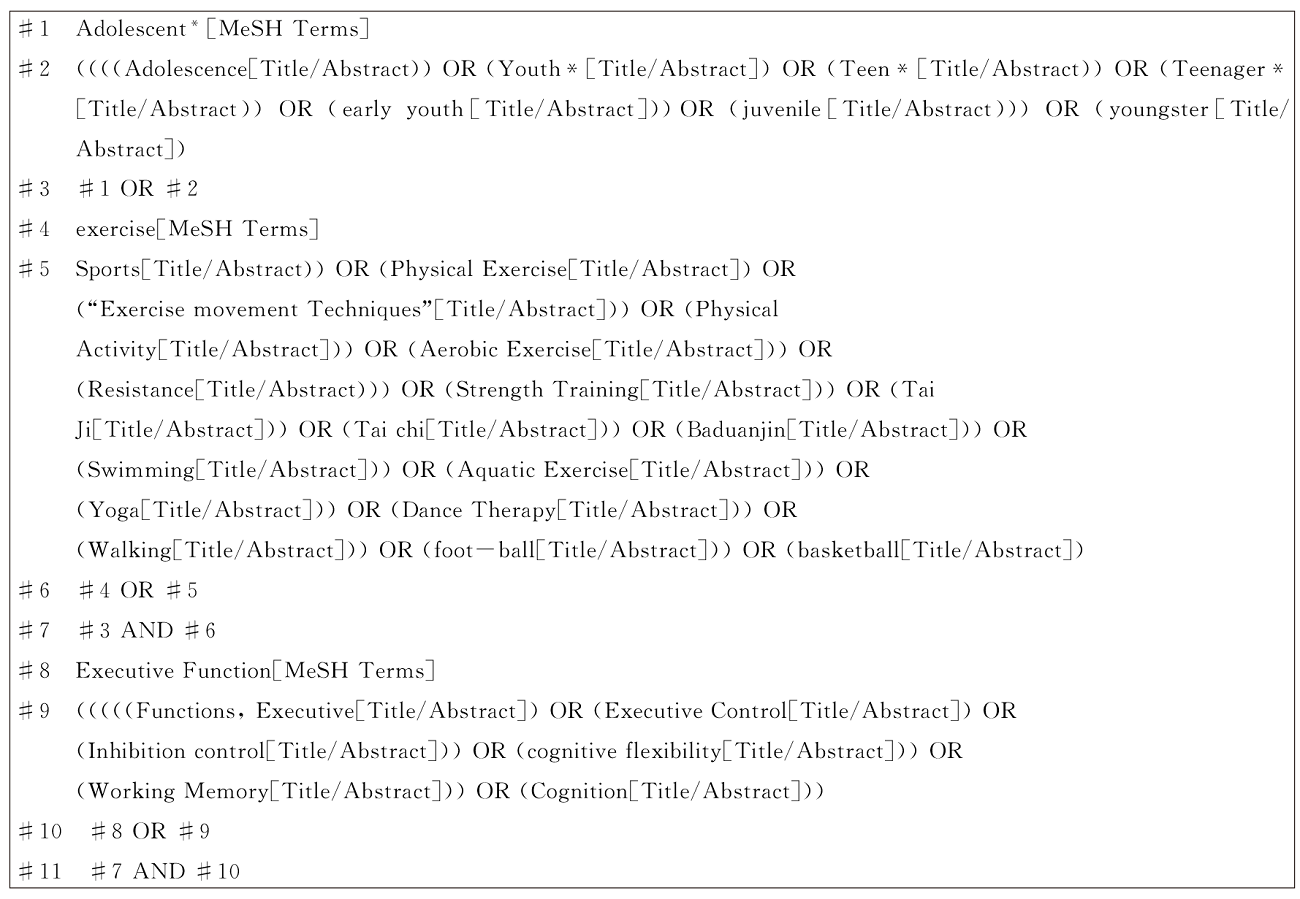
Fig.1 PubMed search strategy
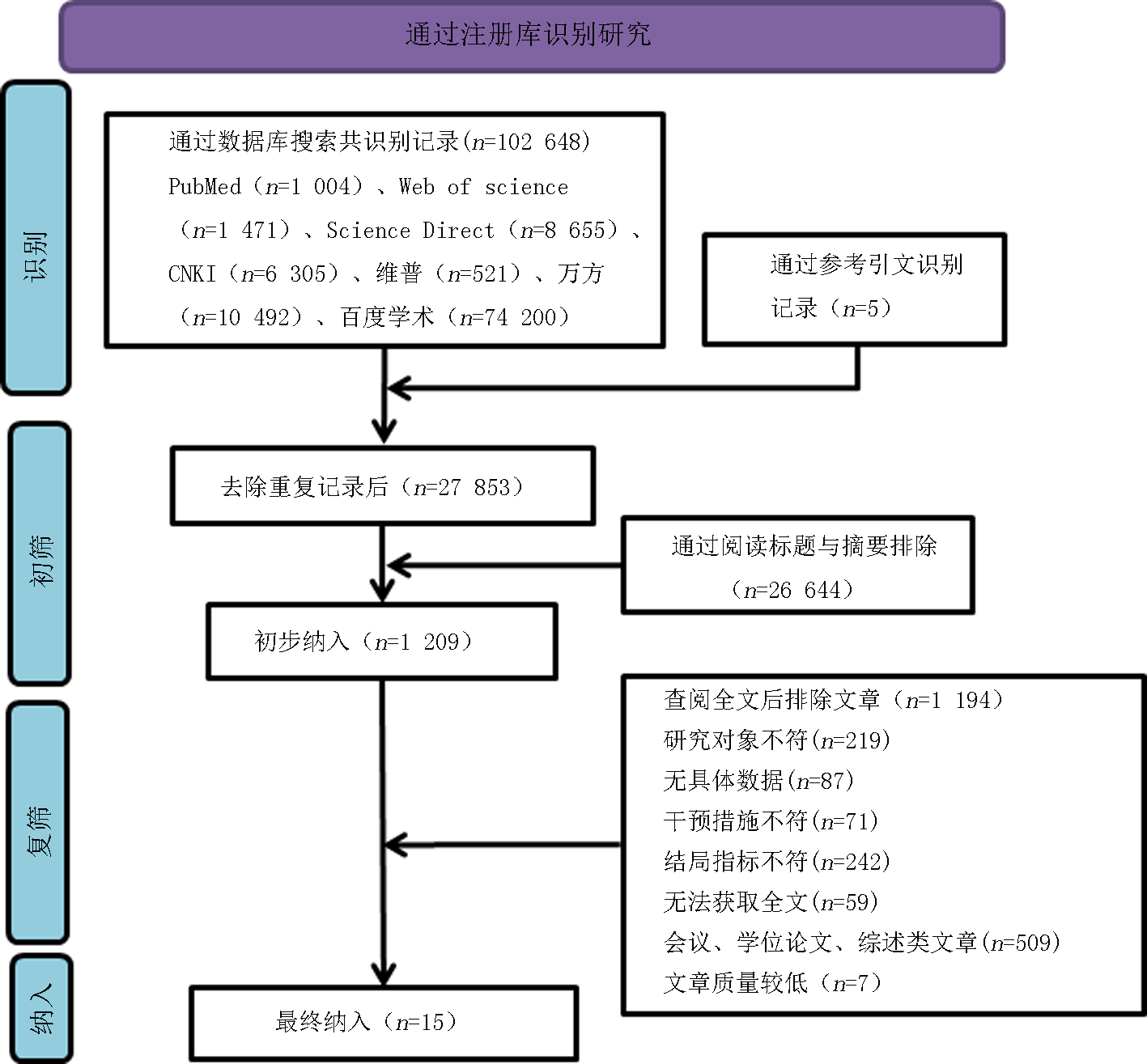
Fig.2 Flowchart of literature screening
| 研究者 | 国家 | 样本量 (T/C) | 平均年龄 (T/C) | 干预措施 (T/C) | 干预方案 | 结局指标 |
|---|---|---|---|---|---|---|
| Benzing等[ | 瑞士 | 42(21/21) | T1:14.52±1.03 T2:14.61±1.22 C:14.38±1.02 | ②/③/① | 15min/次,-,- | D-KEFS |
| Tavakoil等[ | 伊朗 | 60(30/30) | 12.13±0.28/12.83±0.61 | ④/① | 45 min/次,3次/周,8周 | Simon任务 |
| Sjöwall等[ | 瑞典 | 167(108/59) | - | ②/① | 20 min/次,-,- | D-KEFS/Stroop色词测验/WISC |
| Silva等[ | 巴西 | 20(10/10) | 12±2/12±1 | ②/① | -,2次/周,8周 | TMT |
| Jeon等[ | 美国 | 40(10/10/10/10) | T1:15.06±0.73 T2:15.47±0.78 T3:15.15±0.33 C:15.05±0.41 | ②/① | -,4次/周,12周 | WISC |
| Kolovelonis等[ | 希腊 | 102(36/34/32) | - | ③/⑤/① | 45 min/次,-,- | DFT |
| 李琳等[ | 中国 | 58(18/21/19) | T1:18.44±0.51 T2:18.43±0.51 C:18.58±0.51 | ②/④/① | 50 min/次,3次/周,8周 | Stroop色词测验/N-back任务 |
| 张凯等[ | 中国 | 32(17/15) | - | ⑤/① | 45 min/次,2次/周,10周 | Flanker任务 |
| 张立敏等[ | 中国 | 66(33/33) | - | ⑤/① | 45 min/次,-,12周 | Flanker任务/shifting task/N-back任务 |
| Rutkauskaite等[ | 立陶宛 | 63(31/32) | 13.7±0.8/13.9±0.8 | ⑤/① | 60 min/次,3次/周,4周 | Stroop色词测验/VDST |
| Hillman等[ | 美国 | 221(109/112) | - | ⑤/① | 70 min/次,5次/周,20周 | CSST |
| Ludyga等[ | 瑞士 | 35(19/16) | 12.5±0.7/12.4±0.7 | ⑤/① | 20 min/次,5次/周,8周 | Stroop色词测验 |
| Subramanian等[ | 英国 | 350(172/175) | - | ⑤/① | 120 min/次,6次/周,24周 | RFFT |
| Williams等[ | 英国 | 16(8/8) | 11.8±0.2/11.6±0.4 | ⑥/① | 60 min/次,3次/周,2周 | Stroop色词测验、Sternberg paradigm |
| Wassenaar等[ | 英国 | 16 017(7 860/8 157) | 12.5±0.30/12.5±0.29 | ⑥/① | 60 min/次,2次/周,40周 | Flanker任务/CSST/2-Back任务 |
Tab.1 Characteristics of the included studies
| 研究者 | 国家 | 样本量 (T/C) | 平均年龄 (T/C) | 干预措施 (T/C) | 干预方案 | 结局指标 |
|---|---|---|---|---|---|---|
| Benzing等[ | 瑞士 | 42(21/21) | T1:14.52±1.03 T2:14.61±1.22 C:14.38±1.02 | ②/③/① | 15min/次,-,- | D-KEFS |
| Tavakoil等[ | 伊朗 | 60(30/30) | 12.13±0.28/12.83±0.61 | ④/① | 45 min/次,3次/周,8周 | Simon任务 |
| Sjöwall等[ | 瑞典 | 167(108/59) | - | ②/① | 20 min/次,-,- | D-KEFS/Stroop色词测验/WISC |
| Silva等[ | 巴西 | 20(10/10) | 12±2/12±1 | ②/① | -,2次/周,8周 | TMT |
| Jeon等[ | 美国 | 40(10/10/10/10) | T1:15.06±0.73 T2:15.47±0.78 T3:15.15±0.33 C:15.05±0.41 | ②/① | -,4次/周,12周 | WISC |
| Kolovelonis等[ | 希腊 | 102(36/34/32) | - | ③/⑤/① | 45 min/次,-,- | DFT |
| 李琳等[ | 中国 | 58(18/21/19) | T1:18.44±0.51 T2:18.43±0.51 C:18.58±0.51 | ②/④/① | 50 min/次,3次/周,8周 | Stroop色词测验/N-back任务 |
| 张凯等[ | 中国 | 32(17/15) | - | ⑤/① | 45 min/次,2次/周,10周 | Flanker任务 |
| 张立敏等[ | 中国 | 66(33/33) | - | ⑤/① | 45 min/次,-,12周 | Flanker任务/shifting task/N-back任务 |
| Rutkauskaite等[ | 立陶宛 | 63(31/32) | 13.7±0.8/13.9±0.8 | ⑤/① | 60 min/次,3次/周,4周 | Stroop色词测验/VDST |
| Hillman等[ | 美国 | 221(109/112) | - | ⑤/① | 70 min/次,5次/周,20周 | CSST |
| Ludyga等[ | 瑞士 | 35(19/16) | 12.5±0.7/12.4±0.7 | ⑤/① | 20 min/次,5次/周,8周 | Stroop色词测验 |
| Subramanian等[ | 英国 | 350(172/175) | - | ⑤/① | 120 min/次,6次/周,24周 | RFFT |
| Williams等[ | 英国 | 16(8/8) | 11.8±0.2/11.6±0.4 | ⑥/① | 60 min/次,3次/周,2周 | Stroop色词测验、Sternberg paradigm |
| Wassenaar等[ | 英国 | 16 017(7 860/8 157) | 12.5±0.30/12.5±0.29 | ⑥/① | 60 min/次,2次/周,40周 | Flanker任务/CSST/2-Back任务 |
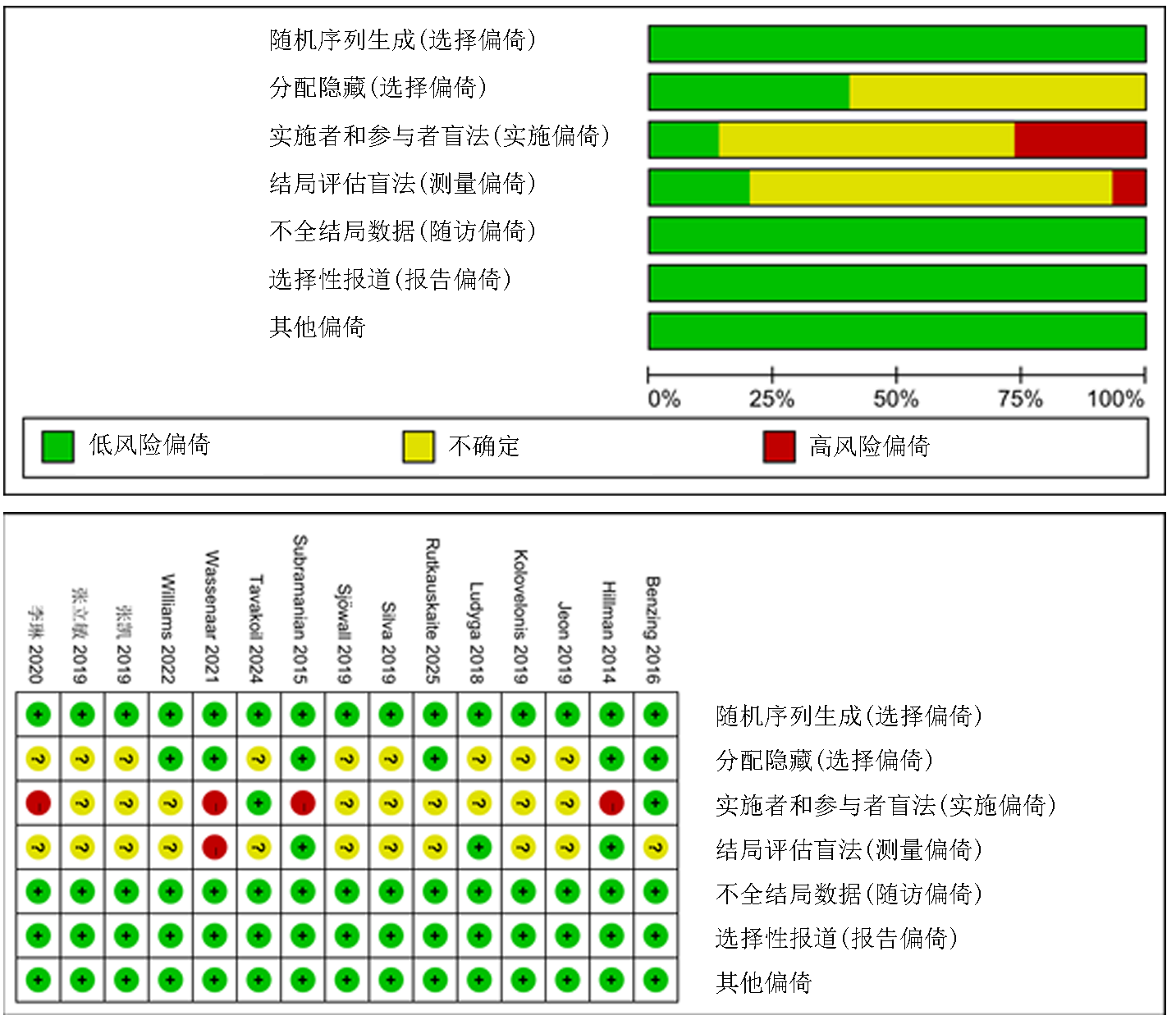
Fig.3 Risk of bias plot for the included studies
| 结局指标 | 纳入研究数(个) | 异质性检验结果 | 效应模型 | meta分析结果 | ||
|---|---|---|---|---|---|---|
| I2值(%) | P值 | SMD(95%CI) | P值 | |||
| 抑制 | 10 | 85.55 | <0.01 | 随机 | 0.36[0.04, 0.65] | <0.05 |
| 认知灵活性 | 8 | 98.47 | <0.01 | 随机 | 0.77[0.03, 1.51] | <0.05 |
| 工作记忆 | 9 | 95.37 | <0.01 | 随机 | 0.66[0.03, 0.70] | <0.05 |
Tab.2 Summary table of the traditional meta-analysis
| 结局指标 | 纳入研究数(个) | 异质性检验结果 | 效应模型 | meta分析结果 | ||
|---|---|---|---|---|---|---|
| I2值(%) | P值 | SMD(95%CI) | P值 | |||
| 抑制 | 10 | 85.55 | <0.01 | 随机 | 0.36[0.04, 0.65] | <0.05 |
| 认知灵活性 | 8 | 98.47 | <0.01 | 随机 | 0.77[0.03, 1.51] | <0.05 |
| 工作记忆 | 9 | 95.37 | <0.01 | 随机 | 0.66[0.03, 0.70] | <0.05 |
| 结局指标 | 亚组 | 纳入研究数 (个) | 异质性检验结果 | meta分析结果 | ||||
|---|---|---|---|---|---|---|---|---|
| I2值(%) | P值 | SMD(95%CI) | P值 | |||||
| 抑制 | 结局指标 | D-KEFS | 1 | - | - | 0.32[0.00, 0.64] | >0.05 | |
| Simon任务 | 1 | - | - | 1.62[1.04, 2.20] | <0.01 | |||
| DFT | 1 | - | - | 0.90[0.40, 1.39] | <0.01 | |||
| Stroop色词测验 | 4 | 0.00 | >0.05 | 0.17[-0.15, 0.48] | >0.05 | |||
| Flanker任务 | 3 | 60.69 | >0.05 | 0.09[-0.27, 0.45] | >0.05 | |||
| 干预措施 | 有氧运动 | 1 | - | - | 0.32[0.00, 0.64] | >0.05 | ||
| 认知体能游戏 | 2 | 71.27 | >0.05 | 1.24[0.53, 1.95] | <0.01 | |||
| 多模式运动 | 4 | 0.00 | >0.05 | 0.28[0.01, 0.56] | <0.05 | |||
| 抗阻运动 | 1 | - | - | 0.00[-0.63, 0.63] | >0.05 | |||
| 高强度间歇训练 | 2 | 0.00 | >0.05 | -0.04[-0.07, -0.01] | <0.05 | |||
| 剂量 | 20 min/次 | 2 | 0.00 | 0.05 | 0.29[0.01, 0.58] | 0.05 | ||
| 45~50 min/次 | 5 | 83.23 | <0.01 | 0.59[-0.03, 1.21] | >0.05 | |||
| 60 min/次 | 3 | 32.24 | >0.05 | 0.03[-0.23, 0.29] | >0.05 | |||
| 频率 | 2次/周 | 2 | 0.00 | >0.05 | -0.04[-0.07, -0.01] | <0.05 | ||
| 3次/周 | 4 | 84.18 | <0.01 | 0.49[-0.30, 1.28] | >0.05 | |||
| 5次/周 | 1 | - | - | 0.16[-0.49, 0.81] | >0.05 | |||
| 周期 | 2~4周 | 2 | 0.00 | >0.05 | 0.25[-0.19, 0.68] | >0.05 | ||
| 8周 | 3 | 87.71 | <0.01 | 0.60[-0.42, 1.62] | >0.05 | |||
| 10~12周 | 2 | 59.09 | >0.05 | 0.22[-0.43, 0.87] | >0.05 | |||
| 40周 | 1 | - | - | -0.04[-0.07, -0.01] | <0.05 | |||
| 认知灵活性 | 干预措施 | 有氧运动 | 2 | 95.99 | <0.01 | 1.96[-1.84, 5.75] | >0.05 | |
| 认知体能游戏 | 2 | 82.65 | <0.05 | 1.17[0.19, 2.16] | <0.05 | |||
| 多模式运动 | 3 | 0.00 | >0.05 | 0.20[0.04, 0.35] | <0.05 | |||
| 高强度间歇训练 | 1 | - | - | -0.01[-0.04, 0.03] | >0.05 | |||
| 剂量 | 15~20 min/次 | 2 | 62.21 | >0.05 | 0.31[-0.23, 0.86] | >0.05 | ||
| 45 min/次 | 2 | 86.58 | <0.05 | 1.15[0.14, 2.15] | <0.05 | |||
| 60~70 min/次 | 2 | 0.00 | >0.05 | -0.00[-0.03, 0.03] | >0.05 | |||
| 120 min/次 | 1 | - | - | 0.16[-0.05, 0.37] | >0.05 | |||
| 频率 | 2次/周 | 2 | 96.34 | <0.01 | 1.91[-1.98, 5.8] | >0.05 | ||
| 5~6次/周 | 2 | 0.00 | >0.05 | 0.15[-0.02, 0.31] | >0.05 | |||
| 工作记忆 | 结局指标 | N-back任务 | 5 | 96.65 | <0.01 | 0.78[-0.29, 1.84] | >0.05 | |
| WISC | 2 | 87.67 | <0.01 | 0.71[-0.73, 2.14] | >0.05 | |||
| VDST | 1 | - | - | 0.26[-0.23, 0.75] | >0.05 | |||
| Sternberg paradigm | 1 | - | - | 0.50[-0.44, 1.44] | >0.05 | |||
| 干预措施 | 有氧运动 | 2 | 87.67 | <0.01 | 0.71[-0.73, 2.14] | >0.05 | ||
| 多模式运动 | 3 | 0.00 | >0.05 | 0.36[0.05, 0.66] | <0.05 | |||
| 抗阻运动 | 2 | 96.81 | <0.01 | 1.62[-1.10, 4.33] | >0.05 | |||
| 高强度间歇训练 | 2 | 11.80 | >0.05 | 0.02[-0.22, 0.26] | >0.05 | |||
| 剂量 | 20 min/次 | 1 | - | - | 0.05[-0.27, 0.36] | >0.05 | ||
| 45~50min/次 | 4 | 94.26 | <0.01 | 0.99[-0.31, 2.29] | >0.05 | |||
| 60 min/次 | 3 | 26.73 | >0.05 | 0.07[-0.17, 0.30] | >0.05 | |||
| 频率 | 2次/周 | 2 | 0.00 | >0.05 | -0.01[-0.04, 0.02] | >0.05 | ||
| 3次/周 | 4 | 93.49 | <0.01 | 1.00[-0.32, 2.31] | >0.05 | |||
| 4次/周 | 1 | - | - | 1.52[0.56, 2.48] | <0.01 | |||
| 周期 | 2~4周 | 2 | 0.00 | >0.05 | 0.31[-0.12, 0.75] | >0.05 | ||
| 8周 | 2 | 96.81 | <0.01 | 1.62[-1.10, 4.33] | >0.05 | |||
| 10~12周 | 3 | 60.16 | >0.05 | 0.66[0.04, 1.29] | <0.05 | |||
| 40周 | 1 | - | - | -0.01[-0.04, 0.02] | >0.05 | |||
Tab.3 Summary table of subgroup analyses for each outcome measure
| 结局指标 | 亚组 | 纳入研究数 (个) | 异质性检验结果 | meta分析结果 | ||||
|---|---|---|---|---|---|---|---|---|
| I2值(%) | P值 | SMD(95%CI) | P值 | |||||
| 抑制 | 结局指标 | D-KEFS | 1 | - | - | 0.32[0.00, 0.64] | >0.05 | |
| Simon任务 | 1 | - | - | 1.62[1.04, 2.20] | <0.01 | |||
| DFT | 1 | - | - | 0.90[0.40, 1.39] | <0.01 | |||
| Stroop色词测验 | 4 | 0.00 | >0.05 | 0.17[-0.15, 0.48] | >0.05 | |||
| Flanker任务 | 3 | 60.69 | >0.05 | 0.09[-0.27, 0.45] | >0.05 | |||
| 干预措施 | 有氧运动 | 1 | - | - | 0.32[0.00, 0.64] | >0.05 | ||
| 认知体能游戏 | 2 | 71.27 | >0.05 | 1.24[0.53, 1.95] | <0.01 | |||
| 多模式运动 | 4 | 0.00 | >0.05 | 0.28[0.01, 0.56] | <0.05 | |||
| 抗阻运动 | 1 | - | - | 0.00[-0.63, 0.63] | >0.05 | |||
| 高强度间歇训练 | 2 | 0.00 | >0.05 | -0.04[-0.07, -0.01] | <0.05 | |||
| 剂量 | 20 min/次 | 2 | 0.00 | 0.05 | 0.29[0.01, 0.58] | 0.05 | ||
| 45~50 min/次 | 5 | 83.23 | <0.01 | 0.59[-0.03, 1.21] | >0.05 | |||
| 60 min/次 | 3 | 32.24 | >0.05 | 0.03[-0.23, 0.29] | >0.05 | |||
| 频率 | 2次/周 | 2 | 0.00 | >0.05 | -0.04[-0.07, -0.01] | <0.05 | ||
| 3次/周 | 4 | 84.18 | <0.01 | 0.49[-0.30, 1.28] | >0.05 | |||
| 5次/周 | 1 | - | - | 0.16[-0.49, 0.81] | >0.05 | |||
| 周期 | 2~4周 | 2 | 0.00 | >0.05 | 0.25[-0.19, 0.68] | >0.05 | ||
| 8周 | 3 | 87.71 | <0.01 | 0.60[-0.42, 1.62] | >0.05 | |||
| 10~12周 | 2 | 59.09 | >0.05 | 0.22[-0.43, 0.87] | >0.05 | |||
| 40周 | 1 | - | - | -0.04[-0.07, -0.01] | <0.05 | |||
| 认知灵活性 | 干预措施 | 有氧运动 | 2 | 95.99 | <0.01 | 1.96[-1.84, 5.75] | >0.05 | |
| 认知体能游戏 | 2 | 82.65 | <0.05 | 1.17[0.19, 2.16] | <0.05 | |||
| 多模式运动 | 3 | 0.00 | >0.05 | 0.20[0.04, 0.35] | <0.05 | |||
| 高强度间歇训练 | 1 | - | - | -0.01[-0.04, 0.03] | >0.05 | |||
| 剂量 | 15~20 min/次 | 2 | 62.21 | >0.05 | 0.31[-0.23, 0.86] | >0.05 | ||
| 45 min/次 | 2 | 86.58 | <0.05 | 1.15[0.14, 2.15] | <0.05 | |||
| 60~70 min/次 | 2 | 0.00 | >0.05 | -0.00[-0.03, 0.03] | >0.05 | |||
| 120 min/次 | 1 | - | - | 0.16[-0.05, 0.37] | >0.05 | |||
| 频率 | 2次/周 | 2 | 96.34 | <0.01 | 1.91[-1.98, 5.8] | >0.05 | ||
| 5~6次/周 | 2 | 0.00 | >0.05 | 0.15[-0.02, 0.31] | >0.05 | |||
| 工作记忆 | 结局指标 | N-back任务 | 5 | 96.65 | <0.01 | 0.78[-0.29, 1.84] | >0.05 | |
| WISC | 2 | 87.67 | <0.01 | 0.71[-0.73, 2.14] | >0.05 | |||
| VDST | 1 | - | - | 0.26[-0.23, 0.75] | >0.05 | |||
| Sternberg paradigm | 1 | - | - | 0.50[-0.44, 1.44] | >0.05 | |||
| 干预措施 | 有氧运动 | 2 | 87.67 | <0.01 | 0.71[-0.73, 2.14] | >0.05 | ||
| 多模式运动 | 3 | 0.00 | >0.05 | 0.36[0.05, 0.66] | <0.05 | |||
| 抗阻运动 | 2 | 96.81 | <0.01 | 1.62[-1.10, 4.33] | >0.05 | |||
| 高强度间歇训练 | 2 | 11.80 | >0.05 | 0.02[-0.22, 0.26] | >0.05 | |||
| 剂量 | 20 min/次 | 1 | - | - | 0.05[-0.27, 0.36] | >0.05 | ||
| 45~50min/次 | 4 | 94.26 | <0.01 | 0.99[-0.31, 2.29] | >0.05 | |||
| 60 min/次 | 3 | 26.73 | >0.05 | 0.07[-0.17, 0.30] | >0.05 | |||
| 频率 | 2次/周 | 2 | 0.00 | >0.05 | -0.01[-0.04, 0.02] | >0.05 | ||
| 3次/周 | 4 | 93.49 | <0.01 | 1.00[-0.32, 2.31] | >0.05 | |||
| 4次/周 | 1 | - | - | 1.52[0.56, 2.48] | <0.01 | |||
| 周期 | 2~4周 | 2 | 0.00 | >0.05 | 0.31[-0.12, 0.75] | >0.05 | ||
| 8周 | 2 | 96.81 | <0.01 | 1.62[-1.10, 4.33] | >0.05 | |||
| 10~12周 | 3 | 60.16 | >0.05 | 0.66[0.04, 1.29] | <0.05 | |||
| 40周 | 1 | - | - | -0.01[-0.04, 0.02] | >0.05 | |||
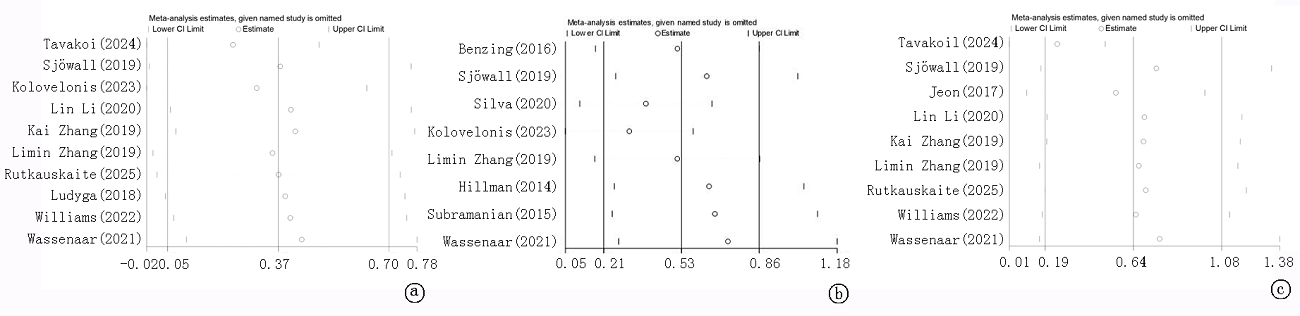
Fig.4 Sensitivity analysis a. Inhibition; b. Cognitive flexibility; c. Working memory
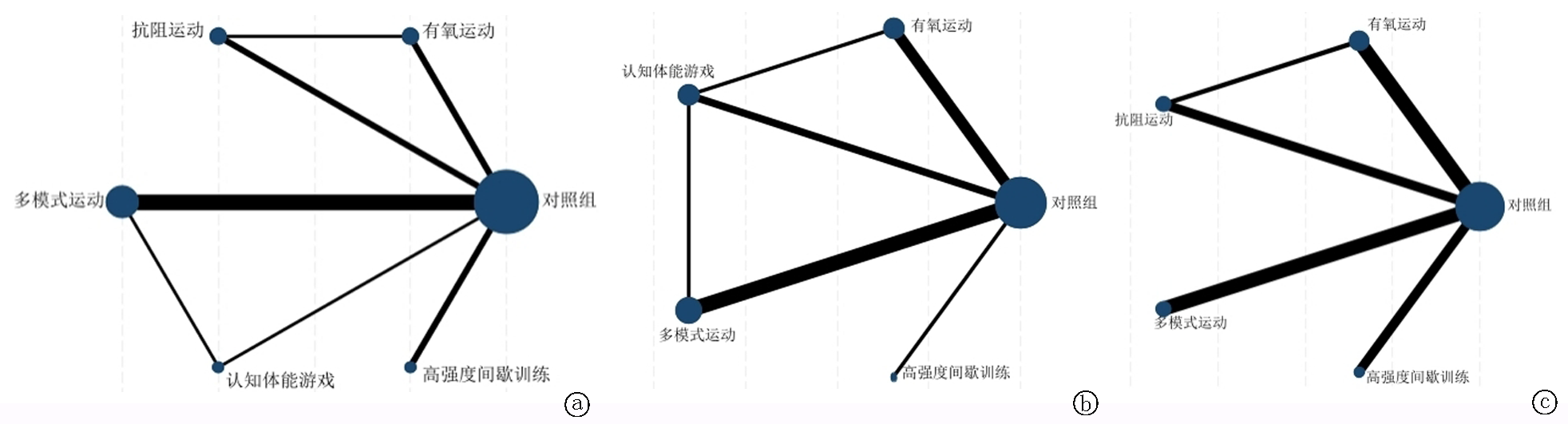
Fig.5 Network evidence plot a. Inhibition; b. Cognitive flexibility; c. Working memory

Fig.6 Cumulative probability ranking plot of the intervention effects of different exercise types on adolescent inhibition, cognitive flexibility, and working memory a. Inhibition; b. Cognitive flexibility; c. Working memory

Fig.7 Pairwise comparison results of the intervention effects of different exercise types on adolescent inhibition, cognitive flexibility, and working memory a. Inhibition; b. Cognitive flexibility; c. Working memory
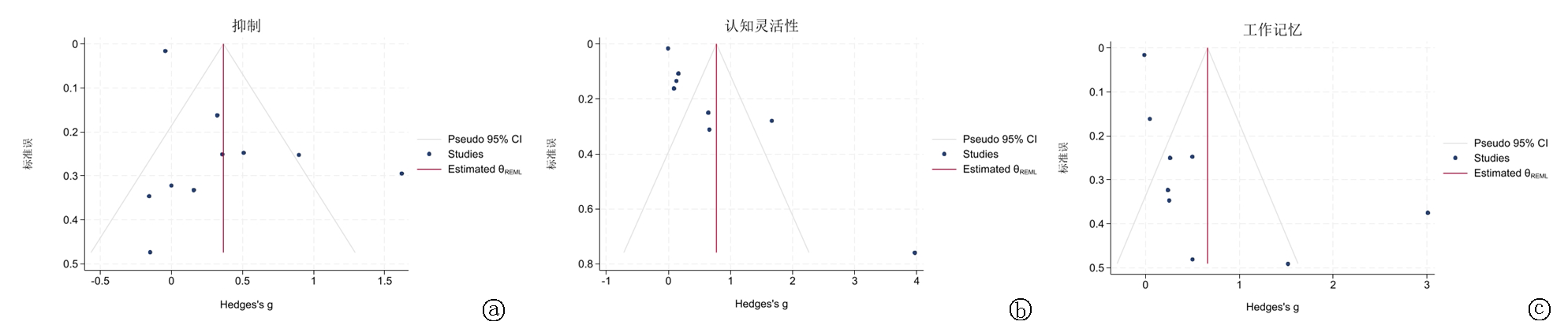
Fig.8 Funnel plot a. Inhibition; b. Cognitive flexibility; c. Working memory
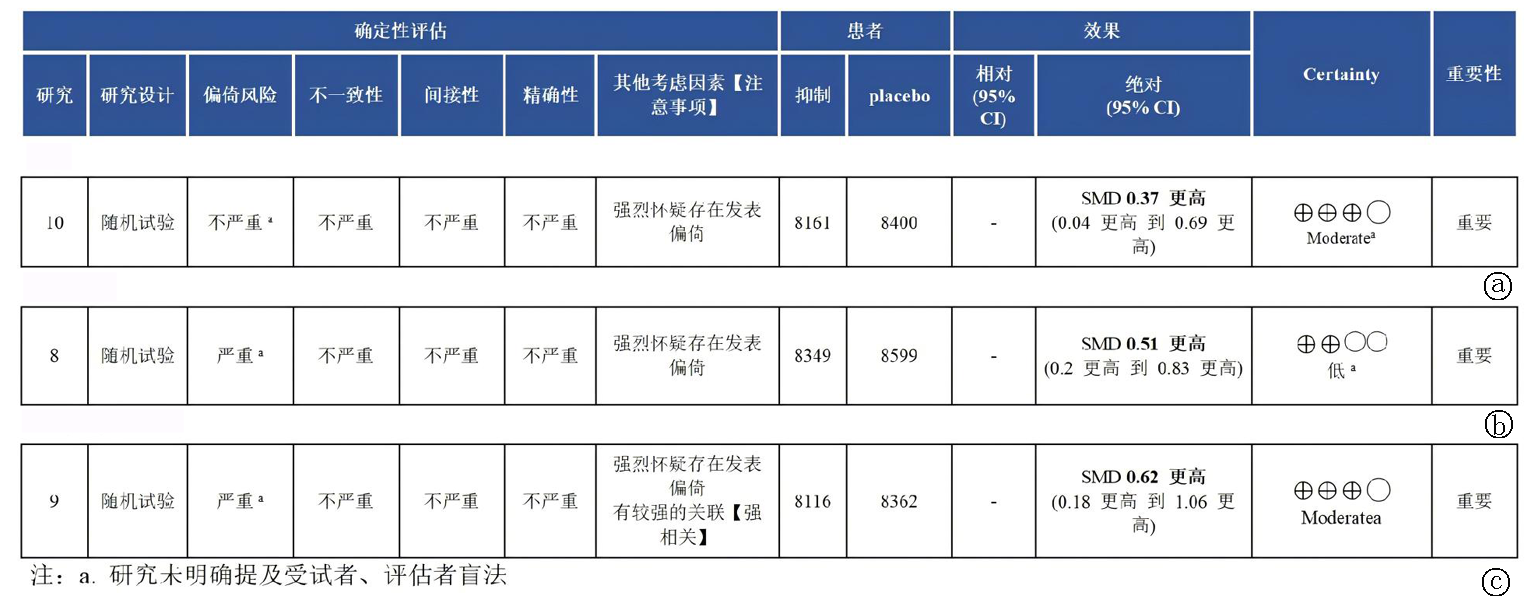
Fig.9 GRADE evidence quality assessment plot a. Inhibition; b. Cognitive flexibility; c. Working memory
| [1] |
Arnett JJ. Adolescent storm and stress, reconsidered[J]. Am Psychol, 1999, 54(5): 317-326. doi:10.1037/0003-066X.54.5.317.
pmid: 10354802 |
| [2] | Pan XF, Wang L, Pan A. Epidemiology and determinants of obesity in China[J]. Lancet Diabetes Endocrinol, 2021, 9(6): 373-392. doi: 10.1016/S2213-8587(21)00045-0. |
| [3] | 王兵. 全球及中国的肥胖症流行病学现状及趋势[J]. 中国普外基础与临床杂志, 2025, 32(6): 661-668. doi: 10.7507/1007-9424.202505133. |
| [4] | Chen K, Shen Z, Gu W, et al. Prevalence of obesity and associated complications in China: A cross-sectional, real-world study in 15.8 million adults[J]. Diabetes Obes Metab, 2023, 25(11): 3390-3399. doi: 10.1111/dom.15238. |
| [5] | 吴婷, 张文武, 杜亚松. 青少年抑郁障碍的研究与诊疗现状[J]. 现代实用医学, 2022, 34(4): 421-424. doi:10.3969/j.issn.1671-0800.2022.04.001. |
| [6] | 冯月, 王芳. 2015-2024年我国儿童青少年抑郁症状患病率的Meta分析[J]. 中国当代儿科杂志, 2025, 27(5): 529-539. doi:10.7499/j.issn.1008-8830.2409109. |
| [7] | 张诗婷, 黄霞, 刘春莹, 等. 1990-2021年中国10-24岁青少年焦虑症疾病负担及变化趋势分析[J]. 现代预防医学, 2025, 52(6): 1063-1068. doi: 10.20043/j.cnki.MPM.202410362. |
| [8] |
Padilla MM, Fernández-Serrano MJ, Verdejo García A, et al. Negative social evaluation impairs executive functions in adolescents with excess weight: Associations with autonomic responses[J]. Ann Behav Med, 2019, 53(4): 383-391. doi: 10.1093/abm/kay051.
pmid: 29939202 |
| [9] | Vilgis V, Silk TJ, Vance A. Executive function and attention in children and adolescents with depressive disorders: A systematic review[J]. Eur Child Adolesc Psychiatry, 2015, 24(4): 365-384. doi: 10.1007/s00787-015-0675-7. |
| [10] |
Han G, Helm J, Iucha C, et al. Are executive functioning deficits concurrently and predictively associated with depressive and anxiety symptoms in adolescents?[J]. J Clin Child Adolesc Psychol, 2016, 45(1): 44-58. doi: 10.1080/15374416.2015.1041592.
pmid: 26042358 |
| [11] |
Mamrot P, Han'c T. The association of the executive functions with overweight and obesity indicators in children and adolescents: A literature review[J]. Neurosci Biobehav Rev, 2019, 107: 59-68. doi: 10.1016/j.neubiorev.2019.08.021.
pmid: 31470031 |
| [12] |
Diamond A. Executive functions[J]. Annu Rev Psychol, 2013, 64: 135-168. doi: 10.1146/annurev-psych-113011-143750.
pmid: 23020641 |
| [13] | Miyake A, Friedman NP, Emerson MJ, et al. The unity and diversity of executive functions and their contributions to complex “frontal lobe” tasks: A latent variable analysis[J]. Cogn Psychol, 2000, 41(1): 49-100. doi: 10.1006/cogp.1999.0734. |
| [14] |
Cowan N. Working memory underpins cognitive development, learning, and education[J]. Educ Psychol Rev, 2014, 26(2): 197-223. doi: 10.1007/s10648-013-9246-y.
pmid: 25346585 |
| [15] |
Hofmann W, Schmeichel BJ, Baddeley AD. Executive functions and self-regulation[J]. Trends Cogn Sci, 2012, 16(3): 174-180. doi: 10.1016/j.tics.2012.01.006.
pmid: 22336729 |
| [16] |
Diamond A. Close interrelation of motor development and cognitive development and of the cerebellum and prefrontal cortex[J]. Child Dev, 2000, 71(1): 44-56. doi: 10.1111/1467-8624.00117.
pmid: 10836557 |
| [17] |
Hillman CH, Erickson KI, Kramer AF. Be smart, exercise your heart: Exercise effects on brain and cognition[J]. Nat Rev Neurosci, 2008, 9(1): 58-65. doi: 10.1038/nrn2298.
pmid: 18094706 |
| [18] | Kolb B, Whishaw IQ. Brain plasticity and behavior[J]. Annu Rev Psychol, 1998, 49(1): 43-64. doi: 10.1146/annurev.psych.49.1.43. |
| [19] |
Harrison BJ, Shaw M, Yücel M, et al. Functional connectivity during Stroop task performance[J]. Neuroimage, 2005, 24(1): 181-191. doi: 10.1016/j.neuroimage.2004.08.033.
pmid: 15588609 |
| [20] |
Vaynman SS, Ying Z, Yin D, et al. Exercise differentially regulates synaptic proteins associated to the function of BDNF[J]. Brain Res, 2006, 1070(1): 124-130. doi: 10.1016/j.brainres.2005.11.062.
pmid: 16413508 |
| [21] | Kujach S, Olek RA, Byun K, et al. Acute sprint interval exercise increases both cognitive functions and peripheral neurotrophic factors in humans: The possible involvement of lactate[J]. Front Neurosci, 2020, 13: 1455. doi: 10.3389/fnins.2019.01455. |
| [22] | Henckens MJ, Van Wingen GA, Joëls M, et al. Time-dependent effects of cortisol on selective attention and emotional interference: A functional MRI study[J]. Front Integr Neurosci, 2012, 6: 66. doi: 10.3389/fnint.2012.00066. |
| [23] | Verburgh L, Königs M, Scherder EJ, et al. Physical exercise and executive functions in preadolescent children, adolescents and young adults: A meta-analysis[J]. Br J Sports Med, 2014, 48(12): 973-979. doi: 10.1136/bjsports-2012-091441. |
| [24] | Xue Y, Yang Y, Huang T. Effects of chronic exercise interventions on executive function among children and adolescents: A systematic review with meta-analysis[J]. Br J Sports Med, 2019, 53(22): 1397-1404. doi: 10.1136/bjsports-2018-099825. |
| [25] | Liu S, Yu Q, Li Z, et al. Effects of acute and chronic exercises on executive function in children and adolescents: A systemic review and meta-analysis[J]. Front Psychol, 2020, 11: 554915. doi: 10.3389/fpsyg.2020.554915. |
| [26] |
Park S, Etnier JL. Beneficial effects of acute exercise on executive function in adolescents[J]. J Phys Act Health, 2019, 16(6): 423-429. doi: 10.1123/jpah.2018-0219.
pmid: 31010372 |
| [27] | Hu S, Shi P, Zhang Z, et al. Effects of open-skill exercise on executive functions in children and adolescents: A systematic review and meta-analysis[J]. Front Hum Neurosci, 2025, 18: 1495371. doi: 10.3389/fnhum.2024.1495371. |
| [28] | Reyes-Amigo T, Bezerra A, Gomez-Mazorra M, et al. Effects of high-intensity interval training on executive functions in children and adolescents: A systematic review and meta-analysis[J]. Physical Activity Review, 2022, 10(2): 77-87. doi: 10.16926/par.2022.10.23. |
| [29] | Wang H, Cheng G, Li MM. The effectiveness and sustained effects of exercise therapy to improve executive function in children and adolescents with autism: A systematic review and meta-analysis[J]. Eur J Pediatr, 2025, 184(5): 286. doi: 10.1007/s00431-025-06115-7. |
| [30] | Song Y, Fan B, Wang C, et al. Meta-analysis of the effects of physical activity on executive function in children and adolescents with attention deficit hyperactivity disorder[J]. PLoS One, 2023, 18(8): e0289732. doi: 10.1371/journal.pone.0289732. |
| [31] | Benzing V, Heinks T, Eggenberger N, et al. Acute cognitively engaging exergame-based physical activity enhances executive functions in adolescents[J]. PLos One, 2016, 11(12): e0167501. doi: 10.1371/journal.pone.0167501. |
| [32] | Tavakoli MHM, Shojaei M, Molanorouzl K. Effects of physical activity on sleep quality, inhibitory control, working memory and cognitive flexibility among adolescent students[J]. Revista Iberoamericana de Psicología del Ejercicio y el Deporte, 2024, 19(4): 398-401. |
| [33] | Sjöwall D, Thorell LB, Mandic M, et al. No effects of a long-term physical activity intervention on executive functioning among adolescents[J]. SAGE Open Med, 2019, 7: 2050312119880734. doi: 10.1177/2050312119880734. |
| [34] |
Silva LAD, Doyenart R, Henrique Salvan P, et al. Swimming training improves mental health parameters, cognition and motor coordination in children with attention deficit hyperactivity disorder[J]. Int J Environ Health Res, 2020, 30(5): 584-592. doi: 10.1080/09603123.2019.1612041.
pmid: 31081373 |
| [35] | Jeon YK, Ha CH. The effect of exercise intensity on brain derived neurotrophic factor and memory in adolescents[J]. Environ Health Prev Med, 2017, 22(1): 27. doi: 10.1186/s12199-017-0643-6. |
| [36] | Kolovelonis A, Goudas M. The effects of cognitively challenging physical activity games versus health-related fitness activities on students’ executive functions and situational interest in physical education: A group-randomized controlled trial[J]. Eur J Investig Health Psychol Educ, 2023, 13(5): 796-809. doi: 10.3390/ejihpe13050060. |
| [37] | 李琳, 崔洁, 项琪, 等. 8周不同类型的运动对女大学生执行功能的影响[J]. 中国运动医学杂志, 2020, 39(10): 810-816. doi: 10.16038/j.1000-6710.2020.10.010. |
| [38] | 张凯, 魏源. 五体球运动对高中生执行功能的影响[J]. 湖北体育科技, 2019, 38(6): 514-518. |
| [39] | 张立敏, 喻青, 查圣祥. 中等强度足球锻炼对小学生执行功能的影响[J]. 体育成人教育学刊, 2019, 35(3): 74-79. doi: 10.16419/j.cnki.42-1684/g8.20190524.010. |
| [40] | Rutkauskaite R, Gruodyte-Raciene R, Pliuskute G, et al. The influence of short-term dance-oriented exergaming on cognitive skills and psychological well-being of adolescents[J]. Educ Sci, 2025, 15(4): 508. doi: 10.3390/educsci15040508. |
| [41] | Hillman CH, Pontifex MB, Castelli DM, et al. Effects of the FITKids randomized controlled trial on executive control and brain function[J]. Pediatrics, 2014, 134(4): e1063-e1071. doi: 10.1542/peds.2013-3219. |
| [42] | Ludyga S, Gerber M, Herrmann C, et al. Chronic effects of exercise implemented during school-break time on neurophysiological indices of inhibitory control in adolescents[J]. Trends Neurosci Educ, 2018, 10: 1-7. doi: 10.1016/j.tine.2017.11.001. |
| [43] | Subramanian SK, Sharma VK, Arunachalam V, et al. Effect of structured and unstructured physical activity training on cognitive functions in adolescents-a randomized control trial[J]. J Clin Diagn Res, 2015, 9(11): CC04. doi: 10.7860/JCDR/2015/14881.6818. |
| [44] | Williams RA, Dring KJ, Morris JG, et al. Effect of two-weeks of school-based sprint training on physical fitness, risk factors for cardiometabolic diseases and cognitive function in adolescent girls: A randomized controlled pilot trial[J]. Front Sports Act Living, 2022, 4: 884051. doi: 10.3389/fspor.2022.884051. |
| [45] |
Wassenaar TM, Wheatley CM, Beale N, et al. The effect of a one-year vigorous physical activity intervention on fitness, cognitive performance and mental health in young adolescents: The fit to study cluster randomised controlled trial[J]. Int J Behav Nutr Phys Act, 2021, 18(1): 47. doi: 10.1186/s12966-021-01113-y.
pmid: 33789683 |
| [46] |
Best JR. Exergaming immediately enhances children's executive function[J]. Dev Psychol, 2012, 48(5): 1501. doi: 10.1037/a0026648.
pmid: 22148945 |
| [47] |
Anderson-Hanley C, Arciero PJ, Brickman AM, et al. Exergaming and older adult cognition: A cluster randomized clinical trial[J]. Am J Prev Med, 2012, 42(2): 109-119. doi: 10.1016/j.amepre.2011.10.016.
pmid: 22261206 |
| [48] |
Karr JE, Areshenkoff CN, Rast P, et al. An empirical comparison of the therapeutic benefits of physical exercise and cognitive training on the executive functions of older adults: A meta-analysis of controlled trials[J]. Neuropsychology, 2014, 28(6): 829. doi: 10.1037/neu0000101.
pmid: 24933486 |
| [49] |
Toril P, Reales JM, Ballesteros S. Video game training enhances cognition of older adults: A meta-analytic study[J]. Psychol Aging, 2014, 29(3): 706. doi:10.1037/a0037507.
pmid: 25244488 |
| [50] |
Swinburn BA, Sacks G, Hall KD, et al. The global obesity pandemic: Shaped by global drivers and local environments[J]. lancet, 2011, 378(9793): 804-814. doi: 10.1016/S0140-6736(11)60813-1.
pmid: 21872749 |
| [51] | Navon D, Gopher D. On the economy of the human-processing system[J]. Psychol Rev, 1979, 86(3): 214. doi:10.1037/0033-295X.86.3.214. |
| [52] |
Navon D, Miller J. Role of outcome conflict in dual-task interference[J]. J Exp Psychol Human, 1987, 13(3): 435. doi: 10.1037/0096-1523.13.3.435.
pmid: 2958592 |
| [53] |
Harlow HF. The formation of learning sets[J]. Psychol Rev, 1949, 56(1): 51. doi: 10.1037/h0062474.
pmid: 18124807 |
| [54] |
Schott N, Klotzbier TJ. Profiles of cognitive-motor interference during walking in children: Does the motor or the cognitive task matter?[J]. Front Psychol, 2018, 9: 947. doi: 10.3389/fpsyg.2018.00947.
pmid: 29951020 |
| [55] |
Lcour M, Bernard-Demanze L, Dumitrescu M. Posture control, aging, and attention resources: Models and posture-analysis methods[J]. Neurophysiol Clin, 2008, 38(6): 411-421. doi: 10.1016/j.neucli.2008.09.005.
pmid: 19026961 |
| [56] |
Ludyga S, Gerber M, Brand S, et al. Acute effects of moderate aerobic exercise on specific aspects of executive function in different age and fitness groups: A meta-analysis[J]. Psychophysiology, 2016, 53(11): 1611-1626. doi: 10.1111/psyp.12736.
pmid: 27556572 |
| [57] | Zang W, Zhu J, Xiao N, et al. Effects of aerobic exercise on children's executive function and academic performance: A systematic review and meta-analysis[J]. Heliyon, 2024, 10(7): e28633. doi: 10.1016/j.heliyon.2024.e28633. |
| [58] |
Guiney H, Machado L. Benefits of regular aerobic exercise for executive functioning in healthy populations[J]. Psychon Bull Rev, 2013, 20(1): 73-86. doi: 10.3758/s13423-012-0345-4.
pmid: 23229442 |
| [59] | Chang YK, Chu C H, Wang CC, et al. Dose-response relation between exercise duration and cognition[J]. Med Sci Sports Exerc, 2015, 47(1): 159-165. doi: 10.1249/MSS.0000000000000383. |
| [60] | Sibley BA, Etnier JL, Le Masurier GC. Effects of an acute bout of exercise on cognitive aspects of Stroop performance[J]. J Sport Exercise Psy, 2006, 28(3): 285-299. doi: 10.1123/jsep.28.3.285. |
| [61] | Hillmasibley BA, Etnier JL, Le Masurier GC. Effects of an acute bout of exercise on cognitive aspects of Stroop performance[J]. J Sport Exercise Psy, 2006, 28(3): 285-299. doi: https://doi.org/10.1123/jsep.28.3.285. |
| [62] | Joyce J, Graydon J, McMorris T, et al. The time course effect of moderate intensity exercise on response execution and response inhibition[J]. Brain Cogn, 2009, 71(1): 14-19. doi: 10.1016/j.bandc.2009.03.004. |
| [63] | Moriarty T, Bourbeau K, Bellovary B, et al. Exercise intensity influences prefrontal cortex oxygenation during cognitive testing[J]. Behav Sci, 2019, 9(8): 83. doi: 10.3390/bs9080083. |
| Viewed | ||||||
|
Full text |
|
|||||
|
Abstract |
|
|||||