临床荟萃 ›› 2026, Vol. 41 ›› Issue (7): 608-613.doi: 10.3969/j.issn.1004-583X.2026.07.005

• 论著 • 上一篇    下一篇

2024-2026年我国哨点监测呼吸道病原体流行特征分析

韩艳()   

  1. 河南医药大学 医学技术学院, 河南 新乡 453003
  • 收稿日期:2026-06-03 出版日期:2026-07-20 发布日期:2026-07-17
  • 通讯作者: 韩艳,Email:15222981221@163.com

Epidemiological characteristics of respiratory pathogens under sentinel surveillance in China, 2024-2026

Han Yan()   

  1. School of Medical Technology, Henan Medical University, Xinxiang 453003, China
  • Received:2026-06-03 Online:2026-07-20 Published:2026-07-17
  • Contact: Han Yan,Email:15222981221@163.com

摘要:

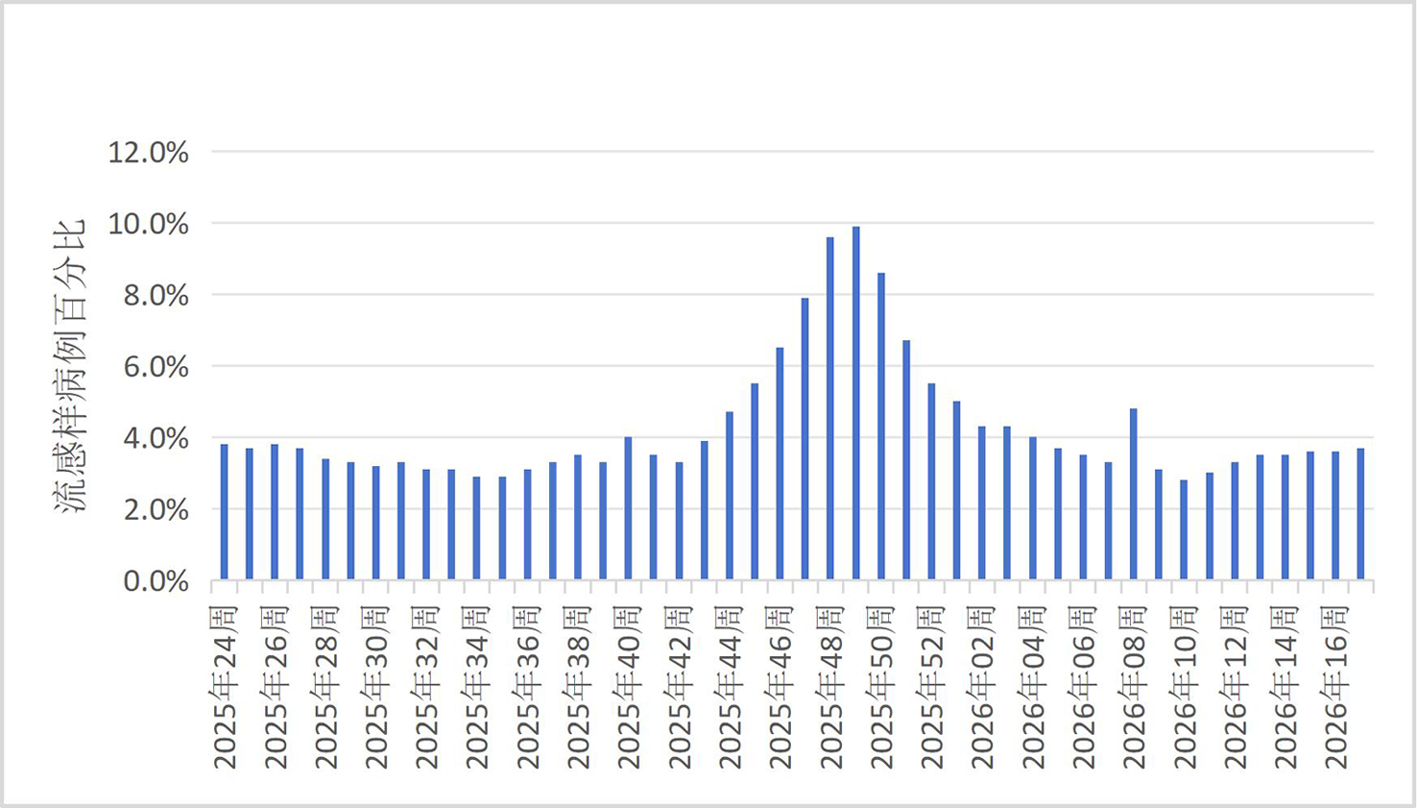
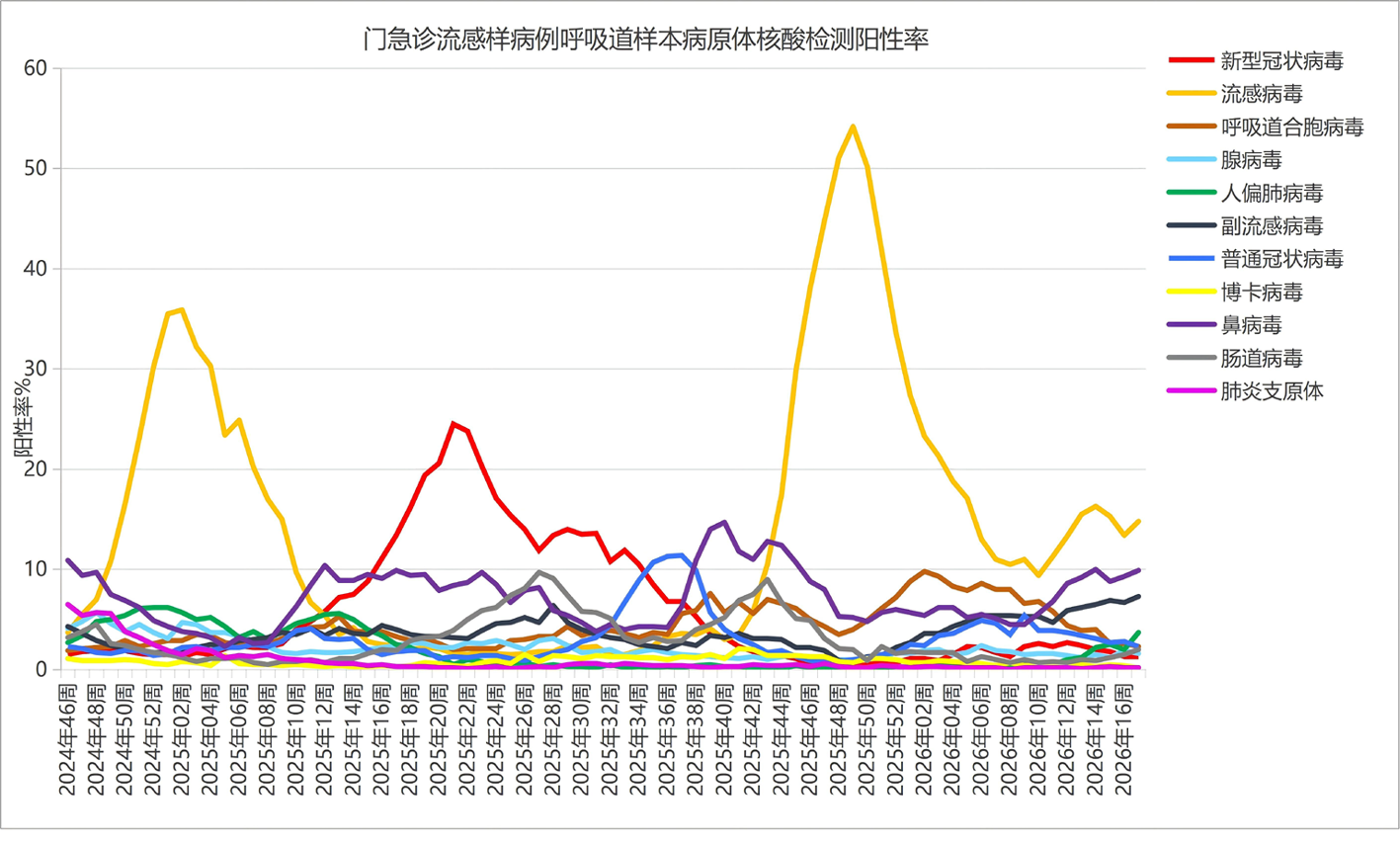
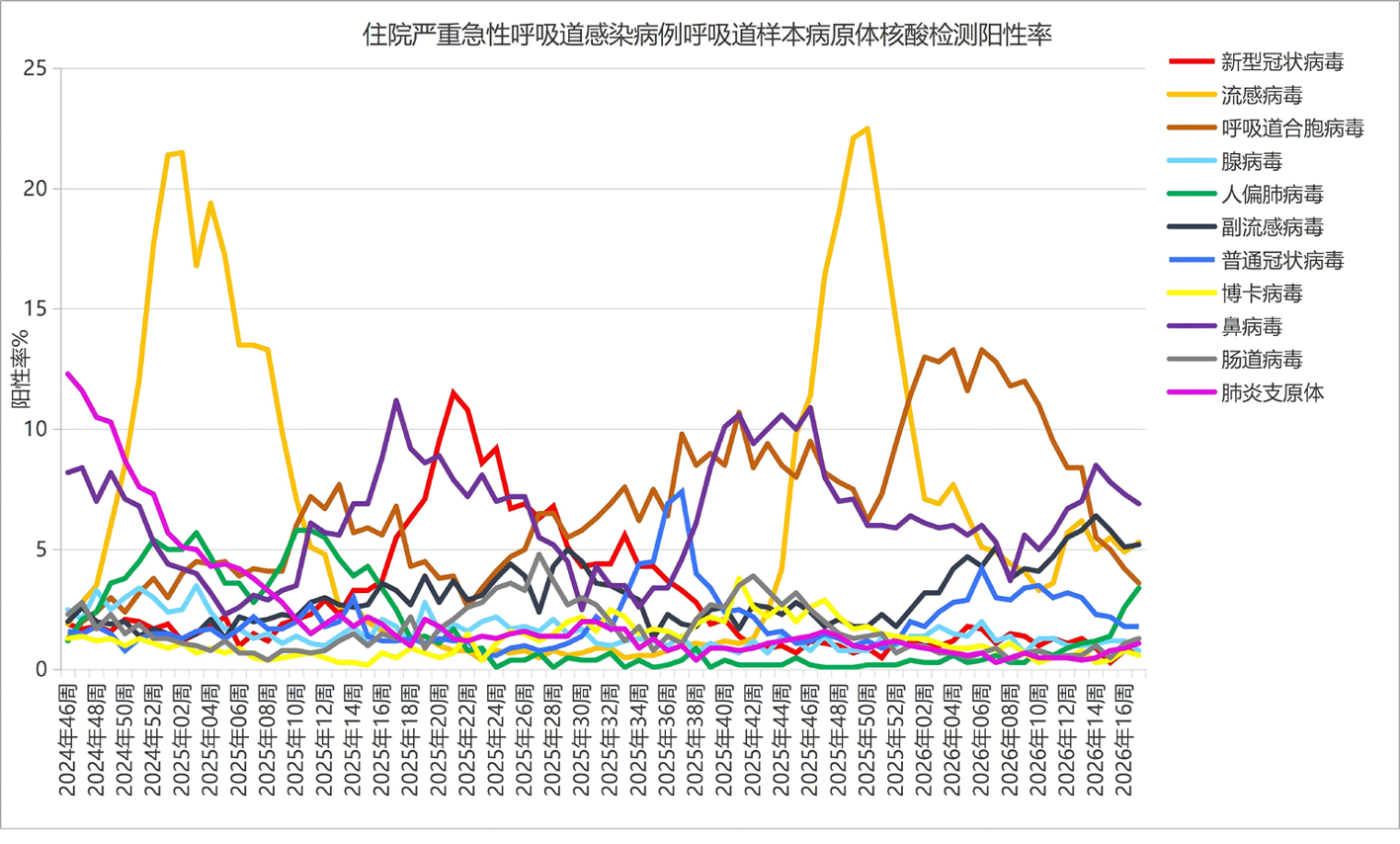
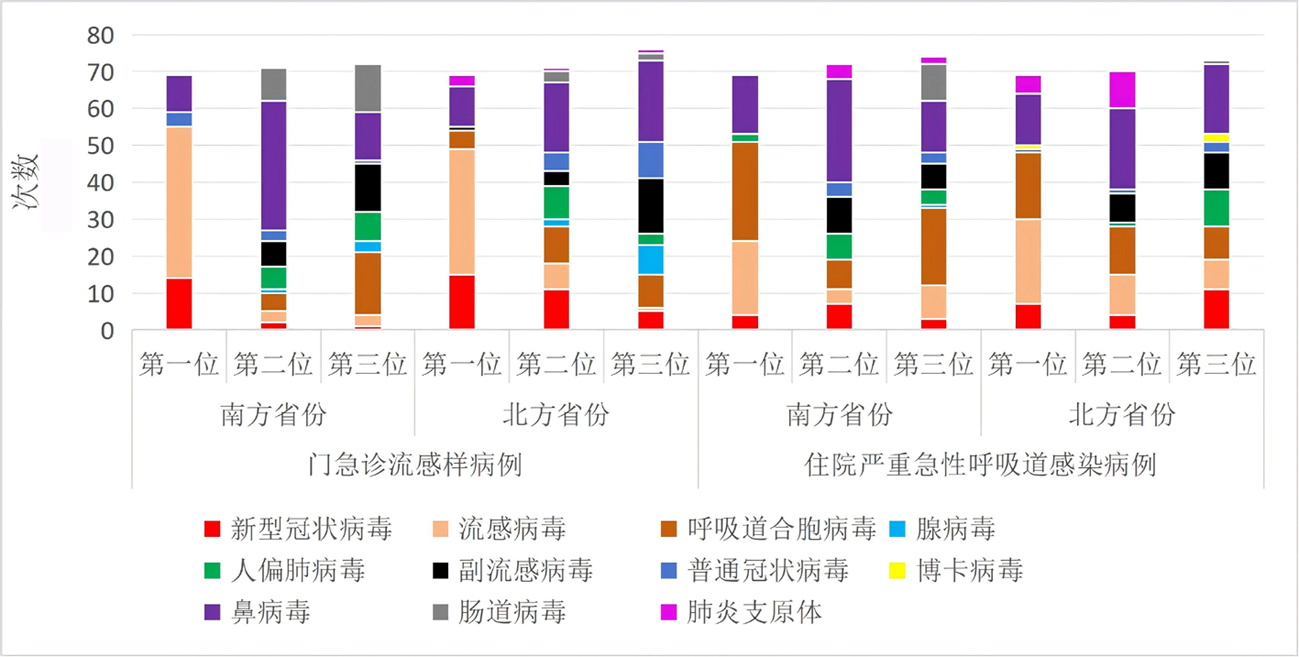
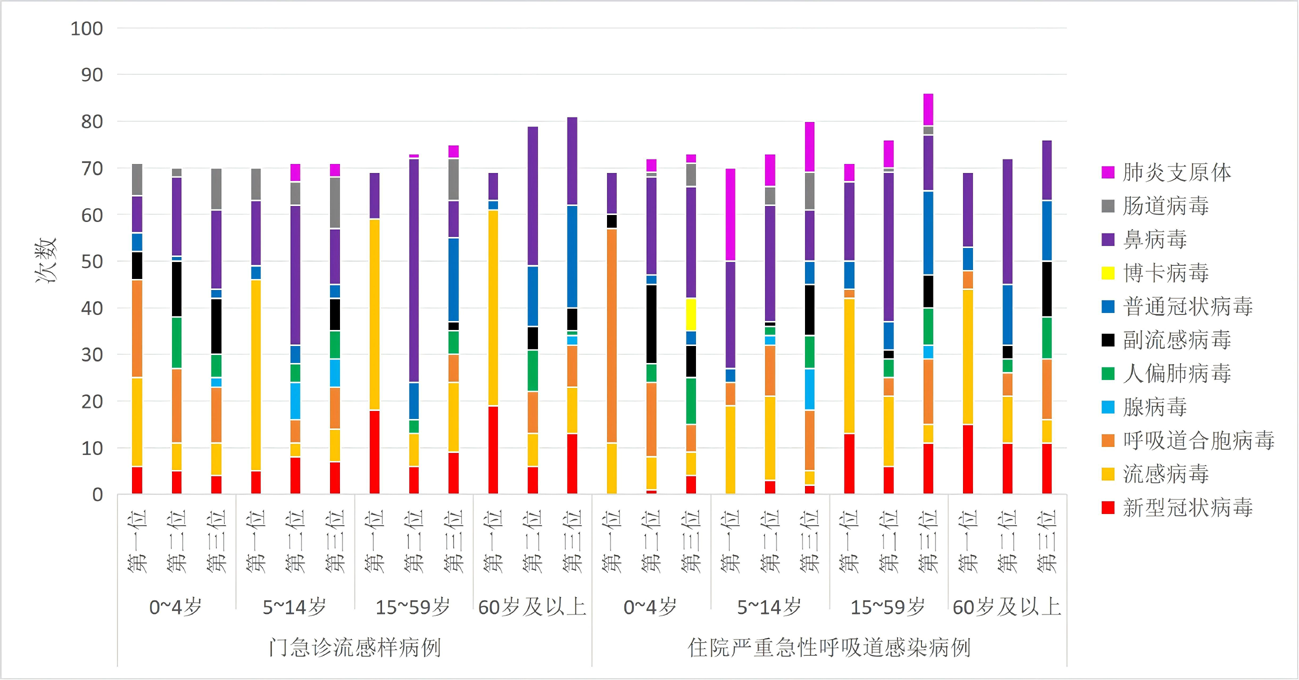
目的 分析2024-2026年我国哨点监测急性呼吸道传染病多种病原体的流行特征,为呼吸道感染的临床诊疗与科学防控提供依据。方法 收集中国疾病预防控制中心公布的2024年46周-2026年17周全国急性呼吸道传染病哨点监测病原体的流行数据,对新型冠状病毒、流感病毒、呼吸道合胞病毒、腺病毒、人偏肺病毒、副流感病毒、普通冠状病毒、博卡病毒、鼻病毒和肠道病毒等10种病毒以及肺炎支原体在内的多种呼吸道病原体数据,按照流行病学周阳性率、地域、年龄进行统计学分析。结果 门急诊流感样病例呼吸道病原体核酸检测阳性率最高的是流感病毒,冬春季节流行,最高检出率为54.2%。其次是新型冠状病毒和鼻病毒。住院严重急性呼吸道感染病例呼吸道病原体核酸检测阳性率最高的是呼吸道合胞病毒,其次是流感病毒和鼻病毒。不同地域和年龄病原体流行特征存在差异,多种病原体存在共流行特征。结论 不同病原体流行特征存在明显的季节性、地域性和年龄差异,建议针对不同地域、年龄人群和季节变化,制定差异化的临床诊疗和防控策略。

关键词: 急性呼吸道传染病, 呼吸道病原体, 流行特征

Abstract:

Objective To analyze the epidemiological characteristics of multiple pathogens causing acute respiratory infections under sentinel surveillance in China from 2024 to 2026, and to provide evidence for clinical diagnosis, treatment, and scientific prevention and control of respiratory infections. Methods Epidemiological data on pathogens from national sentinel surveillance of acute respiratory infections, as released by the Chinese Center for Disease Control and Prevention, were collected from week 46 of 2024 to week 17 of 2026. Data on multiple respiratory pathogens, including 10 viruses-severe acute respiratory syndrome coronavirus 2, influenza virus, respiratory syncytial virus, adenovirus, human metapneumovirus, parainfluenza virus, common coronavirus, bocavirus, rhinovirus, and enterovirus-as well as Mycoplasma pneumoniae, were statistically analyzed according to weekly positivity rates, geographic region, and age. Results Among outpatient and emergency department patients with influenza-like illness, influenza virus had the highest nucleic acid positivity rate among respiratory pathogens, with a winter-spring predominance and a maximum detection rate of 54.2%. This was followed by severe acute respiratory syndrome coronavirus 2 and rhinovirus. Among hospitalized patients with severe acute respiratory infection, respiratory syncytial virus showed the highest nucleic acid positivity rate, followed by influenza virus and rhinovirus. The epidemiological characteristics of pathogens varied across regions and age groups, and co-circulation of multiple pathogens was observed. Conclusion The epidemiological characteristics of different respiratory pathogens show marked seasonal, geographic, and age-related differences. Differential clinical diagnosis, treatment, and prevention and control strategies should be developed according to regional, age-specific, and seasonal variations.

Key words: acute respiratory infectious diseases, respiratory pathogens, epidemiological characteristics

中图分类号: