Clinical Focus ›› 2026, Vol. 41 ›› Issue (1): 12-17.doi: 10.3969/j.issn.1004-583X.2026.01.002
• Original article • Previous Articles Next Articles
TyG and TyG-BMI indices predict major adverse cardiovascular events after emergency revascularization for acute myocardial infarction
Ouyang Weili( ), Jiang Yile
Department of Cardiology ,the People's Hospital of Danyang, Affiliated Danyang Hospital of Nantong University Danyang 212300, China
-
Received:2025-12-11Online:2026-01-20Published:2026-02-02 -
Contact:Ouyang Weili E-mail:734514789@qq.com

CLC Number:
Cite this article
Ouyang Weili, Jiang Yile. TyG and TyG-BMI indices predict major adverse cardiovascular events after emergency revascularization for acute myocardial infarction[J]. Clinical Focus, 2026, 41(1): 12-17.
share this article
Add to citation manager EndNote|Ris|BibTeX
URL: https://www.lchc.cn/EN/10.3969/j.issn.1004-583X.2026.01.002
| 项目 | 对照组(n=96) | NSTEMI组(n=40) | STEMI组(n=161) | χ2/F/Z值 | P值 |
|---|---|---|---|---|---|
| 年龄(岁) | 61.06±9.02 | 59.10±11.58 | 61.16±11.92 | 0.584 | 0.558 |
| 男[例(%)] | 43(44.79) | 36(90.00)* | 121(75.16)* | 36.000 | <0.01 |
| 高血压[例(%)] | 63(65.63) | 31(77.50) | 117(72.67) | 2.390 | 0.303 |
| 糖尿病[例(%)] | 15(15.63) | 10(25.00) | 53(32.92)* | 9.330 | <0.01 |
| BMI(kg/m2) | 24.53±3.42 | 26.28±3.40* | 26.91±3.62* | 13.800 | <0.01 |
| FBG(mmol/L) | 5.31±1.33 | 6.83±2.57* | 7.55±3.76* | 16.480 | <0.01 |
| TG(mmol/L) | 1.52±0.63 | 2.16±1.28* | 2.66±1.57*# | 23.40 | <0.01 |
| TyG指数 | 8.66±0.50 | 9.16±0.72* | 9.46±0.69*# | 47.420 | <0.01 |
| TyG-BMI指数 | 212.74±33.27 | 241.04±39.49* | 255.50±44.45*# | 33.560 | <0.01 |
| TC(mmol/L) | 4.49±1.08 | 4.81±1.08 | 4.93±1.02* | 5.250 | <0.01 |
| LDL(mmol/L) | 2.49±0.74 | 2.92±0.81* | 3.04±0.79* | 15.410 | <0.01 |
| HDL(mmol/L) | 1.19±0.28 | 1.08±0.31* | 1.11±0.24* | 3.630 | 0.028 |
| Cr(μmol/L) | 63.23±15.32 | 71.29±13.61* | 71.74±20.77* | 6.880 | <0.01 |
| UA(μmol/L) | 313.31±75.11 | 338.29±83.41 | 340.25±101.26 | 2.760 | 0.065 |
| LVEF(%) | 68.06±3.94 | 64.08±6.05* | 60.65±9.17*# | 29.880 | <0.01 |
| LVDd(mm) | 47.25±4.87 | 50.00±4.61* | 50.57±6.05* | 11.130 | <0.01 |
| cTnI(μg/L) | 0.01(0.00, 0.10) | 23.20(8.78, 36.29)* | 35.90(24.91, 56.43)*# | 202.620 | <0.01 |
| NT-proBNP(ng/L) | - | 765.97(321.00, 1720.23) | 1095.25(448.27, 2110.86) | 2669.000 | 0.105 |
| Gensini评分(分) | 1.67±1.98 | 78.85±20.89* | 87.87±18.05*# | 948.690 | <0.01 |
| Killip分级(Ⅰ/Ⅱ/Ⅲ/Ⅳ) | - | 36/4/0/0 | 125/27/3/6 | 18.260 | <0.01 |
| MACE(24个月)[例(%)] | 1(1.04) | 5(12.50)* | 21(13.04)* | 9.540 | <0.01 |
Tab.1 Clinical baseline data among the three groups
| 项目 | 对照组(n=96) | NSTEMI组(n=40) | STEMI组(n=161) | χ2/F/Z值 | P值 |
|---|---|---|---|---|---|
| 年龄(岁) | 61.06±9.02 | 59.10±11.58 | 61.16±11.92 | 0.584 | 0.558 |
| 男[例(%)] | 43(44.79) | 36(90.00)* | 121(75.16)* | 36.000 | <0.01 |
| 高血压[例(%)] | 63(65.63) | 31(77.50) | 117(72.67) | 2.390 | 0.303 |
| 糖尿病[例(%)] | 15(15.63) | 10(25.00) | 53(32.92)* | 9.330 | <0.01 |
| BMI(kg/m2) | 24.53±3.42 | 26.28±3.40* | 26.91±3.62* | 13.800 | <0.01 |
| FBG(mmol/L) | 5.31±1.33 | 6.83±2.57* | 7.55±3.76* | 16.480 | <0.01 |
| TG(mmol/L) | 1.52±0.63 | 2.16±1.28* | 2.66±1.57*# | 23.40 | <0.01 |
| TyG指数 | 8.66±0.50 | 9.16±0.72* | 9.46±0.69*# | 47.420 | <0.01 |
| TyG-BMI指数 | 212.74±33.27 | 241.04±39.49* | 255.50±44.45*# | 33.560 | <0.01 |
| TC(mmol/L) | 4.49±1.08 | 4.81±1.08 | 4.93±1.02* | 5.250 | <0.01 |
| LDL(mmol/L) | 2.49±0.74 | 2.92±0.81* | 3.04±0.79* | 15.410 | <0.01 |
| HDL(mmol/L) | 1.19±0.28 | 1.08±0.31* | 1.11±0.24* | 3.630 | 0.028 |
| Cr(μmol/L) | 63.23±15.32 | 71.29±13.61* | 71.74±20.77* | 6.880 | <0.01 |
| UA(μmol/L) | 313.31±75.11 | 338.29±83.41 | 340.25±101.26 | 2.760 | 0.065 |
| LVEF(%) | 68.06±3.94 | 64.08±6.05* | 60.65±9.17*# | 29.880 | <0.01 |
| LVDd(mm) | 47.25±4.87 | 50.00±4.61* | 50.57±6.05* | 11.130 | <0.01 |
| cTnI(μg/L) | 0.01(0.00, 0.10) | 23.20(8.78, 36.29)* | 35.90(24.91, 56.43)*# | 202.620 | <0.01 |
| NT-proBNP(ng/L) | - | 765.97(321.00, 1720.23) | 1095.25(448.27, 2110.86) | 2669.000 | 0.105 |
| Gensini评分(分) | 1.67±1.98 | 78.85±20.89* | 87.87±18.05*# | 948.690 | <0.01 |
| Killip分级(Ⅰ/Ⅱ/Ⅲ/Ⅳ) | - | 36/4/0/0 | 125/27/3/6 | 18.260 | <0.01 |
| MACE(24个月)[例(%)] | 1(1.04) | 5(12.50)* | 21(13.04)* | 9.540 | <0.01 |
| 项目 | Q1组(n=101) | Q2组(n=100) | χ2/F/Z值 | P值 |
|---|---|---|---|---|
| 年龄(岁) | 62.58±11.80 | 58.89±11.68 | 4.980 | 0.027 |
| 男[例(%)] | 81(80.20) | 76(76.00) | 0.520 | 0.472 |
| 高血压[例(%)] | 71(70.30) | 77(77.00) | 1.160 | 0.281 |
| 糖尿病[例(%)] | 18(17.82) | 45(45.00) | 17.250 | <0.01 |
| BMI(kg/m2) | 25.94±3.22 | 27.64±3.73 | 12.020 | <0.01 |
| FBG(mmol/L) | 6.20±1.83 | 8.63±4.39 | 26.340 | <0.01 |
| TG(mmol/L) | 1.58±0.46 | 3.55±1.58 | 145.060 | <0.01 |
| TyG指数 | 8.88±0.35 | 9.93±0.56 | 255.020 | <0.01 |
| TyG-BMI指数 | 230.48±30.93 | 274.98±43.62 | 69.710 | <0.01 |
| TC(mmol/L) | 4.75±1.00 | 5.06±1.04 | 4.790 | 0.030 |
| LDL(mmol/L) | 2.93±0.79 | 3.10±0.79 | 2.300 | 0.131 |
| HDL(mmol/L) | 1.10±0.25 | 1.10±0.26 | 0.100 | 0.920 |
| Cr(μmol/L) | 72.19±20.10 | 71.11±19.03 | 0.150 | 0.697 |
| UA(μmol/L) | 339.86±96.88 | 339.85±99.16 | 0.000 | 0.999 |
| cTnI(μg/L) | 24.91(20.28, 49.48) | 42.30(24.91, 66.66) | 3864.50 | <0.01 |
| NT-proBNP(ng/L) | 1 089.92(400.25, 2 253.44) | 972.23(375.75, 1 866.53) | 4320.56 | 0.172 |
| LVEF(%) | 64.62±4.82 | 58.00±10.41 | 36.640 | <0.01 |
| LVDd(mm) | 48.78±4.05 | 52.14±6.73 | 18.410 | <0.01 |
| Gensini评分(分) | 80.22±18.30 | 91.99±17.77 | 21.380 | <0.01 |
| MACE[例(%)] | 8(7.92) | 18(18.00) | 4.530 | 0.033 |
Tab.2 Clinical data between Q1 and Q2 groups
| 项目 | Q1组(n=101) | Q2组(n=100) | χ2/F/Z值 | P值 |
|---|---|---|---|---|
| 年龄(岁) | 62.58±11.80 | 58.89±11.68 | 4.980 | 0.027 |
| 男[例(%)] | 81(80.20) | 76(76.00) | 0.520 | 0.472 |
| 高血压[例(%)] | 71(70.30) | 77(77.00) | 1.160 | 0.281 |
| 糖尿病[例(%)] | 18(17.82) | 45(45.00) | 17.250 | <0.01 |
| BMI(kg/m2) | 25.94±3.22 | 27.64±3.73 | 12.020 | <0.01 |
| FBG(mmol/L) | 6.20±1.83 | 8.63±4.39 | 26.340 | <0.01 |
| TG(mmol/L) | 1.58±0.46 | 3.55±1.58 | 145.060 | <0.01 |
| TyG指数 | 8.88±0.35 | 9.93±0.56 | 255.020 | <0.01 |
| TyG-BMI指数 | 230.48±30.93 | 274.98±43.62 | 69.710 | <0.01 |
| TC(mmol/L) | 4.75±1.00 | 5.06±1.04 | 4.790 | 0.030 |
| LDL(mmol/L) | 2.93±0.79 | 3.10±0.79 | 2.300 | 0.131 |
| HDL(mmol/L) | 1.10±0.25 | 1.10±0.26 | 0.100 | 0.920 |
| Cr(μmol/L) | 72.19±20.10 | 71.11±19.03 | 0.150 | 0.697 |
| UA(μmol/L) | 339.86±96.88 | 339.85±99.16 | 0.000 | 0.999 |
| cTnI(μg/L) | 24.91(20.28, 49.48) | 42.30(24.91, 66.66) | 3864.50 | <0.01 |
| NT-proBNP(ng/L) | 1 089.92(400.25, 2 253.44) | 972.23(375.75, 1 866.53) | 4320.56 | 0.172 |
| LVEF(%) | 64.62±4.82 | 58.00±10.41 | 36.640 | <0.01 |
| LVDd(mm) | 48.78±4.05 | 52.14±6.73 | 18.410 | <0.01 |
| Gensini评分(分) | 80.22±18.30 | 91.99±17.77 | 21.380 | <0.01 |
| MACE[例(%)] | 8(7.92) | 18(18.00) | 4.530 | 0.033 |
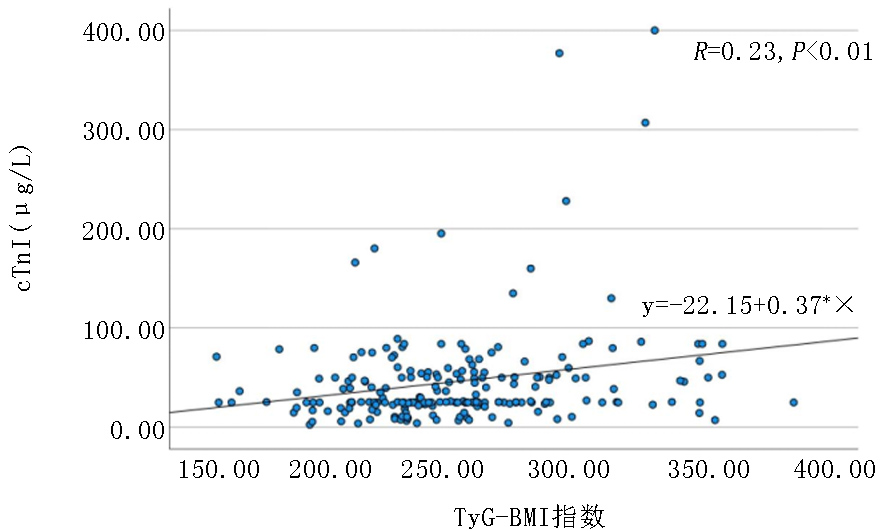
Fig.1 Scatter plot of the relationship between TyG-BMI index and cTnI
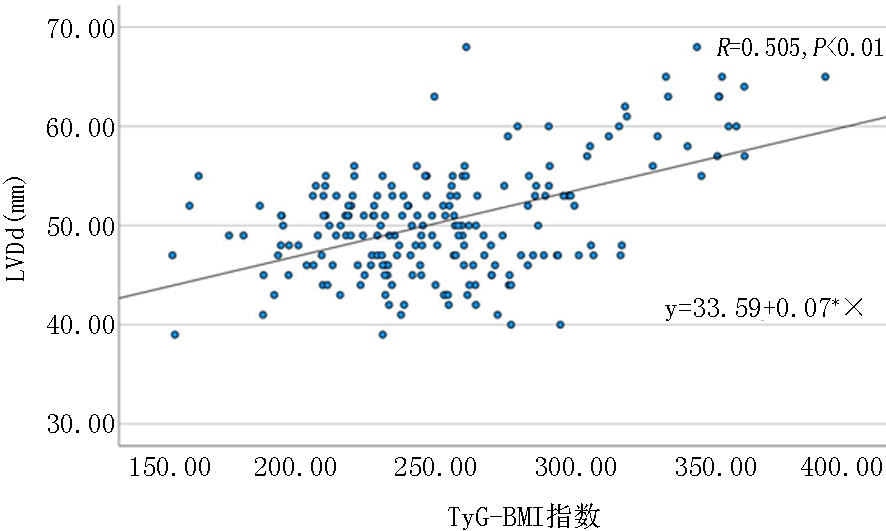
Fig.2 Scatter plot of the relationship between TyG-BMI index and LVDd
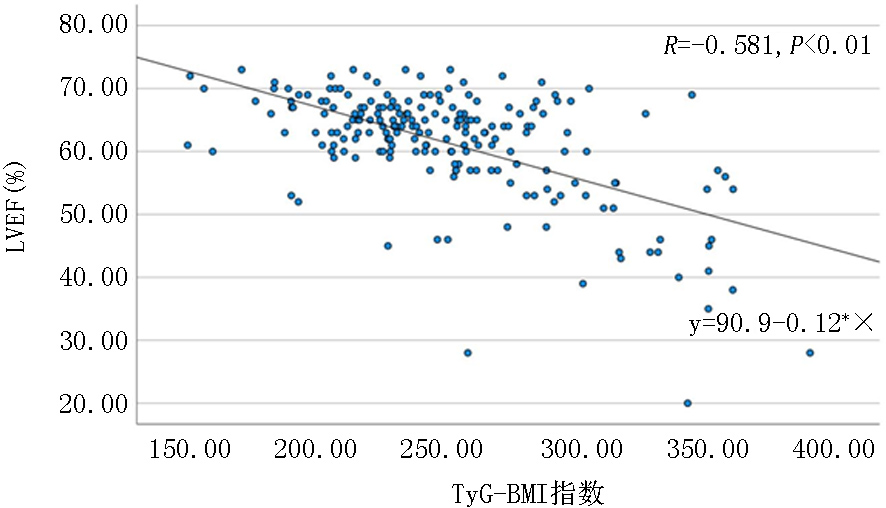
Fig.3 Scatter plot of the relationship between TyG-BMI index and LVEF
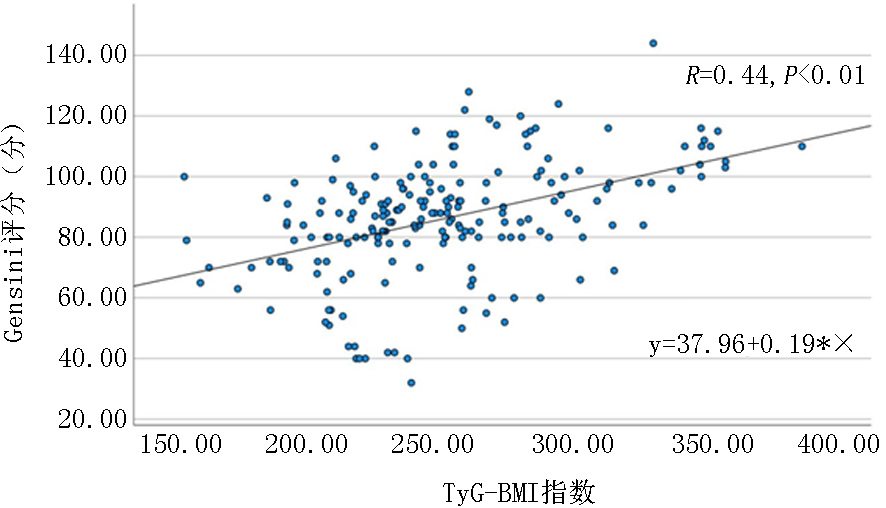
Fig.4 Scatter plot of the relationship between TyG-BMI index and Gensini score
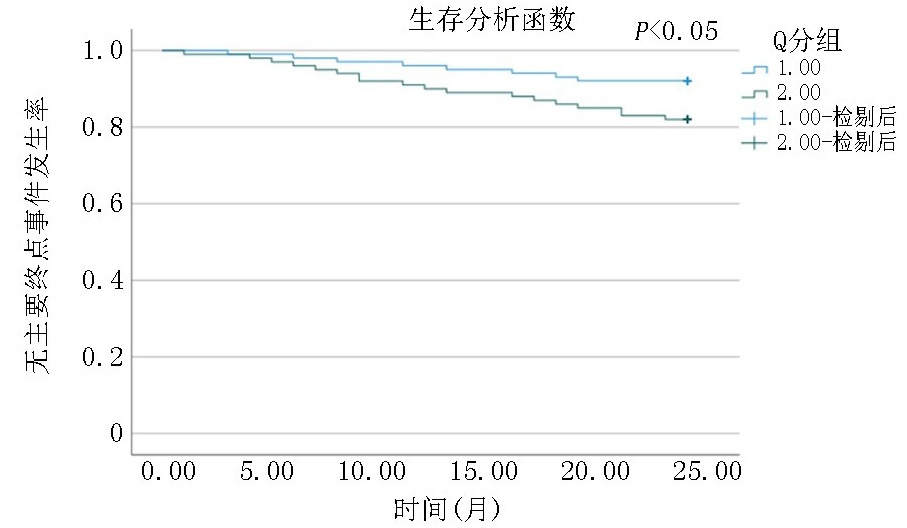
Fig.5 Survival curve comparing the incidence of major endpoint events between Q1 and Q2 groups
| [1] | Rao SV, O'Donoghue ML, Ruel M, et al. 2025 ACC/AHA/ACEP/NAEMSP/SCAI guideline for the management of patients with acute coronary syndromes: A report of the American College of Cardiology/American Heart Association Joint Committee on clinical practice guidelines[J]. J Am Coll Cardiol, 2025, 85(22):2135-2237.doi: 10.1016/j.jacc.2025.03.500. |
| [2] | Bergmark BA, Mathenge N, Merlini PA, et al. Acute coronary syndromes[J]. Lancet, 2022, 399(10332):1347-1358.doi: 10.1016/S0140-6736(21)02391-6. |
| [3] | Moriwaki K, Kurita T, Hirota Y, et al. Prognostic impact of prehospital simple risk index in patients with ST-elevation myocardial infarction[J]. Circ J, 2023, 87(5):629-639.doi: 10.1253/circj.CJ-22-0795. |
| [4] | Gullick J, Wu J, Chew D, et al. Objective risk assessment vs standard care for acute coronary syndromes-The Australian GRACE Risk tool Implementation Study (AGRIS): A process evaluation[J]. BMC Health Serv Res, 2022, 22(1):380.doi: 10.1186/s12913-022-07750-8. |
| [5] | 陈倩, 梁文琪, 赵茜, 等. TYG指数对慢性肾脏病患者新发心血管事件的预测价值[J]. 四川医学, 2022, 43(10):1023-1028. doi:10.16252/j.cnki.issn1004-0501-2022.10.013. |
| [6] | Li W, Shen C, Kong W, et al. Association between the triglyceride glucose-body mass index and future cardiovascular disease risk in a population with cardiovascular-kidney-metabolic syndrome stage 0-3: A nationwide prospective cohort study[J]. Cardiovasc Diabetol, 2024, 23(1):292.doi: 10.1186/s12933-024-02352-6. |
| [7] | Chen X, Wang L, Jiang Y, et al. Interplay between triglyceride-glucose index and cardiovascular events in hypertensive patients with controlled blood pressure (SBP<140 mmHg): Insights from the SPRINT trial[J]. Front Endocrinol (Lausanne), 2025, 16: 1508667.doi: 10.3389/fendo.2025.1508667. |
| [8] | Tai S, Fu L, Zhang N, et al. Impact of baseline and trajectory of triglyceride-glucose index on cardiovascular outcomes in patients with type 2 diabetes mellitus[J]. Front Endocrinol (Lausanne), 2022, 13:858209. doi: 10.3389/fendo.2022.858209. |
| [9] | Rampidis GP, Benetos G, Benz DC, et al. A guide for gensini score calculation[J]. Atherosclerosis, 2019, 287:181-183.doi: 10.1016/j.atherosclerosis.2019.05.012. |
| [10] | Kosmas CE, Bousvarou MD, Kostara CE, et al. Insulin resistance and cardiovascular disease[J]. J Int Med Res, 2023, 51(3):3000605231164548.doi: 10.1177/03000605231164548. |
| [11] | Siqueira de Andrade MI, Oliveira JS, Leal VS, et al. Independent predictors of insulin resistance in Brazilian adolescents: Results of the study of cardiovascular risk in adolescents-Brazil[J]. PloS one, 2021, 16(2):e0246445.doi: 10.1371/journal.pone.0246445. |
| [12] | DeFronzo RA, Tobin JD, Andres R. Glucose clamp technique: A method for quantifying insulin secretion and resistance[J]. Am J Physiol, 1979, 237(3):E214-23. doi: 10.1152/ajpendo.1979.237.3.E214. |
| [13] | Ramdas Nayak VK, Satheesh P, Shenoy MT, et al. Triglyceride glucose (TyG) index: A surrogate biomarker of insulin resistance[J]. J Pak Med Assoc, 2022, 72(5):986-988. doi: 10.47391/JPMA.22-63. |
| [14] | Tahapary DL, Pratisthita LB, Fitri NA, et al. Challenges in the diagnosis of insulin resistance: Focusing on the role of HOMA-IR and tryglyceride/glucose index[J]. Diabetes Metab Syndr, 2022, 16(8):102581. doi: 10.1016/j.dsx.2022.102581. |
| [15] | Cheng W, Kong F, Chen S. Comparison of the predictive value of four insulin resistance surrogates for the prevalence of hypertension: A population-based study[J]. Diabetol Metab Syndr, 2022, 14(1):137. doi: 10.1186/s13098-022-00907-9. |
| [16] | Wang J, Huang X, Fu C, et al. Association between triglyceride glucose index, coronary artery calcification and multivessel coronary disease in Chinese patients with acute coronary syndrome[J]. Cardiovasc Diabetol, 2022, 21(1):187.doi: 10.1186/s12933-022-01615-4. |
| [17] | Sun C, Hu L, Li X, et al. Triglyceride-glucose index's link to cardiovascular outcomes post-percutaneous coronary intervention in China: A meta-analysis[J]. ESC heart failure, 2024, 11(3):1317-1328.doi: 10.1002/ehf2.14679. |
| [18] | Liu M, Pan J, Meng K, et al. Triglyceride-glucose body mass index predicts prognosis in patients with ST-elevation myocardial infarction[J]. Sci Rep, 2024, 14(1):976. doi: 10.1038/s41598-023-51136-7. |
| [19] | Li F, Wang Y, Shi B, et al. Association between the cumulative average triglyceride glucose-body mass index and cardiovascular disease incidence among the middle-aged and older population: A prospective nationwide cohort study in China[J]. Cardiovasc Diabetol, 2024, 23(1):16. doi: 10.1186/s12933-023-02114-w. |
| [20] | Cersosimo E, DeFronzo RA. Insulin resistance and endothelial dysfunction: The road map to cardiovascular diseases[J]. Diabetes Metab Res Rev, 2006, 22(6):423-436. doi: 10.1002/dmrr.634. |
| [21] | Zamolodchikova TS, Tolpygo SM, Kotov AV. Insulin in the regulation of the renin-angiotensin system: A new perspective on the mechanism of insulin resistance and diabetic complications[J]. Front Endocrinol (Lausanne), 2024, 15:1293221. doi: 10.3389/fendo.2024.1293221. |
| [22] | Bays HE, Kirkpatrick CF, Maki KC, et al. Obesity, dyslipidemia, and cardiovascular disease: A joint expert review from the Obesity Medicine Association and the National Lipid Association 2024[J]. J Clin Lipidol, 2024, 18(3):e320-e350. doi: 10.1016/j.jacl.2024.04.001. |
| [23] | Powell-Wiley TM, Poirier P, Burke LE, et al. Obesity and cardiovascular disease: A scientific statement from the american heart association[J]. Circulation, 2021, 143(21):e984-e1010. doi: 10.1161/CIR.0000000000000973. |
| Viewed | ||||||
|
Full text |
|
|||||
|
Abstract |
|
|||||