Clinical Focus ›› 2026, Vol. 41 ›› Issue (3): 197-204.doi: 10.3969/j.issn.1004-583X.2026.03.001
Dietary inflammatory index and lung cancer risk: A meta-analysis
Tang Siying1, Jia Junping1, Tang Yuting1, Zheng Yuqin2a, Kong Yue1,2b( )
)
- 1. School of Nursing,Fujian University of Traditional Chinese Medicine,Fuzhou 350000,China
2. a.Department of Respiratory and Critical Care Medicine; b.Teaching and Research Section of edical Service Training Center, the 900th Hospital of Joint Logistics Support Force of hinese People's Liberation Army,Fuzhou 350000,China
-
Received:2025-11-19Online:2026-03-20Published:2026-03-27

CLC Number:
Cite this article
Tang Siying, Jia Junping, Tang Yuting, Zheng Yuqin, Kong Yue. Dietary inflammatory index and lung cancer risk: A meta-analysis[J]. Clinical Focus, 2026, 41(3): 197-204.
share this article
Add to citation manager EndNote|Ris|BibTeX
URL: https://www.lchc.cn/EN/10.3969/j.issn.1004-583X.2026.03.001
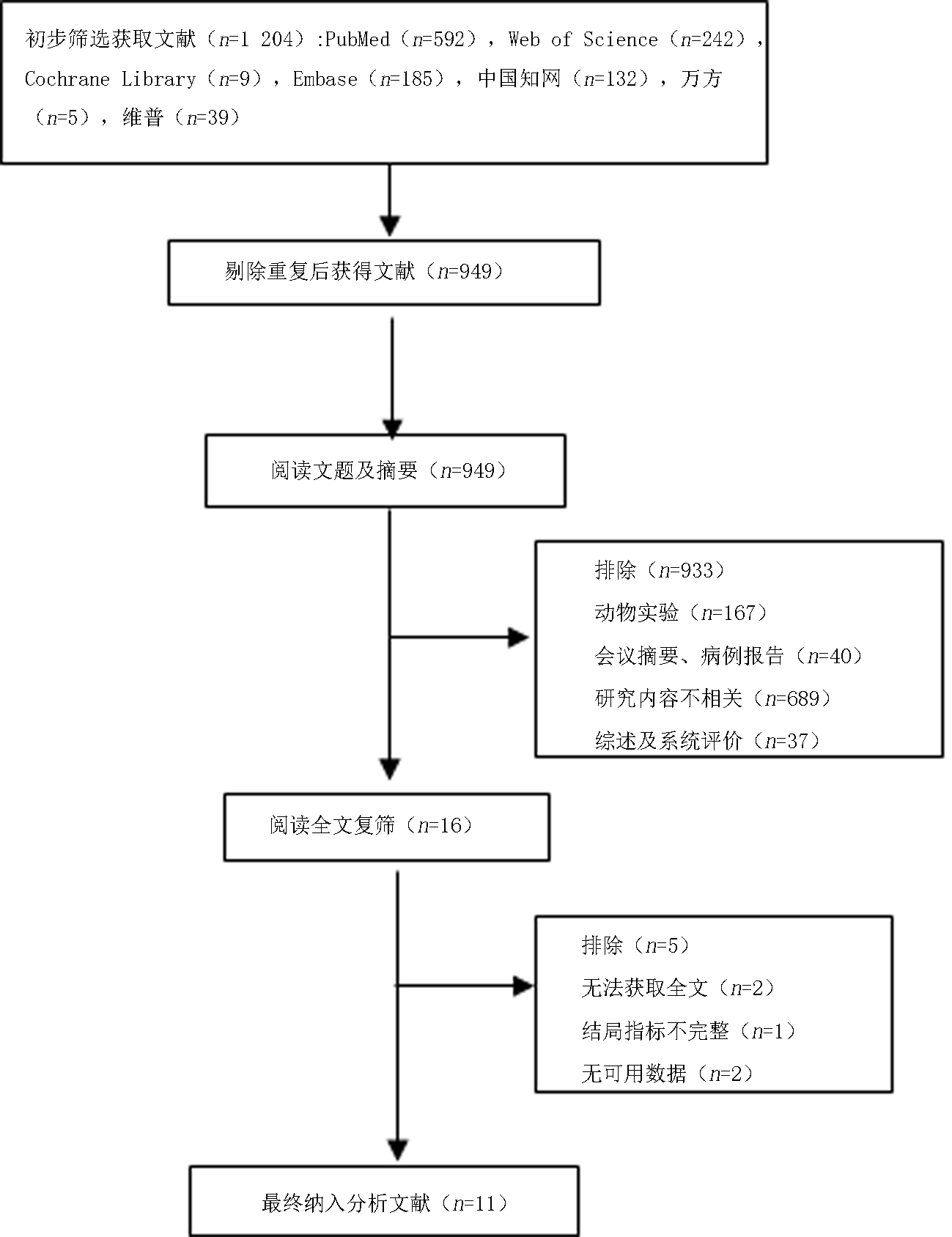
Fig.1 Flow chart of literature selection
| 作者 | 出版 年份 | 研究 地点 | 研究设计 | 研究时间 | 年龄 (岁) | 研究工具 | 食物 参数 | 参与 人数 | 病例 | 数据 类型 |
|---|---|---|---|---|---|---|---|---|---|---|
| Deng等[ | 2017 | 美国 | 前瞻性队列研究 | 1988-1994 | 20~90 | 24 h膳食回顾法 | 27 | 13 280 | 168 | 三分位数 |
| Bodén等[ | 2019 | 瑞典 | 前瞻性队列研究 | 1990-2016 | 40~60 | FFQ | 30 | 100 881 | 442 | 三分位数 |
| Sadeghi等[ | 2022 | 伊朗 | 病例对照研究 | 2020.6-2021.9 | >30 | FFQ | 32 | 280 | 3 | 三分位数 |
| Hodge等[ | 2016 | 墨尔本 | 前瞻性队列研究 | 1990-2011 | 40~69 | FFQ | 29 | 35 303 | 403 | 四分位数 |
| Maisonneuve等[ | 2016 | 意大利 | 前瞻性队列研究 | 2004-2005 | ≥50 | FFQ | 24 | 4 336 | 200 | 四分位数 |
| Shivappa等[ | 2019 | 新加坡 | 前瞻性队列研究 | 1993-2015 | 45~74 | FFQ | 36 | 60 232 | 1 851 | 五分位数 |
| Mekonnen等[ | 2025 | 美国 | 前瞻性队列研究 | 1998.12-2018.12 | ≥55 | FFQ | 33 | 96 607 | 2 127 | 四分位数 |
| Park等[ | 2021 | 美国 | 前瞻性队列研究 | 1993-2014 | 45~75 | QFFQ | 28 | 179 318 | 5 350 | 五分位数 |
| Shi等[ | 2025 | 美国 | 前瞻性队列研究 | 1993-2001 | ≥55 | DHQ | 35 | 101 755 | 1 706 | 四分位数 |
| Dehghani等[ | 2024 | 伊朗 | 病例对照研究 | NA | ≥18 | FFQ | 36 | 4 028 | 616 | 三分位数 |
| Zhou等[ | 2025 | 英国 | 前瞻性队列研究 | 2006-2012.6 | 39~72 | 24 h膳食回顾法 | 28 | 189 561 | 1 041 | 三分位数 |
Tab.1 Basic characteristics of the included studies(n=11)
| 作者 | 出版 年份 | 研究 地点 | 研究设计 | 研究时间 | 年龄 (岁) | 研究工具 | 食物 参数 | 参与 人数 | 病例 | 数据 类型 |
|---|---|---|---|---|---|---|---|---|---|---|
| Deng等[ | 2017 | 美国 | 前瞻性队列研究 | 1988-1994 | 20~90 | 24 h膳食回顾法 | 27 | 13 280 | 168 | 三分位数 |
| Bodén等[ | 2019 | 瑞典 | 前瞻性队列研究 | 1990-2016 | 40~60 | FFQ | 30 | 100 881 | 442 | 三分位数 |
| Sadeghi等[ | 2022 | 伊朗 | 病例对照研究 | 2020.6-2021.9 | >30 | FFQ | 32 | 280 | 3 | 三分位数 |
| Hodge等[ | 2016 | 墨尔本 | 前瞻性队列研究 | 1990-2011 | 40~69 | FFQ | 29 | 35 303 | 403 | 四分位数 |
| Maisonneuve等[ | 2016 | 意大利 | 前瞻性队列研究 | 2004-2005 | ≥50 | FFQ | 24 | 4 336 | 200 | 四分位数 |
| Shivappa等[ | 2019 | 新加坡 | 前瞻性队列研究 | 1993-2015 | 45~74 | FFQ | 36 | 60 232 | 1 851 | 五分位数 |
| Mekonnen等[ | 2025 | 美国 | 前瞻性队列研究 | 1998.12-2018.12 | ≥55 | FFQ | 33 | 96 607 | 2 127 | 四分位数 |
| Park等[ | 2021 | 美国 | 前瞻性队列研究 | 1993-2014 | 45~75 | QFFQ | 28 | 179 318 | 5 350 | 五分位数 |
| Shi等[ | 2025 | 美国 | 前瞻性队列研究 | 1993-2001 | ≥55 | DHQ | 35 | 101 755 | 1 706 | 四分位数 |
| Dehghani等[ | 2024 | 伊朗 | 病例对照研究 | NA | ≥18 | FFQ | 36 | 4 028 | 616 | 三分位数 |
| Zhou等[ | 2025 | 英国 | 前瞻性队列研究 | 2006-2012.6 | 39~72 | 24 h膳食回顾法 | 28 | 189 561 | 1 041 | 三分位数 |
| 作者 | ① | ② | ③ | ④ | ⑤ | ⑥ | ⑦ | ⑧ | 总分 |
|---|---|---|---|---|---|---|---|---|---|
| Deng等[ | 1 | 1 | 1 | 1 | 2 | 1 | 1 | 0 | 8 |
| Bodén等[ | 1 | 1 | 1 | 1 | 2 | 1 | 1 | 0 | 8 |
| Hodge等[ | 1 | 1 | 1 | 1 | 2 | 1 | 1 | 1 | 9 |
| Maisonneuve等[ | 1 | 1 | 1 | 1 | 2 | 1 | 1 | 1 | 9 |
| Shivappa等[ | 1 | 1 | 1 | 1 | 2 | 1 | 1 | 1 | 9 |
| Mekonnen等[ | 1 | 1 | 1 | 1 | 2 | 1 | 1 | 0 | 8 |
| Park等[ | 1 | 1 | 1 | 1 | 2 | 1 | 1 | 0 | 8 |
| Shi等[ | 1 | 1 | 1 | 1 | 2 | 1 | 1 | 0 | 8 |
| Zhou等[ | 1 | 1 | 1 | 1 | 2 | 1 | 1 | 1 | 9 |
Tab.2 Quality assessment of cohort study literatures (n=9)
| 作者 | ① | ② | ③ | ④ | ⑤ | ⑥ | ⑦ | ⑧ | 总分 |
|---|---|---|---|---|---|---|---|---|---|
| Deng等[ | 1 | 1 | 1 | 1 | 2 | 1 | 1 | 0 | 8 |
| Bodén等[ | 1 | 1 | 1 | 1 | 2 | 1 | 1 | 0 | 8 |
| Hodge等[ | 1 | 1 | 1 | 1 | 2 | 1 | 1 | 1 | 9 |
| Maisonneuve等[ | 1 | 1 | 1 | 1 | 2 | 1 | 1 | 1 | 9 |
| Shivappa等[ | 1 | 1 | 1 | 1 | 2 | 1 | 1 | 1 | 9 |
| Mekonnen等[ | 1 | 1 | 1 | 1 | 2 | 1 | 1 | 0 | 8 |
| Park等[ | 1 | 1 | 1 | 1 | 2 | 1 | 1 | 0 | 8 |
| Shi等[ | 1 | 1 | 1 | 1 | 2 | 1 | 1 | 0 | 8 |
| Zhou等[ | 1 | 1 | 1 | 1 | 2 | 1 | 1 | 1 | 9 |
| 作者 | ① | ② | ③ | ④ | ⑤ | ⑥ | ⑦ | ⑧ | 总分 |
|---|---|---|---|---|---|---|---|---|---|
| Sadeghi等[ | 1 | 1 | 0 | 1 | 2 | 1 | 1 | 0 | 7 |
| Dehghani等[ | 1 | 1 | 1 | 1 | 2 | 1 | 1 | 0 | 8 |
Tab.3 Quality assessment of case-control studies (n=2)
| 作者 | ① | ② | ③ | ④ | ⑤ | ⑥ | ⑦ | ⑧ | 总分 |
|---|---|---|---|---|---|---|---|---|---|
| Sadeghi等[ | 1 | 1 | 0 | 1 | 2 | 1 | 1 | 0 | 7 |
| Dehghani等[ | 1 | 1 | 1 | 1 | 2 | 1 | 1 | 0 | 8 |
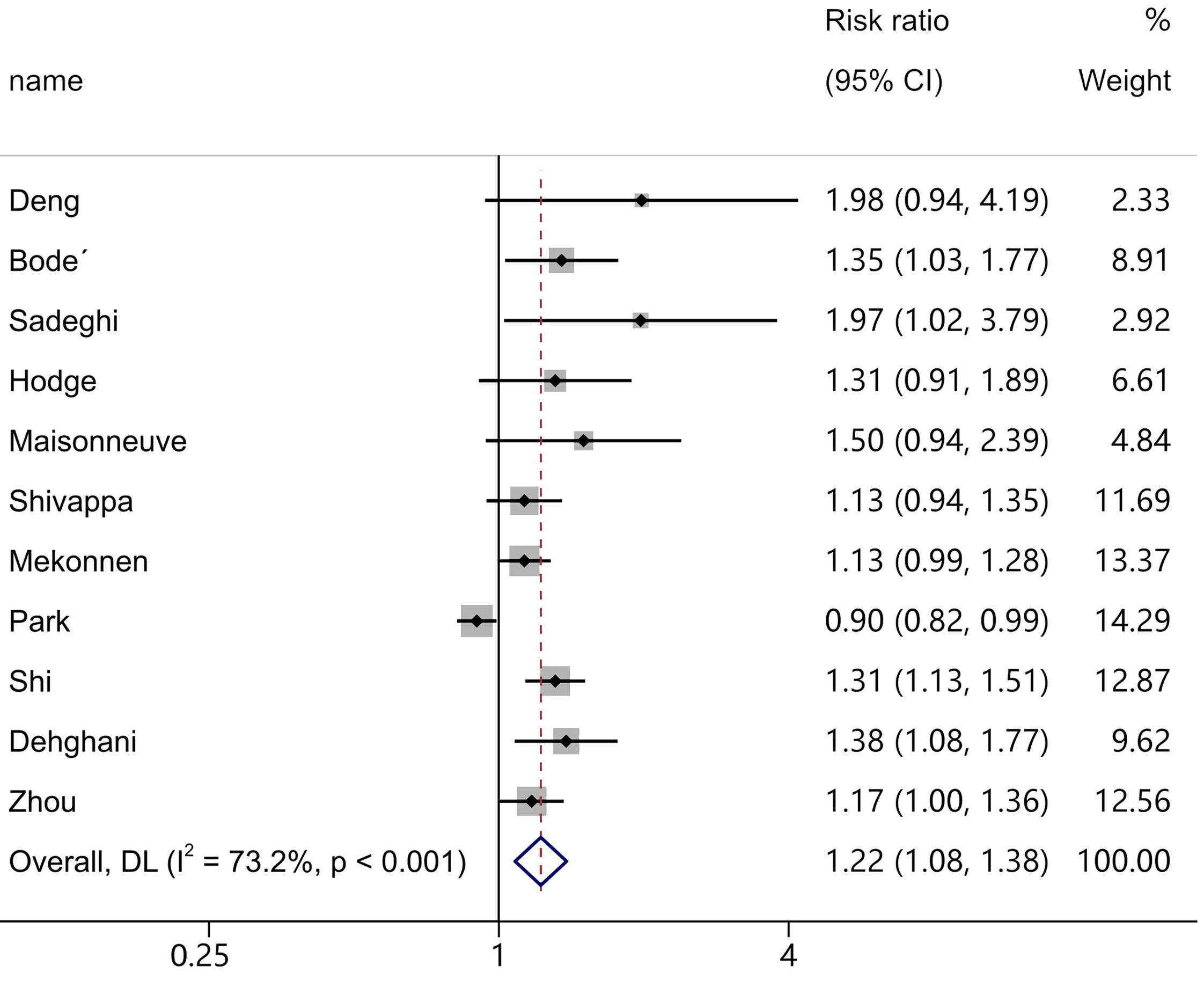
Fig.2 Forest plot of the meta-analysis of DII and lung cancer risk
| 亚组 | 研究数量(n) | RR(95%CI) | I2(%) | P值 |
|---|---|---|---|---|
| 研究设计类型 | ||||
| 队列研究[ | 9 | 1.18(1.04~1.35) | 74.20 | <0.01 |
| 病例对照研究[ | 2 | 1.14(1.15~1.82) | 0 | 0.318 |
| 研究工具 | ||||
| 24 h膳食回顾法[ | 2 | 1.33(0.85~2.08) | 45.00 | 0.178 |
| FFQ[ | 7 | 1.22(1.11~1.34) | 7.70 | 0.370 |
| QFFQ[ | 1 | 0.90(0.82~0.99) | - | - |
| DHQ[ | 1 | 1.31(1.14~1.52) | - | - |
| 地理位置 | ||||
| 北美洲[ | 4 | 1.14(0.91~1.43) | 87.20 | <0.01 |
| 欧洲[ | 3 | 1.23(1.08~1.40) | 0 | 0.461 |
| 亚洲[ | 3 | 1.29(1.03~1.62) | 45.30 | 0.160 |
| 大洋洲[ | 1 | 1.31(0.91~1.89) | - | - |
| DII成分数量 | ||||
| <30[ | 5 | 1.18(0.94~1.49) | 76.50 | 0.002 |
| ≥30[ | 6 | 1.24(1.13~1.36) | 23.80 | 0.256 |
| DII是否经能量调整 | ||||
| 未调整[ | 5 | 1.23(1.12~1.35) | 22.70 | 0.270 |
| 调整[ | 6 | 1.21(0.98~1.50) | 75.40 | 0.001 |
| 吸烟史 | ||||
| 从未吸烟[ | 5 | 1.05(0.85~1.30) | 51.60 | 0.082 |
| 正在吸烟[ | 5 | 1.24(1.06~1.44) | 69.20 | 0.011 |
| 过去吸烟[ | 2 | 1.23(1.02~1.50) | 0 | 0.635 |
| 细胞学亚型 | ||||
| 非小细胞癌[ | 4 | 1.33(1.06~1.66) | 0 | 0.412 |
| 腺癌[ | 3 | 0.97(0.86~1.08) | 0 | 0.375 |
| 鳞癌[ | 3 | 1.23(0.73~2.06) | 83.40 | 0.002 |
| 大细胞癌[ | 1 | 1.19(0.71~2.02) | - | - |
| 性别 | ||||
| 男[ | 6 | 1.21(1.03~1.41) | 77.40 | <0.01 |
| 女[ | 6 | 1.08(0.92~1.26) | 66.60 | 0.010 |
Tab.4 Subgroup analysis of the association between DII and lung cancer
| 亚组 | 研究数量(n) | RR(95%CI) | I2(%) | P值 |
|---|---|---|---|---|
| 研究设计类型 | ||||
| 队列研究[ | 9 | 1.18(1.04~1.35) | 74.20 | <0.01 |
| 病例对照研究[ | 2 | 1.14(1.15~1.82) | 0 | 0.318 |
| 研究工具 | ||||
| 24 h膳食回顾法[ | 2 | 1.33(0.85~2.08) | 45.00 | 0.178 |
| FFQ[ | 7 | 1.22(1.11~1.34) | 7.70 | 0.370 |
| QFFQ[ | 1 | 0.90(0.82~0.99) | - | - |
| DHQ[ | 1 | 1.31(1.14~1.52) | - | - |
| 地理位置 | ||||
| 北美洲[ | 4 | 1.14(0.91~1.43) | 87.20 | <0.01 |
| 欧洲[ | 3 | 1.23(1.08~1.40) | 0 | 0.461 |
| 亚洲[ | 3 | 1.29(1.03~1.62) | 45.30 | 0.160 |
| 大洋洲[ | 1 | 1.31(0.91~1.89) | - | - |
| DII成分数量 | ||||
| <30[ | 5 | 1.18(0.94~1.49) | 76.50 | 0.002 |
| ≥30[ | 6 | 1.24(1.13~1.36) | 23.80 | 0.256 |
| DII是否经能量调整 | ||||
| 未调整[ | 5 | 1.23(1.12~1.35) | 22.70 | 0.270 |
| 调整[ | 6 | 1.21(0.98~1.50) | 75.40 | 0.001 |
| 吸烟史 | ||||
| 从未吸烟[ | 5 | 1.05(0.85~1.30) | 51.60 | 0.082 |
| 正在吸烟[ | 5 | 1.24(1.06~1.44) | 69.20 | 0.011 |
| 过去吸烟[ | 2 | 1.23(1.02~1.50) | 0 | 0.635 |
| 细胞学亚型 | ||||
| 非小细胞癌[ | 4 | 1.33(1.06~1.66) | 0 | 0.412 |
| 腺癌[ | 3 | 0.97(0.86~1.08) | 0 | 0.375 |
| 鳞癌[ | 3 | 1.23(0.73~2.06) | 83.40 | 0.002 |
| 大细胞癌[ | 1 | 1.19(0.71~2.02) | - | - |
| 性别 | ||||
| 男[ | 6 | 1.21(1.03~1.41) | 77.40 | <0.01 |
| 女[ | 6 | 1.08(0.92~1.26) | 66.60 | 0.010 |
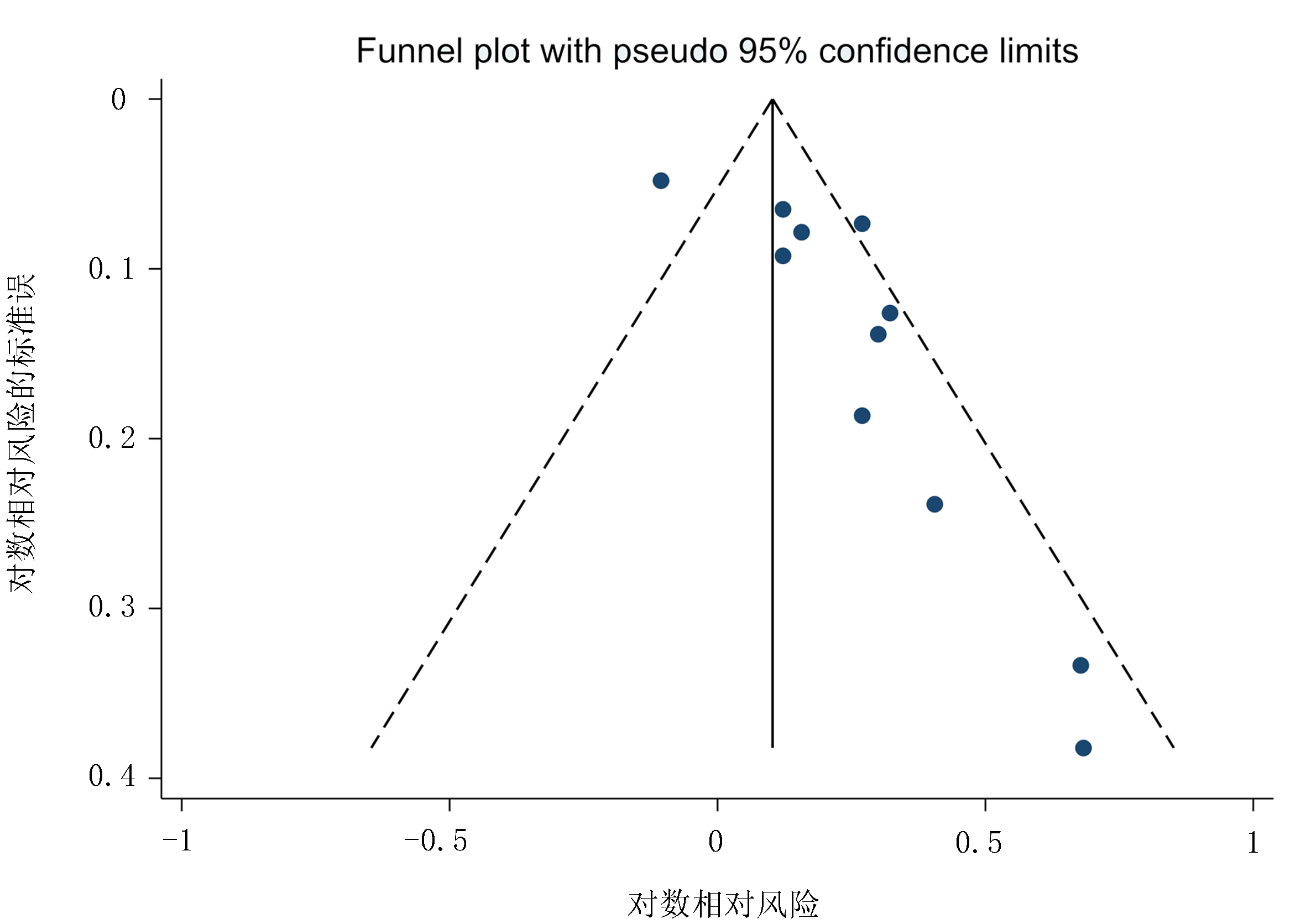
Fig.3 Funnel plot of the meta-analysis of DII and lung cancer risk
| [1] | Bray F, Laversanne M, Sung H, et al. Global cancer statistics 2022: GLOBOCAN estimates of incidence and mortality worldwide for 36 cancers in 185 countries[J]. CA Cancer J Clin, 2024, 74(3): 229-263. doi: 10.3322/caac.21834. |
| [2] | Diao X, Guo C, Jin Y, et al. Cancer situation in China: An analysis based on the global epidemiological data released in 2024[J]. Cancer Commun (Lond), 2025, 45(2): 178-197. doi: 10.1002/cac2.12627. |
| [3] | 中国医疗保健国际交流促进会肿瘤内科学分会, 中国医师协会肿瘤医师分会. Ⅳ期原发性肺癌中国治疗指南(2024版)[J]. 中华肿瘤杂志, 2024, 46(7):595-636. doi:10.3760/cma.j.cn112152-20240311-00104. |
| [4] |
Bade BC, Dela Cruz CS. Lung Cancer 2020: Epidemiology, etiology, and prevention[J]. Clin Chest Med, 2020, 41(1): 1-24. doi: 10.1016/j.ccm.2019.10.001.
pmid: 32008623 |
| [5] |
Shivappa N, Steck SE, Hurley TG, et al. Designing and developing a literature-derived, population-based dietary inflammatory index[J]. Public Health Nutr, 2014, 17(8): 1689-1696. doi: 10.1017/S1368980013002115.
pmid: 23941862 |
| [6] | Burgos-Molina AM, Téllez Santana T, Redondo M, et al. The crucial role of inflammation and the immune system in colorectal cancer carcinogenesis: A comprehensive perspective[J]. Int J Mol Sci, 2024, 25(11): 6188. doi: 10.3390/ijms25116188 |
| [7] |
Bouvard V, Loomis D, Guyton KZ, et al. Carcinogenicity of consumption of red and processed meat[J]. Lancet Oncol, 2015, 16(16): 1599-1600. doi: 10.1016/S1470-2045(15)00444-1.
pmid: 26514947 |
| [8] |
Bakrim S, Fessikh ME, Elhrech H, et al. Targeting inflammation in cancer therapy: From mechanistic insights to emerging therapeutic approaches[J]. J Transl Med, 2025, 23(1): 588. doi: 10.1186/s12967-025-06583-3.
pmid: 40420174 |
| [9] | Chen QJ, Ou L, Li K, et al. Meta-analysis of the relationship between dietary inflammatory index and esophageal cancer risk[J]. Medicine (Baltimore), 2020, 99(49): e23539. doi: 10.1097/MD.0000000000023539. |
| [10] | Nikparast A, Etesami E, Shafiee M, et al. The association between dietary inflammatory potential and risk of total and site-specific colorectal cancer: A systematic review and meta-analysis of observational studies[J]. Br J Nutr, 2025, 133(4): 507-521. doi: 10.1017/S0007114525000121. |
| [11] | Dai YN, Yi-Wen Yu E, Zeegers MP, et al. The association between dietary inflammatory potential and urologic cancers: A meta-analysis[J]. Adv Nutr, 2024, 15(1): 100124. doi: 10.1016/j.advnut.2023.09.012. |
| [12] | Page MJ, McKenzie JE, Bossuyt PM, et al. The PRISMA 2020 statement: An updated guideline for reporting systematic reviews[J]. BMJ, 2021, 372: n71. doi: 10.1136/bmj.n71. |
| [13] |
Deng FE, Shivappa N, Tang Y, et al. Association between diet-related inflammation, all-cause, all-cancer, and cardiovascular disease mortality, with special focus on prediabetics: findings from NHANES III[J]. Eur J Nutr, 2017, 56(3): 1085-1093. doi: 10.1007/s00394-016-1158-4.
pmid: 26825592 |
| [14] | Bodén S, Myte R, Wennberg M, et al. The inflammatory potential of diet in determining cancer risk; A prospective investigation of two dietary pattern scores[J]. PLoS One, 2019, 14(4): e0214551. doi: 10.1371/journal.pone.0214551. |
| [15] | Sadeghi A, Parastouei K, Seifi S, et al. Inflammatory potential of diet and odds of lung cancer: A case-control study[J]. Nutr Cancer, 2022, 74(8): 2859-2867. doi: 10.1080/01635581.2022.2036770. |
| [16] | Hodge AM, Bassett JK, Shivappa N, et al. Dietary inflammatory index, Mediterranean diet score, and lung cancer: A prospective study[J]. Cancer Causes Control, 2016, 27(7): 907-917. doi: 10.1007/s10552-016-0770-1. |
| [17] |
Maisonneuve P, Shivappa N, Hébert JR, et al. Dietary inflammatory index and risk of lung cancer and other respiratory conditions among heavy smokers in the COSMOS screening study[J]. Eur J Nutr, 2016, 55(3): 1069-1079. doi: 10.1007/s00394-015-0920-3.
pmid: 25953452 |
| [18] |
Shivappa N, Wang R, Hébert JR, et al. Association between inflammatory potential of diet and risk of lung cancer among smokers in a prospective study in Singapore[J]. Eur J Nutr, 2019, 58(7): 2755-2766. doi: 10.1007/s00394-018-1825-8.
pmid: 30255403 |
| [19] | Mekonnen TC, Melaku YA, Shi Z, et al. Joint analysis of diet quality, inflammatory potential of diet and ultra-processed food exposure in relation to chronic respiratory diseases and lung cancer mortality[J]. Respir Med, 2025, 243: 108138. doi: 10.1016/j.rmed.2025.108138. |
| [20] | Park SY, Boushey CJ, Shvetsov YB, et al. Diet quality and risk of lung cancer in the multiethnic cohort study[J]. Nutrients, 2021, 13(5): 1614. doi: 10.3390/nu13051614. |
| [21] | Shi Y, Tan W, Xiao Y, et al. The association between energy-adjusted dietary inflammatory index (E-DII) and lung cancer in 101,755 participants aged 55 years and above: A large prospective cohort[J]. BMC Public Health, 2025, 25(1): 2373. doi: 10.1186/s12889-025-22801-5. |
| [22] |
Dehghani F, Toorang F, Seyyedsalehi MS, et al. Association between the dietary inflammatory index and risk of lung cancer: A multi-centered case-control study[J]. BMC Cancer, 2024, 24(1): 1452. doi: 10.1186/s12885-024-13189-3.
pmid: 39593000 |
| [23] | Zhou Q, Gong Z, Li Y, et al. A cohort study on the association of dietary inflammatory index and a posteriori dietary patterns with lung cancer risk[J]. Sci Rep, 2025, 15(1): 31989. doi: 10.1038/s41598-025-15970-1. |
| [24] | 王妹, 高雅卓, 艾艳芳, 等. 膳食炎症指数与妊娠期糖尿病风险关系的meta分析[J]. 重庆医学, 2024, 53(23):3619-3624+3632.doi:10.3969/j.issn.1671-8348.2024.23.018. |
| [25] | 李雪颖, 张霄, 孙铮. 膳食炎症指数与女性生殖系统肿瘤风险关系的meta分析[J]. 重庆医学, 2022, 51(05):842-846.doi:10.3969/j.issn.1671-8348.2022.05.027. |
| [26] | 王丽丽, 赵海峰. 膳食炎症指数与中老年人认知障碍发生风险的Meta分析[J]. 中华疾病控制杂志, 2024, 28(02):209-214+220.doi:10.16462/j.cnki.zhjbkz.2024.02.013. |
| [27] | 王梅, 郭曼, 吴静, 等. 膳食炎症指数与骨质疏松、骨折风险关系的Meta分析[J]. 中华骨质疏松和骨矿盐疾病杂志, 2022, 15(01):57-65.doi:10.3969/j.issn.1674-2591.2022.01.010. |
| [28] | Fenech M, El-Sohemy A, Cahill L, et al. Nutrigenetics and nutrigenomics: Viewpoints on the current status and applications in nutrition research and practice[J]. J Nutrigenet Nutrigenomics, 2011, 4(2): 69-89. doi: 10.1159/000327772. |
| [29] | Haiman CA, Stram DO, Wilkens LR, et al. Ethnic and racial differences in the smoking-related risk of lung cancer[J]. N Engl J Med, 2006, 354(4): 333-342. doi: 10.1056/NEJMoa033250. |
| [30] |
Khuder SA. Effect of cigarette smoking on major histological types of lung cancer: A meta-analysis[J]. Lung Cancer, 2001, 31(2-3): 139-148. doi: 10.1016/s0169-5002(00)00181-1.
pmid: 11165392 |
| [31] |
GBD 2019 Tobacco Collaborators. Spatial, temporal, and demographic patterns in prevalence of smoking tobacco use and attributable disease burden in 204 countries and territories, 1990-2019: A systematic analysis from the Global Burden of Disease Study 2019[J]. Lancet, 2021, 397(10292): 2337-2360. doi: 10.1016/S0140-6736(21)01169-7.
pmid: 34051883 |
| Viewed | ||||||
|
Full text |
|
|||||
|
Abstract |
|
|||||