临床荟萃 ›› 2026, Vol. 41 ›› Issue (7): 632-637.doi: 10.3969/j.issn.1004-583X.2026.07.009

• 论著 • 上一篇    下一篇

基于随机森林模型的妊娠期高血压疾病患者不良妊娠结局的危险因素分析

翟伟伟(), 刘玉侠, 段春红, 魏婷婷   

  1. 驻马店市第一人民医院 产科, 河南 驻马店 463000
  • 收稿日期:2026-04-21 出版日期:2026-07-20 发布日期:2026-07-20
  • 通讯作者: 翟伟伟,Email:zww548862@126.com

Risk factor analysis of adverse pregnancy outcomes in patients with hypertensive disorders of pregnancy based on a random forest model

Zhai Weiwei(), Liu Yuxia, Duan Chunhong, Wei Tingting   

  1. Department of Obstetrics, the First People's Hospital of Zhumadian, Zhumadian 463000, China
  • Received:2026-04-21 Online:2026-07-20 Published:2026-07-20
  • Contact: Zhai Weiwei,Email: zww548862@126.com

摘要:

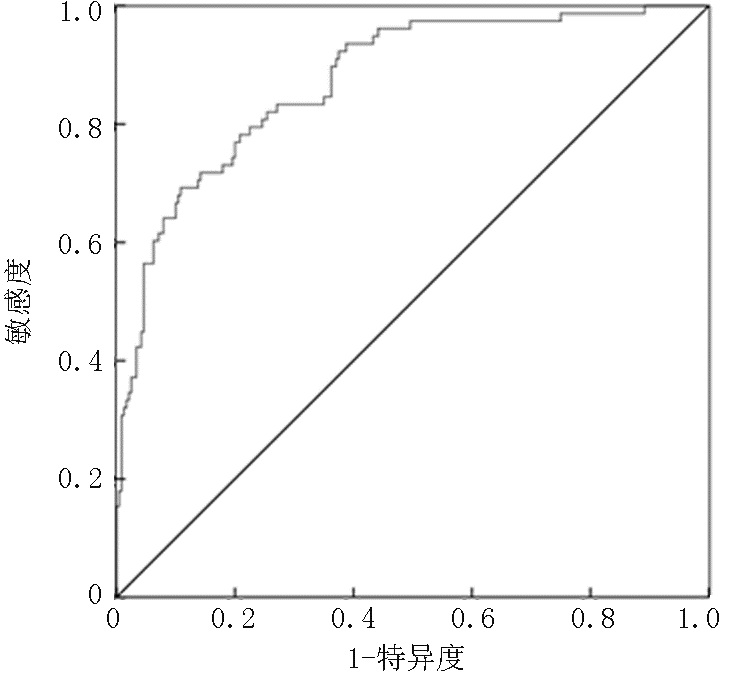
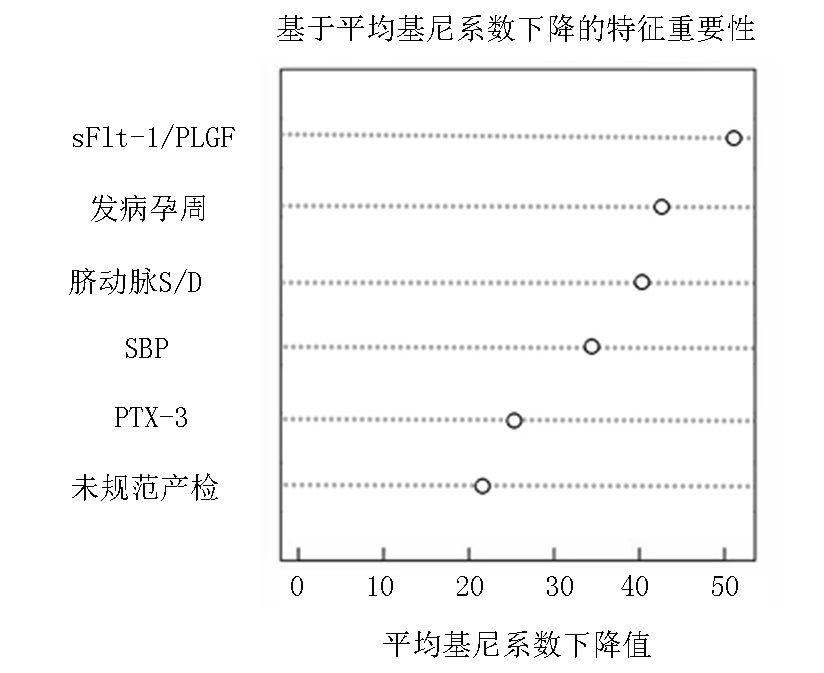
目的 分析妊娠期高血压疾病(hypertensive disorders of pregnancy,HDP)患者发生不良妊娠结局的危险因素,整合临床常规指标构建并验证随机森林预测模型,评估多指标联合预测价值。方法 纳入2022年8月-2025年8月在驻马店市第一人民医院接受诊治的HDP患者152例,根据妊娠结局分为不良结局组(n=48)和良好结局组(n=104)。统计HDP患者不良妊娠结局发生情况及一般资料,采用多因素logistic回归筛选独立危险因素,并构建随机森林预测模型。将总样本按7∶3比例随机分为训练集(n=106)与验证集(n=46),训练集用于构建模型,验证集用于评估模型性能。结果 152例HDP患者中不良妊娠结局48例,总体发生率为31.58%。相较于良好结局组,不良结局组发病孕周更早,未规范产检比例、收缩压(SBP)、脐动脉收缩期峰值流速与舒张末期流速比值(S/D)、正五聚蛋白-3(PTX-3)水平及血清可溶性血管内皮生长因子受体-1(sFlt-1)/胎盘生长因子(PLGF)比值均更高(P<0.05)。多因素logistic回归分析证实,未规范产检、SBP、脐动脉S/D、PTX-3水平、sFlt-1/PLGF升高均为HDP患者发生不良妊娠结局的独立危险因素,发病孕周较晚为保护因素(P<0.05)。将多因素logistic回归分析中的6个独立危险因素为自变量构建随机森林模型,结果显示,模型预测HDP患者发生不良妊娠结局的曲线下面积为0.874(95%CI:0.829~0.918),敏感度为78.20%(95%CI:0.726~0.851),特异度为79.20%(95%CI:0.754~0.896)。同时,基于基尼系数重要性评分方法显示,贡献率由高到低依次为sFlt-1/PLGF(51.676)、发病孕周(42.945)、脐动脉S/D(40.135)、SBP(34.866)、PTX-3(25.239)、未规范产检(22.689)。结论 发病孕周、未规范产检、SBP、脐动脉S/D、PTX-3水平及sFlt-1/PLGF均为HDP患者发生不良妊娠结局的影响因素,同时基于上述变量建立的随机森林预测模型具有良好的区分度和校准度,为临床早期识别高风险患者提供了潜在的工具。

关键词: 高血压, 妊娠性, 妊娠结局, 收缩压, 随机森林预测模型

Abstract:

Objective To analyze the risk factors for adverse pregnancy outcomes in patients with hypertensive disorders of pregnancy (HDP), construct and validate a random forest prediction model by integrating routine clinical indicators, and evaluate the predictive value of multiple combined indicators. Methods A total of 152 patients with HDP who received diagnosis and treatment at the First People’s Hospital of Zhumadian from August 2022 to August 2025 were included. According to pregnancy outcomes, they were divided into an adverse outcome group (n=48) and a good outcome group (n=104). The incidence of adverse pregnancy outcomes and general clinical data were analyzed. Multivariate logistic regression was used to identify independent risk factors, and a random forest prediction model was constructed. The total sample was randomly split in a 7∶3 ratio into a training set (n=106) and a validation set (n=46). The training set was used to build the model, and the validation set was used to evaluate model performance. Results Among the 152 patients with HDP, 48 had adverse pregnancy outcomes, with an overall incidence of 31.58%. Compared with the good outcome group, the adverse outcome group had an earlier gestational age at onset and higher proportions of irregular antenatal care, systolic blood pressure (SBP), umbilical artery systolic/diastolic ratio (S/D), pentraxin-3 (PTX-3) level, and serum soluble fms-like tyrosine kinase-1 (sFlt-1)/placental growth factor (PLGF) ratio (P<0.05). Multivariate logistic regression confirmed that irregular antenatal care, SBP, umbilical artery S/D, elevated PTX-3 level, and increased sFlt-1/PLGF ratio were independent risk factors for adverse pregnancy outcomes in patients with HDP, whereas later gestational age at onset was a protective factor (P<0.05). Using these 6 independent risk factors from the multivariate logistic regression analysis as predictors, a random forest model was constructed. The results showed that the area under the curve(AUC) for predicting adverse pregnancy outcomes in patients with HDP was 0.874(95%CI: 0.829-0.918), with a sensitivity of 78.20%(95%CI: 0.726-0.851) and a specificity of 79.20%(95%CI: 0.754-0.896). In addition, based on the Gini coefficient importance scoring method, the contribution ranking from highest to lowest was sFlt-1/PLGF (51.676), gestational age at onset (42.945), umbilical artery S/D (40.135), SBP (34.866), PTX-3 (25.239), and irregular antenatal care (22.689). Conclusion Gestational age at onset, irregular antenatal care, SBP, umbilical artery S/D, PTX-3 level, and sFlt-1/PLGF are all influencing factors for adverse pregnancy outcomes in patients with HDP. The random forest prediction model established based on these variables demonstrated good discrimination and calibration, providing a potential tool for early identification of high-risk patients in clinical practice.

Key words: hypertension, pregnancy-induced, pregnancy outcome, systolic blood pressure, random forests prediction model

中图分类号: