临床荟萃 ›› 2026, Vol. 41 ›› Issue (3): 205-211.doi: 10.3969/j.issn.1004-583X.2026.03.002

• 论著 • 上一篇    下一篇

基于机器学习整合多维危险因素的急性失代偿性心力衰竭患者再住院风险预测模型

祝孟丽a(), 李敏b, 薛莎莎c, 蔚苗苗c, 付慧娟c   

  1. 黄河三门峡医院 a.质控办;b.综合办;c.心血管内科,河南 三门峡 472000
  • 收稿日期:2026-02-26 出版日期:2026-03-20 发布日期:2026-03-27
  • 通讯作者: 祝孟丽,Email: zml962741@126.com

Machine learning-based risk prediction model integrating multidimensional risk factors for rehospitalization in acute decompensated heart failure

Zhu Menglia(), Li Minb, Xue Shashac, Wei Miaomiaoc, Fu Huijuanc   

  1. a. Quality Control Office; b.General Office; c.Department of Cardiovascular Medicine, Yellow River Sanmenxia Hospital, Sanmenxia 472000, China
  • Received:2026-02-26 Online:2026-03-20 Published:2026-03-27

摘要:

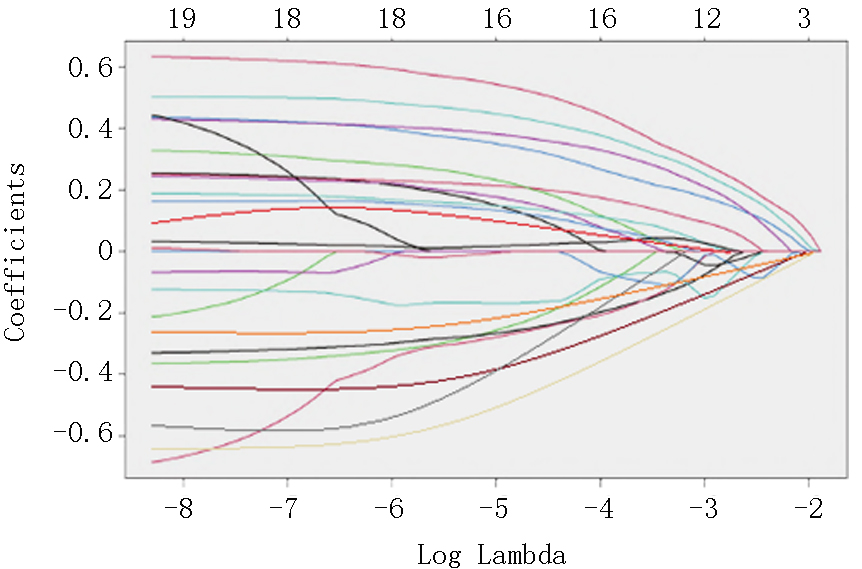
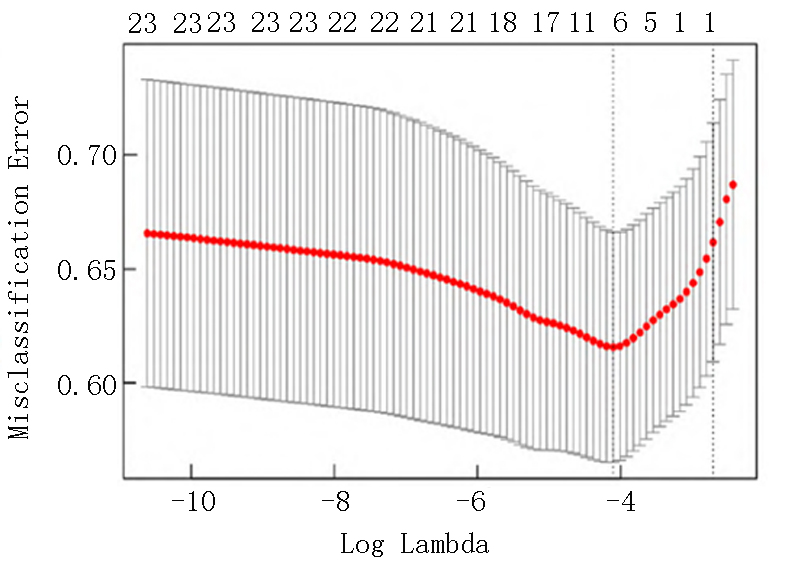
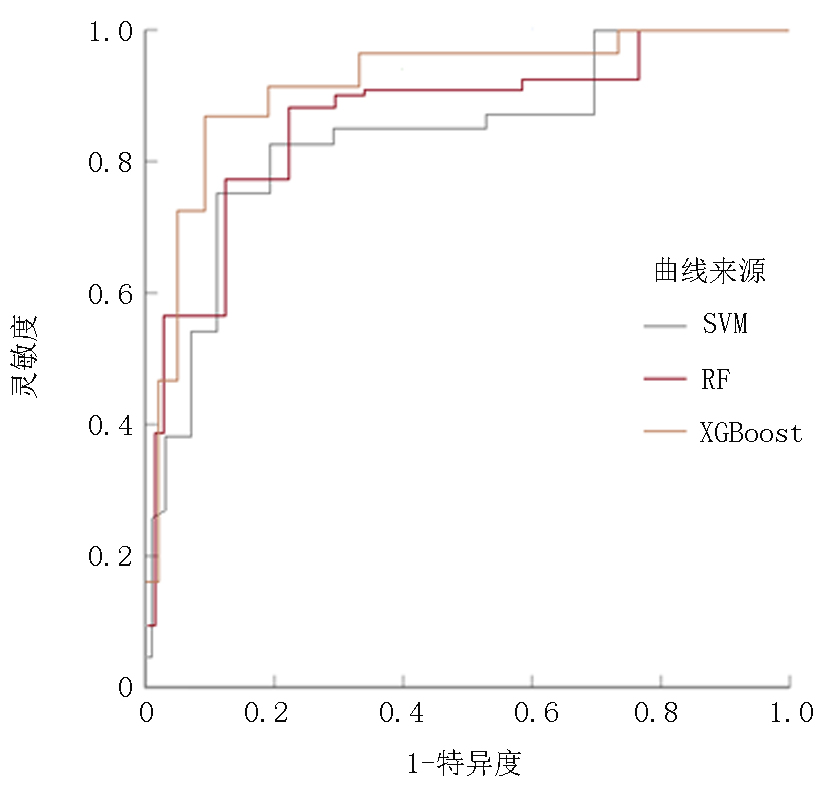
目的 构建基于机器学习整合多维危险因素的急性失代偿性心力衰竭(acute decompensated heart failure,ADHF)患者再住院风险预测模型,为临床精准防控提供决策支持。方法 本研究为回顾性队列研究。纳入黄河三门峡医院2022年9月—2025年3月收治的ADHF患者224例,根据患者出院后6个月内是否发生再住院将其分为再住院组(n=72)和对照组(n=152),收集并比较两组临床资料。通过最小绝对收缩和选择算子回归分析和十折交叉验证法筛选ADHF患者再住院的最优特征,并进行多因素logistic回归分析探究ADHF患者再住院的独立危险因素。分别采用支持向量机(support vector machine,SVM)、随机森林(random forest,RF)、梯度提升决策树(gradient boosting decision tree,XGBoost)3种机器学习算法构建预测模型,绘制受试者工作特征曲线评估预测模型的效能。结果 224例ADHF患者6个月内再住院72例,未再住院152例,再住院发生率为32.14%(72/224)。两组年龄、性别、体质量指数、文化程度、高血压、糖尿病、吸烟史和饮酒史差异均无统计学意义(P>0.05),两组居住情况、病程、出院时纽约心脏病协会(New York Heart Association,NYHA)心功能分级、规律复诊、坚持低钠饮食、坚持限制饮水、服药依从性、自理能力、焦虑、抑郁、适当运动和高血脂差异均有统计学意义(P<0.05)。最小绝对收缩和选择算子回归分析、十折交叉法和logistic回归分析结果均显示,出院时NYHA心功能分级、规律复诊、坚持低钠饮食、服药依从性、焦虑、抑郁、适当运动、高血脂是预测ADHF患者再住院的最优特征。基于以上8个因素构建SVM、RF、XGBoost预测模型,受试者工作特征曲线显示,SVM、RF和XGBoost模型的敏感度分别为88.33%、69.44%和88.89%,特异度分别为65.79%、78.95%和82.24%,准确率分别为71.43%、75.89%、84.38%,曲线下面积分别为0.823、0.869、0.916。结论 ADHF患者出院后6个月内再住院发生率较高,患者再住院受出院时NYHA心功能分级、规律复诊、坚持低钠饮食、服药依从性、焦虑、抑郁、适当运动、高血脂的影响,基于机器学习整合多维危险因素构建的SVM、RF、XGBoost预测模型均显示出较好的预测效果,其中XGBoost预测模型的预测效能最好。

关键词: 心力衰竭, 再住院, 预测模型, 机器学习, 多维危险因素

Abstract:

Objective To construct a machine learning-based risk prediction model that integrates multidimensional risk factors to predict rehospitalization in patients with acute decompensated heart failure (ADHF), and to provide clinical decision support for targeted prevention. Methods In this retrospective cohort study, 224 ADHF patients treated at Yellow River Sanmenxia Hospital between September 2022 and March 2025 were enrolled. Patients were classified into a rehospitalization group (n=72) and a non-rehospitalization control group (n=152) based on whether they were rehospitalized within 6 months after discharge. Clinical variables were collected and compared between groups. Feature selection was performed using least absolute shrinkage and selection operator (LASSO) regression combined with ten-fold cross-validation, and multivariate logistic regression was used to identify independent predictors. Prediction models were developed using three machine learning algorithms-support vector machine (SVM), random forest (RF), and gradient boosting decision tree (XGBoost)-and model performance was assessed with receiver operating characteristic (ROC) analysis. Results Among 224 ADHF patients, 72 experienced rehospitalization within 6 months, yielding a rehospitalization rate of 32.14%(72/224). No significant between-group differences were observed for age, sex, body mass index, education level, hypertension, diabetes, smoking history, or alcohol history (P>0.05). Significant differences were found for living situation, disease duration, New York Heart Association (NYHA) functional class at discharge, regular follow-up, adherence to a low-sodium diet, fluid-restriction adherence, medication adherence, self-care ability, anxiety, depression, appropriate exercise, and hyperlipidemia (P<0.05). LASSO, ten-fold cross-validation, and logistic regression consistently identified eight optimal predictive features: NYHA class at discharge, regular follow-up, adherence to a low-sodium diet, medication adherence, anxiety, depression, appropriate exercise, and hyperlipidemia. Using these eight predictors, SVM, RF, and XGBoost models were trained. ROC analysis showed model sensitivities of 88.33% (SVM), 69.44% (RF), and 88.89% (XGBoost); specificities of 65.79% (SVM), 78.95% (RF), and 82.24% (XGBoost); accuracies of 71.43% (SVM), 75.89% (RF), and 84.38% (XGBoost); and AUCs of 0.823 (SVM), 0.869 (RF), and 0.916 (XGBoost). Conclusion Rehospitalization within 6 months after discharge is common among ADHF patients. Rehospitalization risk is associated with discharge NYHA class, regular follow-up, adherence to a low-sodium diet, medication adherence, anxiety, depression, appropriate exercise, and hyperlipidemia. Machine learning models that integrate these multidimensional factors (SVM, RF, and XGBoost) show good predictive performance, with XGBoost achieving the best discrimination in this cohort.

Key words: heart failure, re-hospitalization, predictive model, machine learning, multidimensional risk factors

中图分类号: