临床荟萃 ›› 2026, Vol. 41 ›› Issue (5): 411-416.doi: 10.3969/j.issn.1004-583X.2026.05.004

• 论著 • 上一篇    下一篇

人工智能辅助不同年资医师评估乳腺4类结节

刘晓丽, 杨爽(), 尹丽, 胡艳, 郑雨萌, 段丽红   

  1. 大连大学附属中山医院 超声科, 辽宁 大连 116001
  • 收稿日期:2025-10-15 出版日期:2026-05-20 发布日期:2026-05-26
  • 通讯作者: 杨爽,Email:

Artificial intelligence-assisted assessment of BI-RADS category 4 breast nodules by physicians of different seniority

Liu Xiaoli, Yang Shuang(), Yin Li, Hu Yan, Zheng Yumeng, Duan Lihong   

  1. Department of Ultrasound, Affiliated Zhongshan Hospital of Dalian University, Dalian 116001, China
  • Received:2025-10-15 Online:2026-05-20 Published:2026-05-26
  • Contact: Yang Shuang,Email:

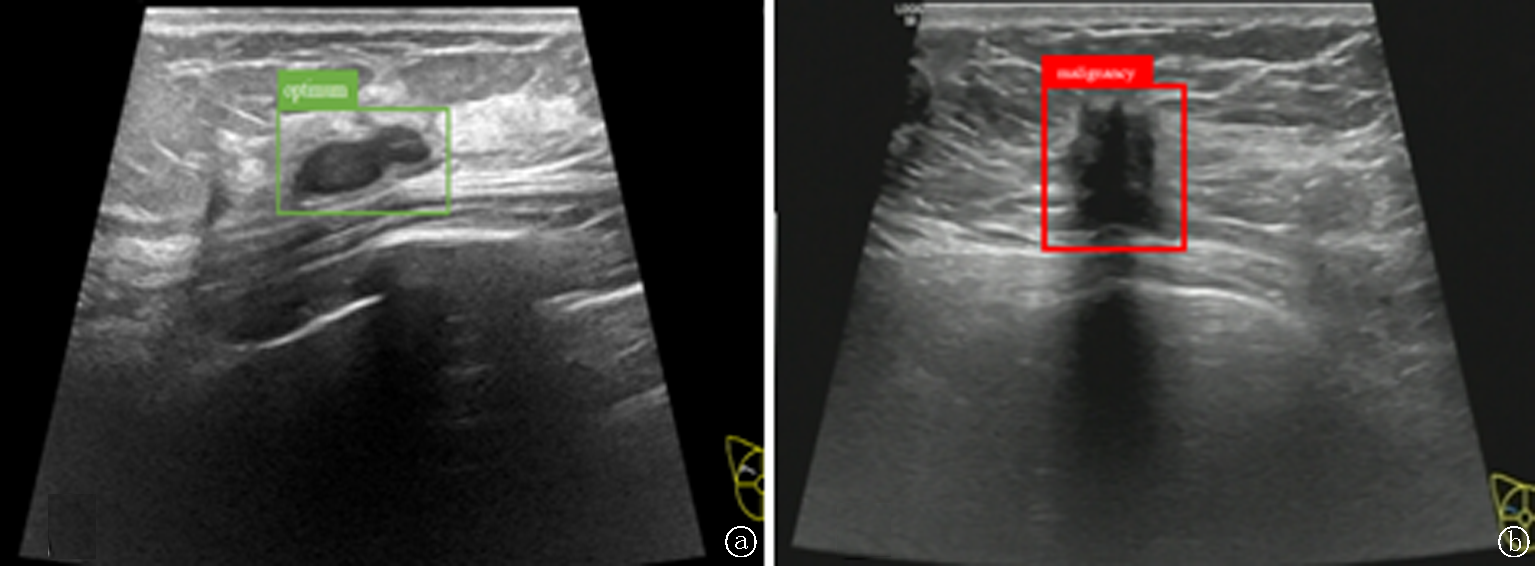
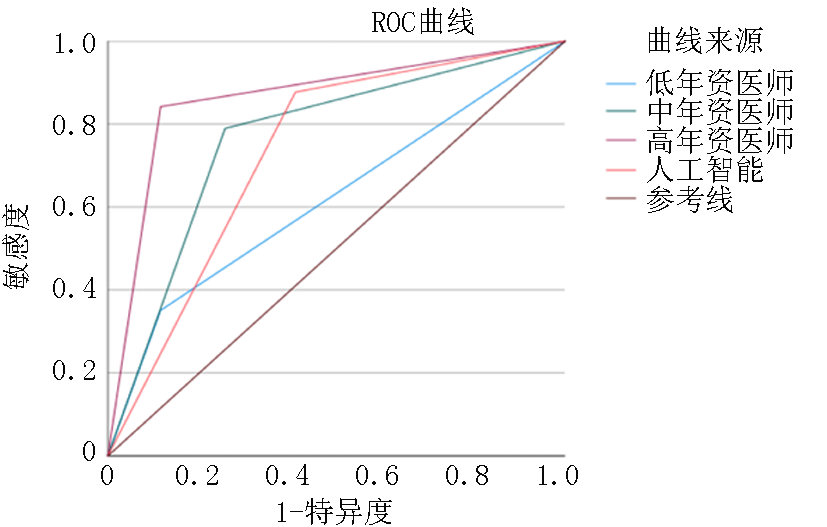
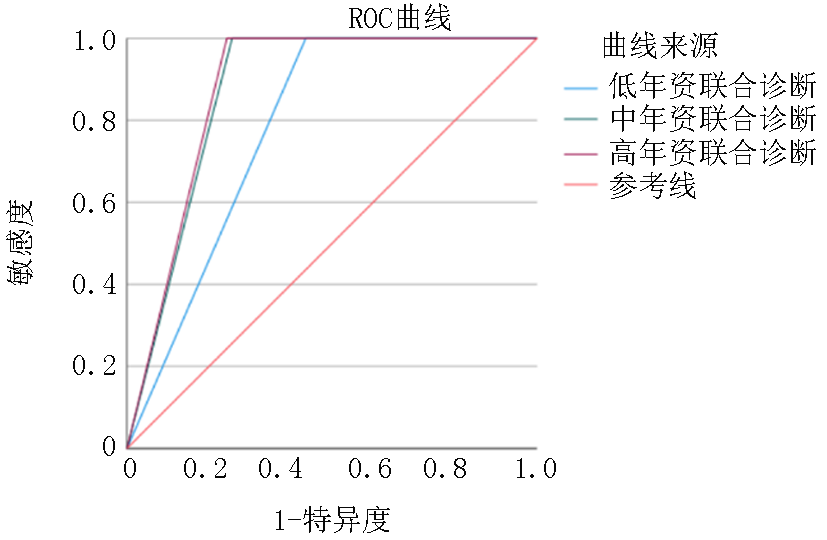
摘要: 目的 分析深度学习模型YOLOv5技术辅助不同年资超声医师诊断BI-RADS 4 类乳腺结节的诊断效能。方法 选取2023年8月-2024年10月在大连大学附属中山医院行乳腺超声检查的可疑乳腺恶性病灶患者100例(135例结节),按照乳腺影像报告和数据系统(US BI-RADS)分类标准,以组织病理学为金标准,由3名不同年资超声医师和人工智能技术对乳腺结节进行良恶性评估并分析不同年资医师联合人工智能技术诊断乳腺结节的诊断效能。结果 135个结节中,BI-RADS 4A类76个、4B类41个、4C类18个;经病理证实恶性57个、良性78个。以病理组织学结果为金标准,YOLOv5模型诊断乳腺结节的敏感度、特异度、准确度、曲线下面积(AUC)均高于低年资医师,差异有统计学意义(P<0.05);敏感度、准确度低于高年资医师与中年资医师,差异有统计学意义(P<0.05)。不同年资医师联合YOLOv5技术诊断后,低年资医师组敏感度由64.91%提升至80.70%、准确度由65.18%提升至74.81%、特异度由65.38%提高至70.51%,AUC由0.618提升至0.782(P<0.001);中年资医师组敏感度由80.70%提升至91.22%、准确度由77.03%提升至80.74%、AUC由0.767提升至0.872(P=0.013);高年资医师组敏感度、准确度、特异度、AUC差异无统计学意义(P=0.679)。各亚型分析显示,联合诊断对4A类结节的辅助效能最为突出,低年资医师组4A类结节诊断准确度由59.21%提升至71.05%,中年资医师组由73.68%提升至82.89%。 结论 YOLOv5深度学习模型辅助诊断可显著提升低年资与中年资医师对BI-RADS 4类乳腺肿块的鉴别诊断能力,尤其对4A类结节的辅助价值最为突出,有助于减少不必要的穿刺活检与手术。

关键词: 乳腺肿瘤, 超声, 深度学习, BI-RADS分类, 不同年资医师

Abstract:

Objective To evaluate the diagnostic performance of a deep learning model based on YOLOv5 in assisting ultrasound physicians with different levels of experience in diagnosing breast imaging reporting and data system (BI-RADS) category 4 breast nodules. Methods A total of 100 patients with suspicious breast malignant lesions who underwent breast ultrasonography at Affiliated Zhongshan Hospital of Dalian University from August 2023 to October 2024 were included, yielding 135 nodules. According to the ultrasonographic (US) BI-RADS classification, and with histopathology as the reference standard, three ultrasound physicians with different seniority levels and an artificial intelligence model independently assessed the benignity or malignancy of the nodules. The diagnostic performance of physicians of different seniority levels, with and without assistance from the artificial intelligence model, was then analyzed. Results Among the 135 nodules, 76 were classified as BI-RADS 4A, 41 as 4B, and 18 as 4C; histopathology confirmed 57 malignant nodules and 78 benign nodules. Using histopathological findings as the reference standard, the YOLOv5 model achieved higher sensitivity, specificity, accuracy, and AUC than the low-seniority physicians, with statistically significant differences (P<0.05). Its sensitivity and accuracy were lower than those of the high-seniority and mid-seniority physicians, with statistically significant differences (P<0.05). After combining the YOLOv5 model with physicians of different seniority levels, the low-seniority group showed an increase in sensitivity from 64.91% to 80.70%, accuracy from 65.18% to 74.81%, specificity from 65.38% to 70.51%, and AUC from 0.618 to 0.782 (P<0.001). In the mid-seniority group, sensitivity increased from 80.70% to 91.22%, accuracy from 77.03% to 80.74%, and AUC from 0.767 to 0.872 (P=0.013). In the high-seniority group, no statistically significant differences were observed in sensitivity, accuracy, specificity, or AUC (P=0.679). Subtype analysis showed that the combined approach was most effective for BI-RADS 4A nodules. In the low-seniority group, diagnostic accuracy for 4A nodules increased from 59.21% to 71.05%; in the mid-seniority group, it increased from 73.68% to 82.89%. Conclusion The YOLOv5 deep learning model can significantly improve the differential diagnostic ability of low- and mid-seniority physicians for BI-RADS category 4 breast nodules, with the greatest added value for 4A nodules. This approach may help reduce unnecessary biopsy and surgery.

Key words: breast neoplasms, ultrasonography, deep learning, BI-RADS, physicians of different seniority

中图分类号: