临床荟萃 ›› 2026, Vol. 41 ›› Issue (9): 831-836.doi: 10.3969/j.issn.1004-583X.2026.09.008

• 论著 • 上一篇    下一篇

血清FCER1G、NRF2、CXCL13表达与2型糖尿病合并糖尿病周围神经病变的相关性及辅助识别价值

徐闪闪(), 崔慧娟, 陈华, 宋娜, 刘思佳, 王赛飞, 李鑫   

  1. 郑州市第三人民医院 内分泌科, 河南 郑州 450000
  • 收稿日期:2026-06-01 出版日期:2026-09-20 发布日期:2026-09-17
  • 通讯作者: 徐闪闪 E-mail:xushanshan202619@163.com

Correlation of serum FCER1G, NRF2, and CXCL13 expression with diabetic peripheral neuropathy in patients with type 2 diabetes mellitus and their auxiliary identification value

Xu Shanshan(), Cui Huijuan, Chen Hua, Song Na, Liu Sijia, Wang Saifei, Li Xin   

  1. Department of Endocrinology, the Third People's Hospital of Zhengzhou, Zhengzhou 450000, China
  • Received:2026-06-01 Online:2026-09-20 Published:2026-09-17
  • Contact: Xu Shanshan E-mail:xushanshan202619@163.com

摘要:

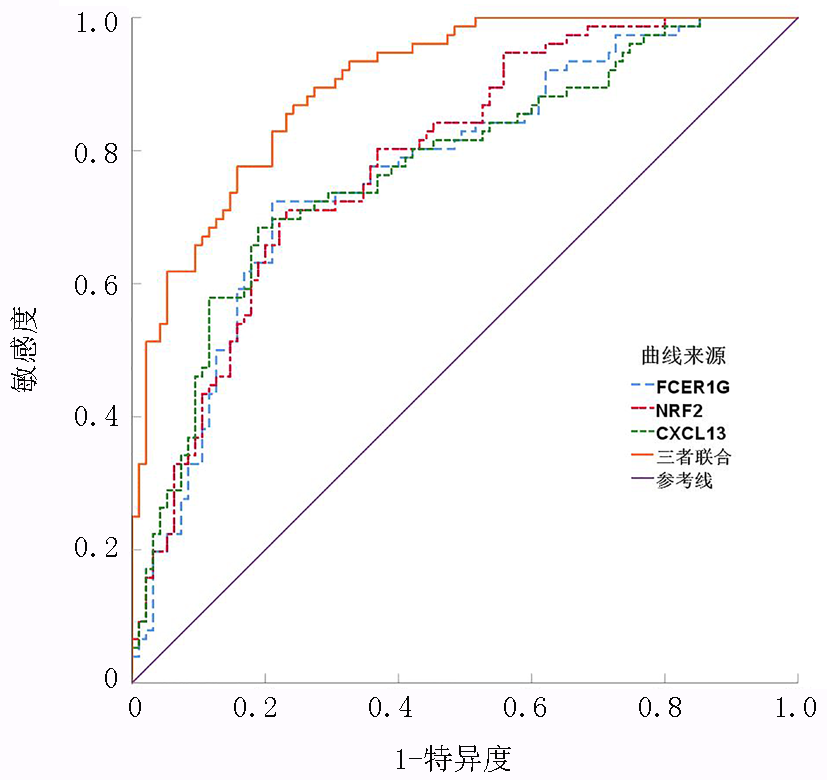
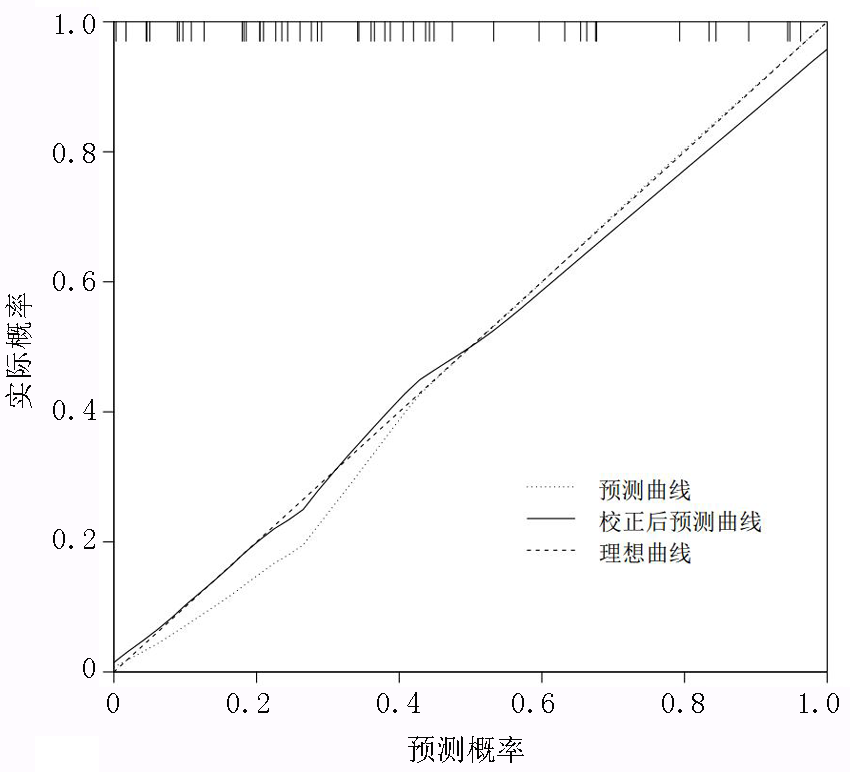
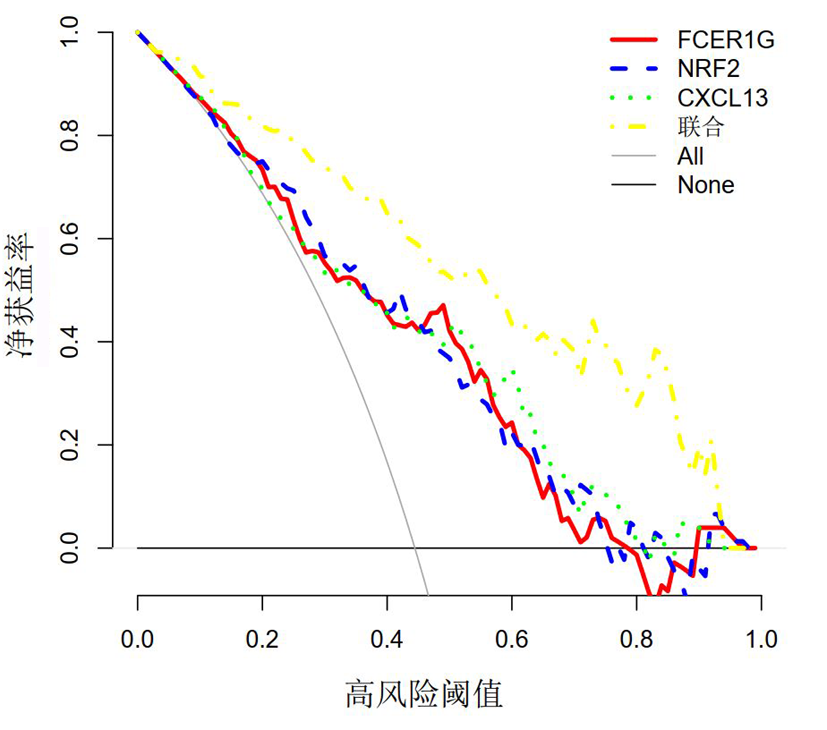
目的 探究血清免疫球蛋白E的Fc段高亲和力1型受体(FCER1G)、核因子红细胞2相关因子2(NRF2)和趋化因子C-X-C基序配体13(CXCL13)的表达与2型糖尿病(type 2 diabetes mellitus,T2DM)合并糖尿病周围神经病变(diabetic peripheral neuropathy, DPN)的相关性及辅助识别价值。方法 纳入2023年8月-2025年8月于郑州市第三人民医院就诊的T2DM患者171例,进一步根据是否发生DPN,分为未发生DPN(N-DPN)组(n=95)和发生DPN(DPN)组(n=76)。比较2组临床资料和血清FCER1G、NRF2、CXCL13水平。采用Pearson相关系数法分析血清FCER1G、NRF2、CXCL13水平与临床资料的相关性。采用多因素logistic回归分析探究T2DM患者合并DPN的相关因素。采用受试者工作特征曲线分析FCER1G、NRF2、CXCL13单独及联合对T2DM患者合并DPN的辅助识别价值。采用Bootstrap法对联合模型进行内部验证,重复抽样1 000次并结合交叉验证。采用Hosmer-Lemeshow检验评估联合模型的拟合程度。采用临床决策曲线分析联合模型的临床实用性。结果 与N-DPN组比较,DPN组糖尿病病程、糖化血红蛋白(HbA1c)、白细胞介素6(IL-6)、FCER1G和CXCL13水平均升高,NRF2水平降低(P<0.05)。FCER1G、NRF2、CXCL13水平与糖尿病病程、HbA1c、IL-6水平相关(P<0.05)。糖尿病病程增加、HbA1c、IL-6、FCER1G、CXCL13水平升高,NRF2水平降低是T2DM患者合并DPN的相关因素(P<0.05)。FCER1G、NRF2、CXCL13联合辅助识别T2DM患者合并DPN的效能优于单一指标(Z三者联合-FCER1G=3.081、Z三者联合-NRF2=2.815、Z三者联合-CXCL13=2.963,P<0.05)。内部验证结果显示联合模型校准度较好(χ2=5.383,P=0.716)。在高风险阈值0.07~0.91范围内,FCER1G、NRF2、CXCL13联合模型的净获益高于单一模型。结论 T2DM合并DPN患者血清FCER1G和CXCL13水平均升高,NRF2水平降低,三者均与DPN相关,联合检测具有良好的辅助识别价值。

关键词: 糖尿病,2型, 糖尿病神经病变, FCER1G, NRF2, CXCL13

Abstract:

Objective To investigate the correlation between serum immunoglobulin E Fc segment high-affinity receptor 1G (FCER1G), nuclear factor erythroid 2-related factor 2 (NRF2), and C-X-C motif ligand 13 (CXCL13) levels and diabetic peripheral neuropathy (DPN) in patients with type 2 diabetes mellitus (T2DM), and to evaluate their auxiliary identification value. Methods A total of 171 T2DM patients who visited the Third People’s Hospital of Zhengzhou from August 2023 to August 2025 were enrolled. Based on whether DPN occurred, patients were further divided into a non-DPN (N-DPN) group (n=95) and a DPN group (n=76). Clinical data and serum FCER1G, NRF2, and CXCL13 levels were compared between the two groups. Pearson correlation analysis was used to evaluate the correlations between serum FCER1G, NRF2, CXCL13 levels and clinical characteristics. Multivariate logistic regression was used to identify factors associated with DPN in T2DM patients. Receiver operating characteristic (ROC) curves were used to assess the auxiliary identification value of FCER1G, NRF2, and CXCL13 alone and in combination for DPN in T2DM patients. Internal validation of the combined model was performed using the Bootstrap method with 1, 000 resamples, together with cross-validation. The Hosmer-Lemeshow test was used to evaluate the goodness-of-fit of the combined model. Clinical decision curve analysis was used to assess the clinical utility of the combined model. Results Compared with the N-DPN group, the DPN group had higher duration of diabetes, glycated hemoglobin (HbA1c), interleukin-6 (IL-6), FCER1G, and CXCL13 levels, and lower NRF2 levels (all P<0.05). FCER1G, NRF2, and CXCL13 levels were correlated with diabetes duration, HbA1c, and IL-6 levels (all P<0.05). Increased diabetes duration, higher HbA1c, higher IL-6, higher FCER1G, higher CXCL13 levels, and lower NRF2 levels were associated with DPN in T2DM patients (all P<0.05). The combined detection of FCER1G, NRF2, and CXCL13 had better auxiliary identification performance than any single marker (Zthree-marker combination-FCER1G=3.081, Zthree-marker combination-NRF2=2.815, Zthree-marker combination-CXCL13=2.963, all P<0.05). Internal validation showed good calibration for the combined model (χ2=5.383, P=0.716). Within the high-risk threshold range of 0.07-0.91, the combined model of FCER1G, NRF2, and CXCL13 provided a higher net benefit than the single models. Conclusion Serum FCER1G and CXCL13 levels are elevated, while the level of NRF2 is decreased in T2DM patients with DPN, all the three are significantly correlated with the DPN, and their conjunction exhibited favorable auxiliary recognition value.

Key words: diabetes mellitus, type 2, diabetic neuropathies, FCER1G, NRF2, CXCL13

中图分类号: