Clinical Focus ›› 2026, Vol. 41 ›› Issue (4): 328-334.doi: 10.3969/j.issn.1004-583X.2026.04.007
Previous Articles Next Articles
Development and validation of an early nomogram prediction model for gestational diabetes mellitus based on routine biomarkers
Ren Jiayina( ), Chen Chunqinb, Liu Fashenga, Shen Huib
- a. Department of Clinical Laboratory; b. Department of Obstetrics and Gynecology, Dongguan Renkang Hospital,Dongguan 523952,China
-
Received:2026-03-11Online:2026-04-20Published:2026-04-24 -
Contact:Ren Jiayin,Email: 249746621@qq.com

CLC Number:
Cite this article
Ren Jiayin, Chen Chunqin, Liu Fasheng, Shen Hui. Development and validation of an early nomogram prediction model for gestational diabetes mellitus based on routine biomarkers[J]. Clinical Focus, 2026, 41(4): 328-334.
share this article
Add to citation manager EndNote|Ris|BibTeX
URL: https://www.lchc.cn/EN/10.3969/j.issn.1004-583X.2026.04.007
| 项目 | 建模队列 ( | 内部验证队列 ( | 性检验) | 建模队列non-GDM ( | 建模队列GDM ( | (组间差异) |
|---|---|---|---|---|---|---|
| 年龄(岁) | 29.0(26.0, 33.0) | 29.0(26.0, 32.0) | 0.657* | 28.0(25.0, 32.0) | 31.0(28.0, 34.0) | <0.01* |
| Pre-BMI | 20.8(19.1, 23.0) | 20.8(19.0, 23.1) | 0.788* | 20.7(18.8, 22.7) | 21.5(19.8, 23.9) | <0.01* |
| 孕次 | 2.00(2.00, 3.00) | 2.00(2.00, 3.00) | 0.714* | 2.00(1.00, 3.00) | 2.00(2.00, 4.00) | 0.010 |
| 产次 | 2.00(1.00, 2.00) | 2.00(1.00, 2.00) | 0.846* | 2.00(1.00, 2.00) | 2.00(2.00, 2.00) | <0.01* |
| ALT(U/L) | 11(8, 15) | 11(8, 15) | 0.791* | 11(8, 15) | 11(8, 16) | 0.013* |
| AST(U/L) | 16.0(14.0, 19.0) | 16.0(14.0, 19.0) | 0.687* | 16.0(14.0, 19.0) | 16.0(14.0, 20.0) | 0.556* |
| TBIL(μmol/L) | 8.5(6.9, 10.6) | 8.6(6.8, 10.7) | 0.366* | 8.5(6.8, 10.5) | 8.6(7.0, 10.7) | 0.465* |
| DBIL(μmol/L) | 2.40(1.70, 3.10) | 2.30(1.70, 3.10) | 0.464* | 2.30(1.70, 3.10) | 2.30(1.70, 3.00) | <0.01* |
| TBA(μmol/L) | 1.90(1.30, 2.80) | 1.90(1.30, 2.85) | 0.722* | 1.90(1.30, 2.90) | 1.80(1.20, 2.80) | 0.015* |
| TP(g/L) | 66.0(63.0, 70.0) | 66.0(63.0, 70.0) | 0.844* | 66.0(63.0, 70.0) | 66.0(63.0, 70.0) | 0.028* |
| ALB(g/L) | 39.0(36.1, 42.0) | 39.4(36.2, 42.0) | 0.461* | 39.2(36.3, 42.2) | 39.0(36.0, 42.0) | 0.123* |
| PA(mg/L) | 232(211, 255) | 232(211, 255) | 0.677* | 231(211, 254) | 236(212, 259) | 0.006* |
| UREA(mmol/L) | 2.67(2.24, 3.16) | 2.67(2.25, 3.18) | 0.449* | 2.65(2.23, 3.13) | 2.72(2.26, 3.23) | 0.019* |
| Cr(μmol/L) | 44(40, 48) | 44(40, 48) | 0.577* | 44(40, 48) | 44(39, 48) | 0.302* |
| UA(μmol/L) | 250(214, 295) | 250(215, 294) | 0.862* | 245(211, 288) | 264(223, 316) | <0.01* |
| CYsC(mg/L) | 0.64(0.55, 0.78) | 0.65(0.55, 0.79) | 0.943* | 0.64(0.55, 0.78) | 0.66(0.56, 0.80) | 0.014* |
| FBG(mmol/L) | 4.80(4.58, 5.04) | 4.80(4.57, 5.04) | 0.453* | 4.75(4.53, 4.98) | 4.94(4.65, 5.20) | <0.01* |
| HbA1c(%) | 4.90(4.70, 5.20) | 4.90(4.70, 5.20) | 0.177* | 4.90(4.60, 5.10) | 5.10(4.80, 5.40) | <0.01* |
| WBC(109/L) | 8.78(7.47, 10.46) | 8.78(7.33, 10.34) | 0.193* | 8.73(7.41, 10.36) | 8.98(7.62, 10.76) | <0.01* |
| NEUT#(109/L) | 6.42(5.32, 7.82) | 6.37(5.24, 7.76) | 0.147* | 6.34(5.26, 7.76) | 6.59(5.45, 8.17) | <0.01* |
| NLR | 3.68(2.94, 4.58) | 3.68(3.00, 4.48) | 0.405* | 3.69(2.96, 4.56) | 3.74(2.98, 4.66) | 0.051* |
| RBC(1012/L) | 3.95(3.67, 4.22) | 3.96(3.65, 4.22) | 0.898* | 3.94(3.66, 4.21) | 3.97(3.70, 4.25) | 0.014* |
| HGB(g/L) | 119(112, 127) | 119(112, 126) | 0.351* | 119(112, 127) | 120(112, 127) | 0.056* |
| RDW-CV(%) | 13.0(12.5, 13.5) | 13.0(12.6, 13.5) | 0.339* | 12.9(12.5, 13.5) | 13.0(12.6, 13.6) | 0.004* |
| TPOAb阳性[例(%)] | 247(7.8) | 109(8.0) | 0.790# | 187(8.3) | 60(6.5) | 0.084# |
| TPOAb阴性[例(%)] | 2 936(92.2) | 1 255(92.0) | 2 070(91.7) | 866(93.5) |
Tab.1 Balance test of baseline characteristics and association with outcomes between the development cohort, internal validation cohort, and subgroups within the development cohort
| 项目 | 建模队列 ( | 内部验证队列 ( | 性检验) | 建模队列non-GDM ( | 建模队列GDM ( | (组间差异) |
|---|---|---|---|---|---|---|
| 年龄(岁) | 29.0(26.0, 33.0) | 29.0(26.0, 32.0) | 0.657* | 28.0(25.0, 32.0) | 31.0(28.0, 34.0) | <0.01* |
| Pre-BMI | 20.8(19.1, 23.0) | 20.8(19.0, 23.1) | 0.788* | 20.7(18.8, 22.7) | 21.5(19.8, 23.9) | <0.01* |
| 孕次 | 2.00(2.00, 3.00) | 2.00(2.00, 3.00) | 0.714* | 2.00(1.00, 3.00) | 2.00(2.00, 4.00) | 0.010 |
| 产次 | 2.00(1.00, 2.00) | 2.00(1.00, 2.00) | 0.846* | 2.00(1.00, 2.00) | 2.00(2.00, 2.00) | <0.01* |
| ALT(U/L) | 11(8, 15) | 11(8, 15) | 0.791* | 11(8, 15) | 11(8, 16) | 0.013* |
| AST(U/L) | 16.0(14.0, 19.0) | 16.0(14.0, 19.0) | 0.687* | 16.0(14.0, 19.0) | 16.0(14.0, 20.0) | 0.556* |
| TBIL(μmol/L) | 8.5(6.9, 10.6) | 8.6(6.8, 10.7) | 0.366* | 8.5(6.8, 10.5) | 8.6(7.0, 10.7) | 0.465* |
| DBIL(μmol/L) | 2.40(1.70, 3.10) | 2.30(1.70, 3.10) | 0.464* | 2.30(1.70, 3.10) | 2.30(1.70, 3.00) | <0.01* |
| TBA(μmol/L) | 1.90(1.30, 2.80) | 1.90(1.30, 2.85) | 0.722* | 1.90(1.30, 2.90) | 1.80(1.20, 2.80) | 0.015* |
| TP(g/L) | 66.0(63.0, 70.0) | 66.0(63.0, 70.0) | 0.844* | 66.0(63.0, 70.0) | 66.0(63.0, 70.0) | 0.028* |
| ALB(g/L) | 39.0(36.1, 42.0) | 39.4(36.2, 42.0) | 0.461* | 39.2(36.3, 42.2) | 39.0(36.0, 42.0) | 0.123* |
| PA(mg/L) | 232(211, 255) | 232(211, 255) | 0.677* | 231(211, 254) | 236(212, 259) | 0.006* |
| UREA(mmol/L) | 2.67(2.24, 3.16) | 2.67(2.25, 3.18) | 0.449* | 2.65(2.23, 3.13) | 2.72(2.26, 3.23) | 0.019* |
| Cr(μmol/L) | 44(40, 48) | 44(40, 48) | 0.577* | 44(40, 48) | 44(39, 48) | 0.302* |
| UA(μmol/L) | 250(214, 295) | 250(215, 294) | 0.862* | 245(211, 288) | 264(223, 316) | <0.01* |
| CYsC(mg/L) | 0.64(0.55, 0.78) | 0.65(0.55, 0.79) | 0.943* | 0.64(0.55, 0.78) | 0.66(0.56, 0.80) | 0.014* |
| FBG(mmol/L) | 4.80(4.58, 5.04) | 4.80(4.57, 5.04) | 0.453* | 4.75(4.53, 4.98) | 4.94(4.65, 5.20) | <0.01* |
| HbA1c(%) | 4.90(4.70, 5.20) | 4.90(4.70, 5.20) | 0.177* | 4.90(4.60, 5.10) | 5.10(4.80, 5.40) | <0.01* |
| WBC(109/L) | 8.78(7.47, 10.46) | 8.78(7.33, 10.34) | 0.193* | 8.73(7.41, 10.36) | 8.98(7.62, 10.76) | <0.01* |
| NEUT#(109/L) | 6.42(5.32, 7.82) | 6.37(5.24, 7.76) | 0.147* | 6.34(5.26, 7.76) | 6.59(5.45, 8.17) | <0.01* |
| NLR | 3.68(2.94, 4.58) | 3.68(3.00, 4.48) | 0.405* | 3.69(2.96, 4.56) | 3.74(2.98, 4.66) | 0.051* |
| RBC(1012/L) | 3.95(3.67, 4.22) | 3.96(3.65, 4.22) | 0.898* | 3.94(3.66, 4.21) | 3.97(3.70, 4.25) | 0.014* |
| HGB(g/L) | 119(112, 127) | 119(112, 126) | 0.351* | 119(112, 127) | 120(112, 127) | 0.056* |
| RDW-CV(%) | 13.0(12.5, 13.5) | 13.0(12.6, 13.5) | 0.339* | 12.9(12.5, 13.5) | 13.0(12.6, 13.6) | 0.004* |
| TPOAb阳性[例(%)] | 247(7.8) | 109(8.0) | 0.790# | 187(8.3) | 60(6.5) | 0.084# |
| TPOAb阴性[例(%)] | 2 936(92.2) | 1 255(92.0) | 2 070(91.7) | 866(93.5) |
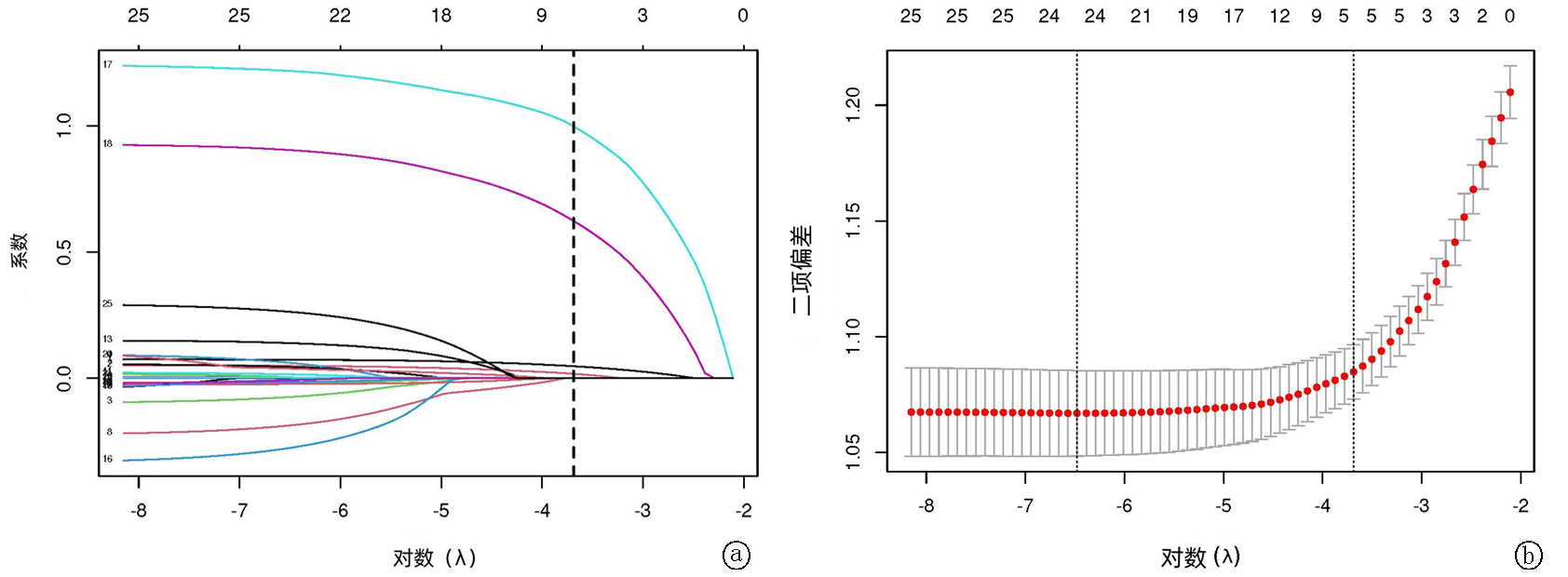
Fig. 1 LASSO regression model for selecting predictive variables for GDM a. LASSO variable selection path; b. LASSO cross-validation plot, λ.1se=0.02504
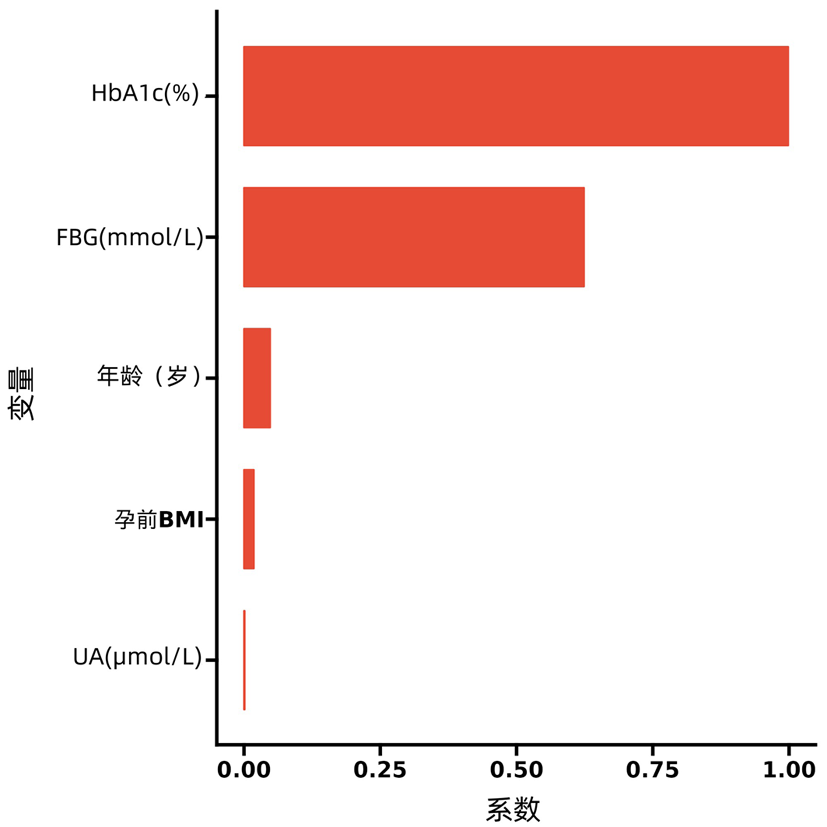
Fig. 2 Histogram of predictive variables selected by LASSO and their corresponding coefficients
| 变量 | 建模队列 | GDM | OR(95% | AUC(95% | |
|---|---|---|---|---|---|
| 年龄(岁) | 3 183 | 926 | 1.10(1.08, 1.11) | <0.01 | 0.629(0.608-0.650) |
| pre-BMI | 3 183 | 926 | 1.11(1.08, 1.15) | <0.01 | 0.587(0.566-0.607) |
| UA(μmol/L) | 3 183 | 926 | 1.00(1.00, 1.01) | <0.01 | 0.574(0.552-0.595) |
| HbA1c(%) | 3 183 | 926 | 5.22(4.17, 6.53) | <0.01 | 0.664(0.643-0.685) |
| FBG(mmol/L) | 3 183 | 926 | 3.18(2.62, 3.85) | <0.01 | 0.628(0.607-0.650) |
Tab.2 Univariate logistic regression and AUC values for individual predictors
| 变量 | 建模队列 | GDM | OR(95% | AUC(95% | |
|---|---|---|---|---|---|
| 年龄(岁) | 3 183 | 926 | 1.10(1.08, 1.11) | <0.01 | 0.629(0.608-0.650) |
| pre-BMI | 3 183 | 926 | 1.11(1.08, 1.15) | <0.01 | 0.587(0.566-0.607) |
| UA(μmol/L) | 3 183 | 926 | 1.00(1.00, 1.01) | <0.01 | 0.574(0.552-0.595) |
| HbA1c(%) | 3 183 | 926 | 5.22(4.17, 6.53) | <0.01 | 0.664(0.643-0.685) |
| FBG(mmol/L) | 3 183 | 926 | 3.18(2.62, 3.85) | <0.01 | 0.628(0.607-0.650) |
| 变量 | 建模队列 | GDM | OR(95% | |
|---|---|---|---|---|
| 年龄(岁) | 3 183 | 926 | 1.08(1.06, 1.09) | <0.01 |
| pre-BMI | 3 183 | 926 | 1.05(1.02, 1.08) | 0.002 |
| UA(μmol/L) | 3 183 | 926 | 1.00(1.00, 1.01) | <0.01 |
| HbA1c(%) | 3 183 | 926 | 3.53(2.79, 4.45) | <0.01 |
| FBG(mmol/L) | 3 183 | 926 | 2.44(1.99, 3.00) | <0.01 |
Tab.3 Multivariate logistic regression results in the development cohort
| 变量 | 建模队列 | GDM | OR(95% | |
|---|---|---|---|---|
| 年龄(岁) | 3 183 | 926 | 1.08(1.06, 1.09) | <0.01 |
| pre-BMI | 3 183 | 926 | 1.05(1.02, 1.08) | 0.002 |
| UA(μmol/L) | 3 183 | 926 | 1.00(1.00, 1.01) | <0.01 |
| HbA1c(%) | 3 183 | 926 | 3.53(2.79, 4.45) | <0.01 |
| FBG(mmol/L) | 3 183 | 926 | 2.44(1.99, 3.00) | <0.01 |
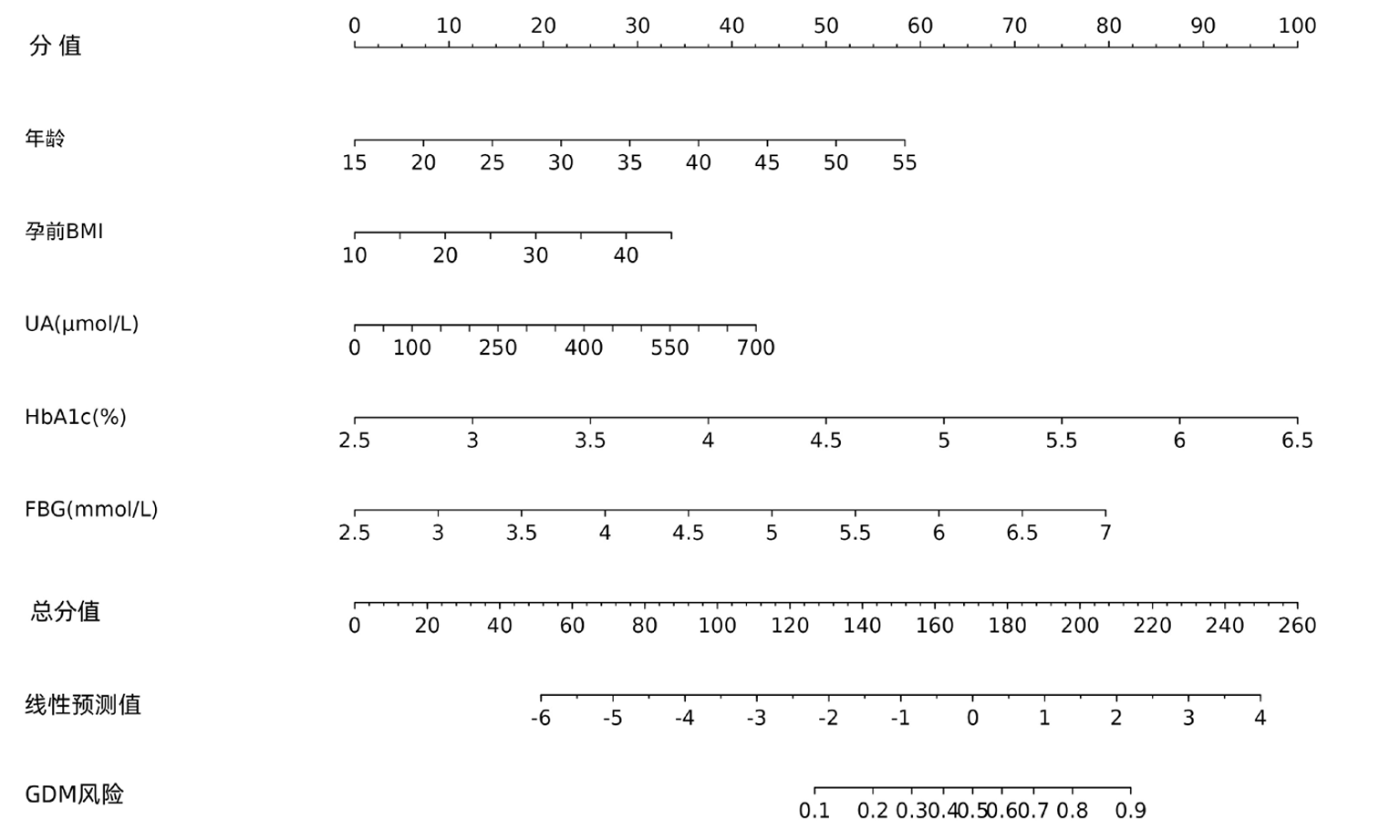
Fig.3 Nomogram developed in the development cohort
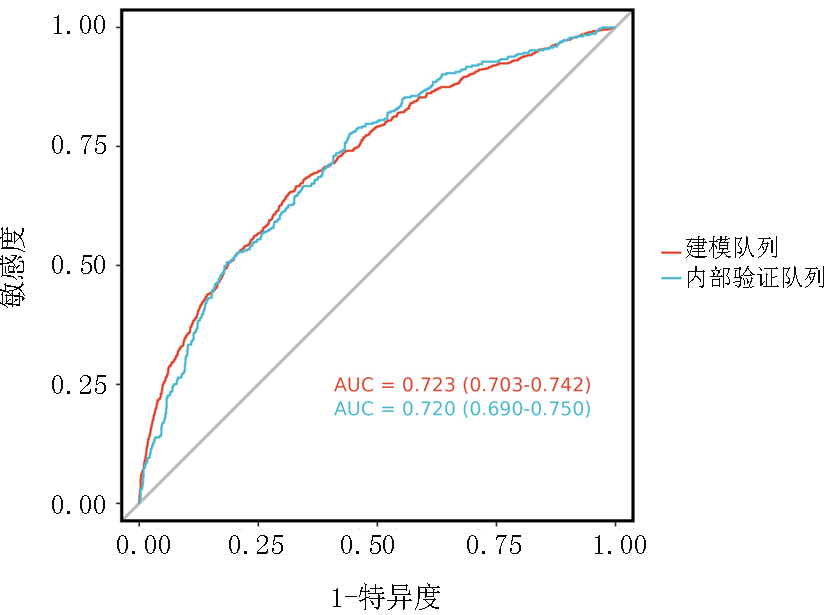
Fig.4 ROC curve of the prediction model in the cohort
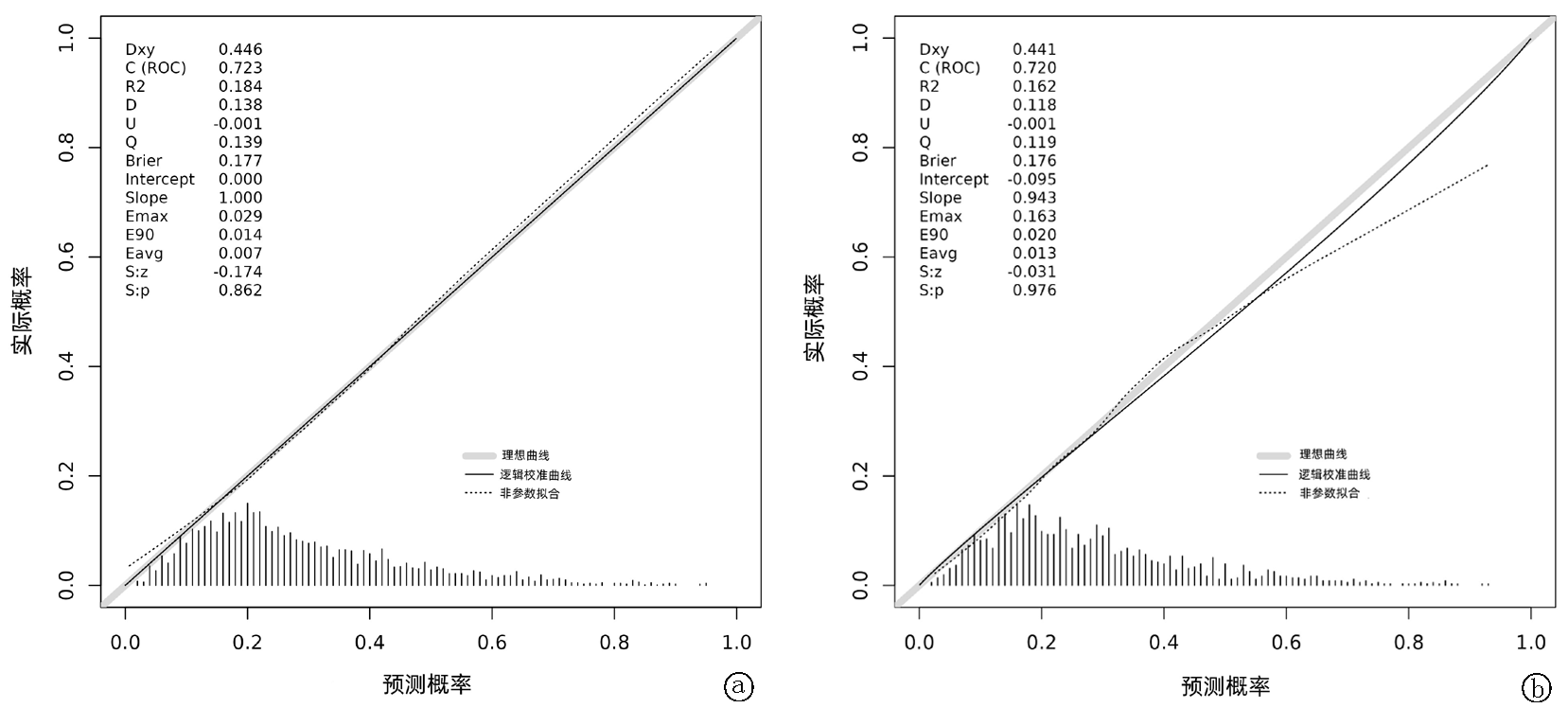
Fig.5 Calibration curves of the nomogram prediction model a. based on the development cohort; b. based on the internal validation cohort
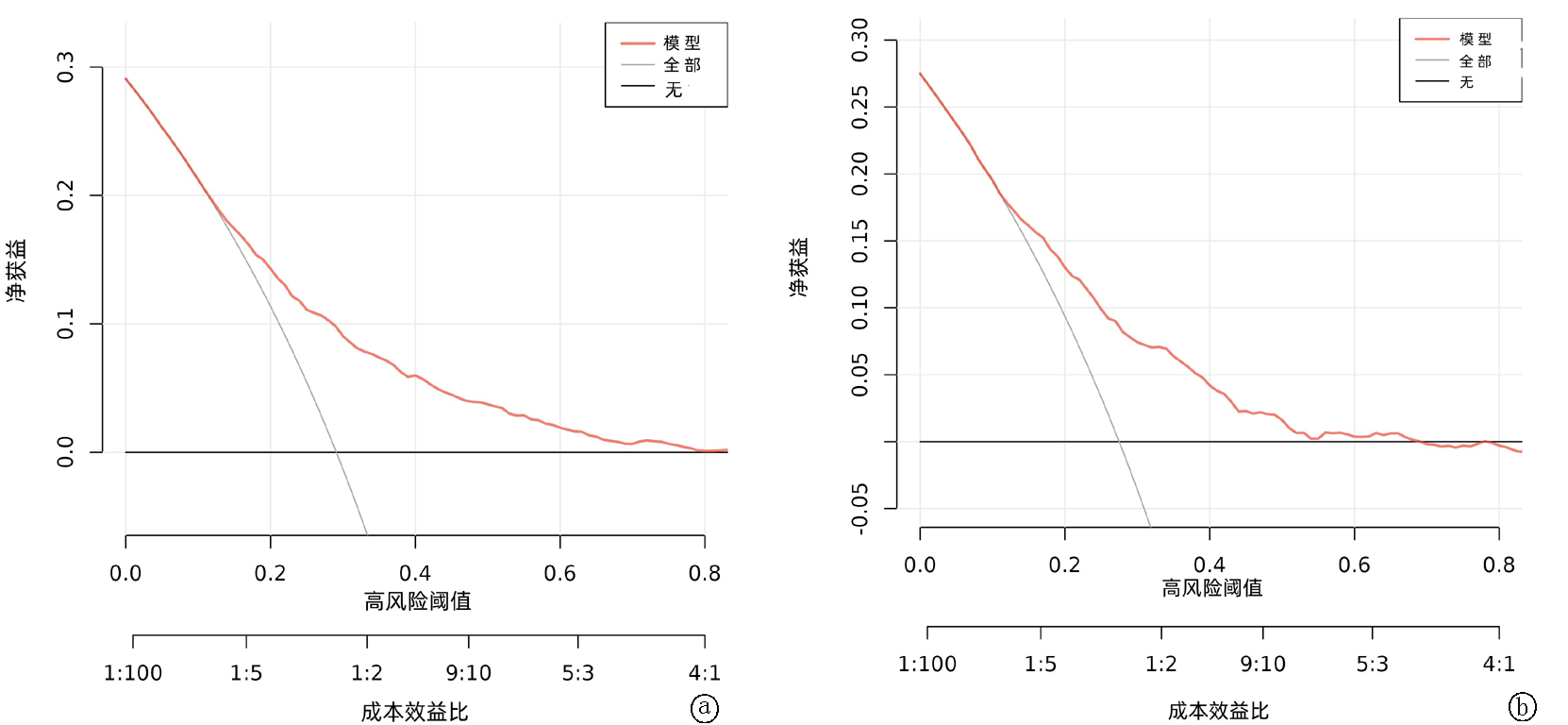
Fig.6 Decision curve analysis of the model a. based on the development cohort; b. based on the internal validation cohort
| [1] | Assani MZ, Boldeanu L, Manolea MM, et al. From molecular insights to clinical management of gestational diabetes mellitus-a narrative review[J]. Int J Mol Sci, 2025, 26(17):8719. doi:10.3390/ijms26178719. |
| [2] | Zhang Z, Zhang Y, Huang S, et al. Influence of gestational diabetes mellitus on the cardiovascular system and its underlying mechanisms[J]. Front Endocrinol (Lausanne), 2025, 16:1474643. doi:10.3389/fendo.2025.1474643. |
| [3] |
Sweeting A, Hare MJ, de Jersey SJ, et al. Australasian Diabetes in Pregnancy Society (ADIPS) 2025 consensus recommendations for the screening, diagnosis and classification of gestational diabetes[J]. Med J Aust, 2025, 223(3):161-167. doi:10.5694/mja2.52696.
pmid: 40544364 |
| [4] |
Sweeting A, Wong J, Murphy HR, et al. A clinical update on gestational diabetes mellitus[J]. Endocr Rev, 2022, 43(5):763-793. doi:10.1210/endrev/bnac003.
pmid: 35041752 |
| [5] |
Zhang L, Yan X, Zheng W, et al. Assessment of first-trimester insulin resistance indices for gestational diabetes mellitus: A prospective cohort study[J]. J Endocrinol Invest, 2025, 48(9):2167-2176.doi:10.1007/s40618-025-02630-4.
pmid: 40650817 |
| [6] | Song S, Luo Q, Zhong X, et al. An elevated triglyceride-glucose index in the first-trimester predicts adverse pregnancy outcomes: A retrospective cohort study[J]. Arch Gynecol Obstet, 2025, 311(3):915-927.doi:10.1007/s00404-025-07973-0. |
| [7] |
Jagriti, Prabhat, Jain A, et al. Gestational diabetes mellitus (GDM): Diagnosis using biochemical parameters and anthropometric measurements during the first trimester in the Indian population[J]. Horm Mol Biol Clin Investig, 2024, 46(2):77-83. doi:10.1515/hmbci-2024-0040.
pmid: 39526985 |
| [8] |
International Association of Diabetes and Pregnancy Study Groups Consensus Panel, Metzger BE, Gabbe SG, et al. International association of diabetes and pregnancy study groups recommendations on the diagnosis and classification of hyperglycemia in pregnancy[J]. Diabetes Care, 2010, 33(3):676-682. doi:10.2337/dc09-1848.
pmid: 20190296 |
| [9] | 尚红, 王毓三, 申子瑜. 全国临床检验操作规程[M]. 4版. 北京: 人民卫生出版社,2015:200-281. |
| [10] |
Abdul-Ghani MA, Tripathy D, DeFronzo RA. Contributions of beta-cell dysfunction and insulin resistance to the pathogenesis of impaired glucose tolerance and impaired fasting glucose[J]. Diabetes Care, 2006, 29(5):1130-1139. doi:10.2337/diacare.2951130.
pmid: 16644654 |
| [11] | 陈淑萍, 丁锦根, 郑珠莲. 孕早期空腹血糖、餐后2 h血糖及糖化血红蛋白联合检测在妊娠期糖尿病中的诊断价值[J]. 糖尿病新世界, 2024, 27(4):53-55.doi:10.16658/j.cnki.1672-4062.2024.04.053. |
| [12] |
Wrench E, Subar DA, Bampouras TM, et al. Myths and methodologies: Assessing glycaemic control and associated regulatory mechanisms in human physiology research[J]. Exp Physiol, 2024, 109(9):1461-1477. doi:10.1113/EP091433.
pmid: 39014995 |
| [13] |
Yang M, Wei Y, Liu J, et al. Contributions of hepatic insulin resistance and islet β-cell dysfunction to the blood glucose spectrum in newly diagnosed type 2 diabetes mellitus[J]. Diabetes Metab J, 2025, 49(4):883-892. doi:10.4093/dmj.2024.0537.
pmid: 39943844 |
| [14] | Su S, Zhang E, Gao S, et al. Serum uric acid and the risk of gestational diabetes mellitus: A systematic review and meta-analysis[J]. Gynecol Endocrinol, 2023, 39(1):2231101. doi:10.1080/09513590.2023.2231101. |
| [15] | Zhi L, Yuzhang Z, Tianliang H, et al. High uric acid induces insulin resistance in cardiomyocytes in vitro and in vivo[J]. PLoS One, 2016, 11(2):e0147737. doi:10.1371/journal.pone.0147737. |
| [16] | 李阳, 蒋玉芬, 李奕. 妊娠期糖尿病患者发病的危险因素及炎性应激状态分析[J]. 实用临床医药杂志, 2025, 29(4):64-68. |
| [17] | Li Y, Ren X, He L, et al. Maternal age and the risk of gestational diabetes mellitus: A systematic review and meta-analysis of over 120 million participants[J]. Diabetes Res Clin Pract, 2020, 162:108044. doi:10.1016/j.diabres.2020.108044. |
| [18] | Zhang H, Dai J, Zhang W, et al. Integration of clinical demographics and routine laboratory analysis parameters for early prediction of gestational diabetes mellitus in the Chinese population[J]. Front Endocrinol (Lausanne), 2023, 14:1216832. doi:10.3389/fendo.2023.1216832. |
| [19] | Kang M, Zhang H, Zhang J, et al. A novel nomogram for predicting gestational diabetes mellitus during early pregnancy[J]. Front Endocrinol (Lausanne), 2021, 12:779210. doi:10.3389/fendo.2021.779210. |
| [20] |
Li R, Yuan K, Yu X, et al. Construction and validation of risk prediction model for gestational diabetes based on a nomogram[J]. Am J Transl Res, 2023, 15(2):1223-1230.
pmid: 36915791 |
| [21] | Zhu T, Tang L, Qin M, et al. Prediction of Gestational Diabetes Mellitus (GDM) risk in early pregnancy based on clinical data and ultrasound information: A nomogram[J]. BMC Med Inform Decis Mak, 2025, 25(1):138. doi:10.1186/s12911-025-02962-4. |
| [22] | Han W, Song Y, Xu Y, et al. Association analysis of MTHFR (C677T, A1298C) and MTRR (A66G) gene polymorphisms on susceptibility to gestational diabetes mellitus in Chinese pregnant women[J]. Gynecol Endocrinol, 2025, 41(1):2565256. doi:10.1080/09513590.2025.2565256. |
| [23] |
Huang G, Sun Y, Li R, et al. Functional genetic variants and susceptibility and prediction of gestational diabetes mellitus[J]. Sci Rep, 2024, 14(1):18123. doi:10.1038/s41598-024-69079-y.
pmid: 39103437 |
| [24] |
Liang Q, Li M, Huang G, et al. Genetic susceptibility, mendelian randomization, and nomogram model construction of gestational diabetes mellitus[J]. J Clin Endocrinol Metab, 2024, 109(11):2802-2814. doi:10.1210/clinem/dgae200.
pmid: 38625888 |
| [25] | 魏曼, 苑文贺, 刘红云, 等. 妊娠期糖尿病患者血清分泌性卷曲相关蛋白-5、热休克蛋白60、溶质载体家族16成员11的表达及其与胰岛素抵抗的关系[J]. 实用临床医药杂志, 2024, 28(20):60-65. |
| Viewed | ||||||
|
Full text |
|
|||||
|
Abstract |
|
|||||