
临床荟萃 ›› 2026, Vol. 41 ›› Issue (8): 716-724.doi: 10.3969/j.issn.1004-583X.2026.08.008
宋旭芳( ), 陈飞飞, 王林风
收稿日期:2026-06-10
出版日期:2026-08-20
发布日期:2026-08-25
通讯作者:
宋旭芳
E-mail:songxuff02@163.com
Song Xufang(), Chen Feifei, Wang Linfeng
Received:2026-06-10
Online:2026-08-20
Published:2026-08-25
Contact:
Song Xufang
E-mail:songxuff02@163.com
摘要:
目的 探讨慢性肾脏病5期血液透析患者认知功能障碍(cognitive impairment, CI)的影响因素,并构建风险预测模型。方法 纳入2022年11月-2025年11月就诊于平顶山市第一人民医院肾脏病风湿免疫科慢性肾脏病5期血液透析患者184例,按6∶2∶2比例分为建模组(训练集110例、测试集37例),内部验证集37例。依据CI筛查结果将患者分为CI组和no-CI组,采用单因素分析、LASSO回归、多因素logistic回归分析确定CI的影响因素,构建预测模型,并结合测试集数据验证预测效能。结果 184例中发生CI例数为60例,总体发生率为32.61%。经LASSO回归筛选26个变量后,多因素logistic回归分析确定年龄(OR=1.074)、受教育年限(OR=0.808)、透析龄 (OR=1.074)、血清白蛋白(OR=0.856)及β受体阻滞剂使用(OR=4.359)为CI独立影响因素(均P<0.05)。预测模型在训练集、验证集、测试集的AUC分别为0.922(95%CI:0.866~0.978)、0.943(95%CI:0.814~0.993)和0.933(95%CI:0.800~0.989),5折交叉验证模型平均AUC为0.909(95%CI:0.828~0.989);校准曲线显示,模型预测概率与实际概率高度一致(P>0.05);临床决策曲线,当决策阈值为0.080~0.320时,使用该模型进行决策能带来额外的临床净收益。结论 慢性肾脏病5期血液透析患者CI发生率较高,年龄增长、透析龄延长、β受体阻滞剂使用是其独立危险因素,受教育年限延长和血清白蛋白水平升高为保护因素。构建的预测模型区分度、校准度和临床实用性良好,可为早期识别CI高风险患者提供工具。
中图分类号:
宋旭芳, 陈飞飞, 王林风. 慢性肾脏病5期血液透析患者认知功能障碍的影响因素分析及风险预测模型开发[J]. 临床荟萃, 2026, 41(8): 716-724.
Song Xufang, Chen Feifei, Wang Linfeng. Analysis of factors associated with cognitive impairment in patients with stage 5 chronic kidney disease undergoing hemodialysis and development of a risk prediction model[J]. Clinical Focus, 2026, 41(8): 716-724.
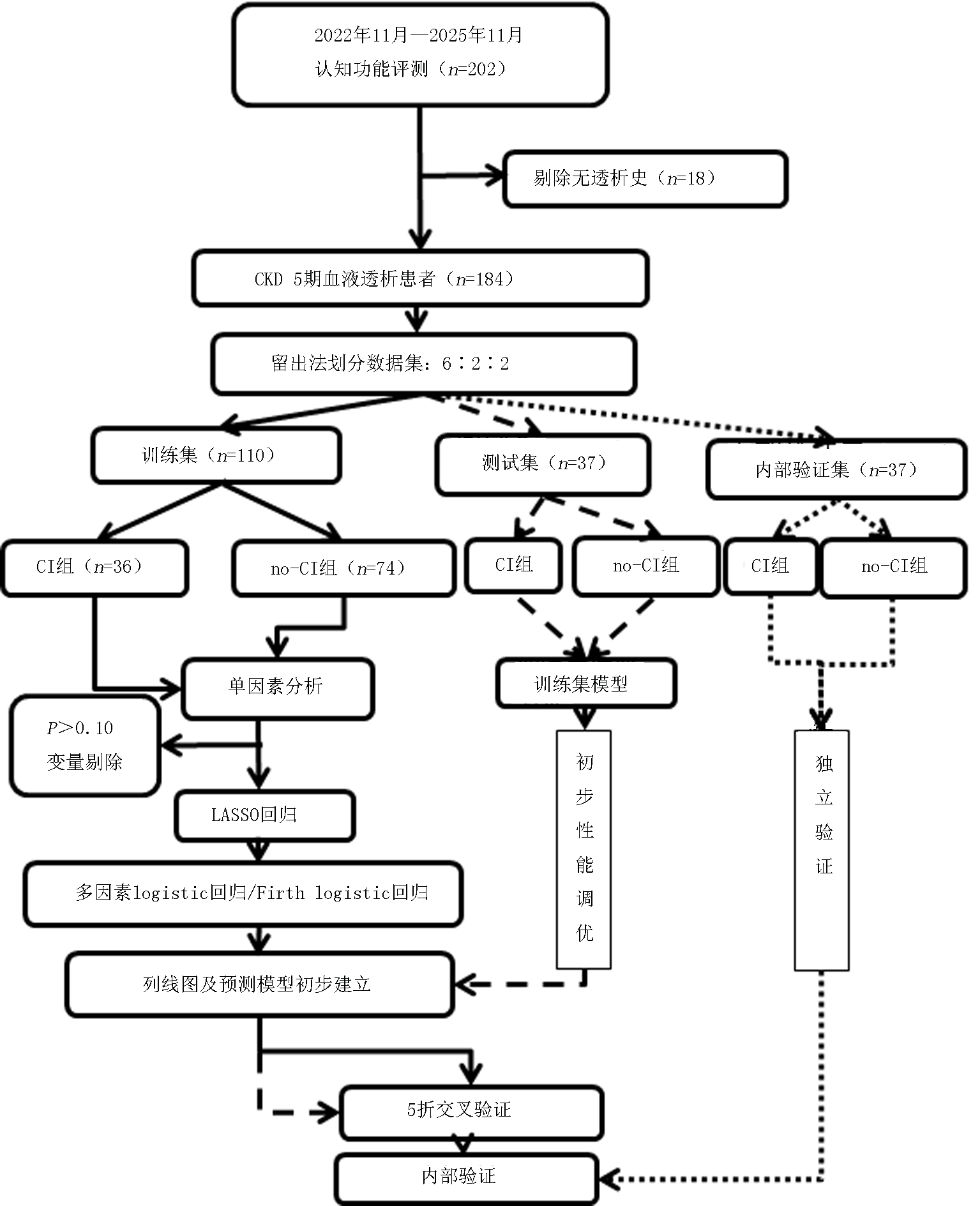
图1 样本收集及变量分析流程图
Fig.1 Flowchart of sample collection and variable analysis
| 项目 | 训练集(n=110) | 测试集(n=37) | 验证集(n=37) | F/Z/χ2值 | P值 |
|---|---|---|---|---|---|
| CI发生率[例(%)] | 36(32.73) | 12(32.43) | 12(32.43) | 0.002 | 0.999 |
| 年龄(岁) | 58.22±11.40 | 61.38±12.03 | 56.59±12.24 | 1.642 | 0.196 |
| 性别[例(%)] | |||||
| 男 女 | 66(60.00) 44(40.00) | 21(56.76) 16(43.24) | 23(62.16) 14(37.84) | 0.230 | 0.891 |
| 体质量指数(kg/m2) | 22.81±3.37 | 23.26±3.28 | 23.12±3.69 | 0.296 | 0.744 |
| 受教育年限(年) | 11.00(8.00, 13.00) | 11.00(9.00, 13.00) | 11.00(7.00, 14.00) | 0.101 | 0.951 |
| 原发疾病[例(%)] | |||||
| 糖尿病肾病 | 42(38.18) | 17(45.95) | 13(35.14) | ||
| 高血压肾损害 | 33(30.00) | 7(18.92) | 9(24.32) | 2.821 | 0.831 |
| 慢性肾小球肾炎 | 20(18.18) | 8(21.62) | 8(21.62) | ||
| 其他 | 15(13.64) | 5(13.51) | 7(18.92) | ||
| 并发症[例(%)] | |||||
| 高血压病 | 78(70.91) | 28(75.68) | 27(72.97) | 0.325 | 0.850 |
| 2型糖尿病 | 50(45.45) | 15(40.54) | 18(48.65) | 0.504 | 0.777 |
| 心力衰竭 | 31(28.18) | 8(21.62) | 15(40.54) | 3.373 | 0.185 |
| 透析参数 | |||||
| 透析龄(月) | 32.00(22.25, 45.00) | 32.00(24.00, 45.00) | 38.00(20.00, 51.00) | 0.688 | 0.709 |
| 高通量HD模式[例(%)] | 72(65.45) | 22(59.46) | 27(72.97) | 1.512 | 0.470 |
| 动静脉内瘘[例(%)] | 94(85.45) | 34(91.89) | 31(83.78) | 1.250 | 0.535 |
| IDWG(%) | 3.95(2.71, 4.80) | 3.63(2.79, 4.50) | 4.04(2.62, 4.89) | 0.920 | 0.631 |
| 超滤率[ml/(kg·h)] | 9.49±2.53 | 8.98±2.32 | 10.03±2.73 | 1.609 | 0.203 |
| 单室Kt/V | 1.45±0.20 | 1.46±0.20 | 1.50±0.21 | 0.811 | 0.446 |
| 尿素氮下降率(%) | 70.02±5.85 | 70.84±5.36 | 70.08±6.28 | 0.281 | 0.755 |
| 血清白蛋白(g/L) | 36.48±4.19 | 35.87±4.26 | 36.89±4.18 | 0.560 | 0.572 |
| 血红蛋白(g/L) | 108.36±11.87 | 108.98±12.00 | 108.09±12.57 | 0.055 | 0.946 |
| 血磷(mmol/L) | 2.20±0.18 | 2.20±0.19 | 2.19±0.18 | 0.061 | 0.941 |
| 血钙(mmol/L) | 1.95±0.54 | 1.93±0.55 | 1.88±0.54 | 0.190 | 0.827 |
| 全段甲状旁腺素(ng/L) | 52.03±15.22 | 49.25±13.35 | 53.94±17.02 | 0.891 | 0.412 |
| 碳酸氢盐(mmol/L) | 22.54±2.97 | 22.52±3.61 | 23.12±2.29 | 0.569 | 0.567 |
| 高敏C反应蛋白(mg/L) | 1.21(0.01, 6.73) | 2.64(0.01, 8.71) | 1.04(0.01, 5.85) | 1.681 | 0.431 |
| 同型半胱氨酸(μmol/L) | 25.60(18.96, 29.73) | 26.42(18.84, 30.71) | 24.78(16.76, 30.14) | 0.427 | 0.808 |
| 症状与事件[例(%)] | |||||
| 透析中低血压 | 28(25.45) | 8(21.62) | 10(27.03) | 0.318 | 0.853 |
| 不宁腿综合征 | 22(20.00) | 8(21.62) | 5(13.51) | 0.960 | 0.619 |
| 肌肉痉挛发生 | 31(28.18) | 9(24.32) | 10(27.03) | 0.209 | 0.901 |
| 头痛/恶心/呕吐 | 39(35.45) | 18(48.65) | 9(24.32) | 4.779 | 0.092 |
| 睡眠状况“差” | 44(40.00) | 13(35.14) | 15(40.54) | 0.314 | 0.855 |
| 跌倒史(近1月) | 11(10.00) | 1(2.70) | 4(10.81) | - | 0.408 |
| 营养状况“差” | 28(25.45) | 8(21.62) | 9(24.32) | 0.221 | 0.896 |
| 存在抑郁/焦虑情绪 | 37(33.64) | 12(32.43) | 13(35.14) | 0.061 | 0.970 |
| 药物使用[例(%)] | |||||
| 使用降压药 | 74(67.27) | 26(70.27) | 24(64.86) | 0.248 | 0.884 |
| 使用活性维生素D | 67(60.91) | 24(64.86) | 22(59.46) | 0.257 | 0.879 |
| 使用ACEI/ARB | 44(40.00) | 16(43.24) | 13(35.14) | 0.520 | 0.771 |
| 使用β受体阻滞剂 | 16(14.55) | 6(16.22) | 5(13.51) | 0.112 | 0.946 |
| 使用他汀类药物 | 77(70.00) | 25(67.57) | 27(72.97) | 0.259 | 0.878 |
表1 不同数据集CI的患病率及基线资料比较
Tab.1 Comparison of CI prevalence and baseline characteristics across different datasets
| 项目 | 训练集(n=110) | 测试集(n=37) | 验证集(n=37) | F/Z/χ2值 | P值 |
|---|---|---|---|---|---|
| CI发生率[例(%)] | 36(32.73) | 12(32.43) | 12(32.43) | 0.002 | 0.999 |
| 年龄(岁) | 58.22±11.40 | 61.38±12.03 | 56.59±12.24 | 1.642 | 0.196 |
| 性别[例(%)] | |||||
| 男 女 | 66(60.00) 44(40.00) | 21(56.76) 16(43.24) | 23(62.16) 14(37.84) | 0.230 | 0.891 |
| 体质量指数(kg/m2) | 22.81±3.37 | 23.26±3.28 | 23.12±3.69 | 0.296 | 0.744 |
| 受教育年限(年) | 11.00(8.00, 13.00) | 11.00(9.00, 13.00) | 11.00(7.00, 14.00) | 0.101 | 0.951 |
| 原发疾病[例(%)] | |||||
| 糖尿病肾病 | 42(38.18) | 17(45.95) | 13(35.14) | ||
| 高血压肾损害 | 33(30.00) | 7(18.92) | 9(24.32) | 2.821 | 0.831 |
| 慢性肾小球肾炎 | 20(18.18) | 8(21.62) | 8(21.62) | ||
| 其他 | 15(13.64) | 5(13.51) | 7(18.92) | ||
| 并发症[例(%)] | |||||
| 高血压病 | 78(70.91) | 28(75.68) | 27(72.97) | 0.325 | 0.850 |
| 2型糖尿病 | 50(45.45) | 15(40.54) | 18(48.65) | 0.504 | 0.777 |
| 心力衰竭 | 31(28.18) | 8(21.62) | 15(40.54) | 3.373 | 0.185 |
| 透析参数 | |||||
| 透析龄(月) | 32.00(22.25, 45.00) | 32.00(24.00, 45.00) | 38.00(20.00, 51.00) | 0.688 | 0.709 |
| 高通量HD模式[例(%)] | 72(65.45) | 22(59.46) | 27(72.97) | 1.512 | 0.470 |
| 动静脉内瘘[例(%)] | 94(85.45) | 34(91.89) | 31(83.78) | 1.250 | 0.535 |
| IDWG(%) | 3.95(2.71, 4.80) | 3.63(2.79, 4.50) | 4.04(2.62, 4.89) | 0.920 | 0.631 |
| 超滤率[ml/(kg·h)] | 9.49±2.53 | 8.98±2.32 | 10.03±2.73 | 1.609 | 0.203 |
| 单室Kt/V | 1.45±0.20 | 1.46±0.20 | 1.50±0.21 | 0.811 | 0.446 |
| 尿素氮下降率(%) | 70.02±5.85 | 70.84±5.36 | 70.08±6.28 | 0.281 | 0.755 |
| 血清白蛋白(g/L) | 36.48±4.19 | 35.87±4.26 | 36.89±4.18 | 0.560 | 0.572 |
| 血红蛋白(g/L) | 108.36±11.87 | 108.98±12.00 | 108.09±12.57 | 0.055 | 0.946 |
| 血磷(mmol/L) | 2.20±0.18 | 2.20±0.19 | 2.19±0.18 | 0.061 | 0.941 |
| 血钙(mmol/L) | 1.95±0.54 | 1.93±0.55 | 1.88±0.54 | 0.190 | 0.827 |
| 全段甲状旁腺素(ng/L) | 52.03±15.22 | 49.25±13.35 | 53.94±17.02 | 0.891 | 0.412 |
| 碳酸氢盐(mmol/L) | 22.54±2.97 | 22.52±3.61 | 23.12±2.29 | 0.569 | 0.567 |
| 高敏C反应蛋白(mg/L) | 1.21(0.01, 6.73) | 2.64(0.01, 8.71) | 1.04(0.01, 5.85) | 1.681 | 0.431 |
| 同型半胱氨酸(μmol/L) | 25.60(18.96, 29.73) | 26.42(18.84, 30.71) | 24.78(16.76, 30.14) | 0.427 | 0.808 |
| 症状与事件[例(%)] | |||||
| 透析中低血压 | 28(25.45) | 8(21.62) | 10(27.03) | 0.318 | 0.853 |
| 不宁腿综合征 | 22(20.00) | 8(21.62) | 5(13.51) | 0.960 | 0.619 |
| 肌肉痉挛发生 | 31(28.18) | 9(24.32) | 10(27.03) | 0.209 | 0.901 |
| 头痛/恶心/呕吐 | 39(35.45) | 18(48.65) | 9(24.32) | 4.779 | 0.092 |
| 睡眠状况“差” | 44(40.00) | 13(35.14) | 15(40.54) | 0.314 | 0.855 |
| 跌倒史(近1月) | 11(10.00) | 1(2.70) | 4(10.81) | - | 0.408 |
| 营养状况“差” | 28(25.45) | 8(21.62) | 9(24.32) | 0.221 | 0.896 |
| 存在抑郁/焦虑情绪 | 37(33.64) | 12(32.43) | 13(35.14) | 0.061 | 0.970 |
| 药物使用[例(%)] | |||||
| 使用降压药 | 74(67.27) | 26(70.27) | 24(64.86) | 0.248 | 0.884 |
| 使用活性维生素D | 67(60.91) | 24(64.86) | 22(59.46) | 0.257 | 0.879 |
| 使用ACEI/ARB | 44(40.00) | 16(43.24) | 13(35.14) | 0.520 | 0.771 |
| 使用β受体阻滞剂 | 16(14.55) | 6(16.22) | 5(13.51) | 0.112 | 0.946 |
| 使用他汀类药物 | 77(70.00) | 25(67.57) | 27(72.97) | 0.259 | 0.878 |
| 项目 | no-CI组(n=74) | CI组(n=36) | t/Z/χ2值 | P值 |
|---|---|---|---|---|
| 年龄(岁) | 55.50±11.44 | 63.81±9.18 | 3.800 | <0.01 |
| 性别[例(%)] | ||||
| 男 女 | 46(62.16) 28(37.84) | 20(55.56) 16(44.44) | 0.440 | 0.507 |
| 体质量指数(kg/m2) | 23.20±3.10 | 22.00±3.80 | 1.766 | 0.080 |
| 受教育年限(年) | 12.00(7.00, 14.00) | 9.00(6.00, 11.25) | 3.494 | <0.01 |
| 原发疾病[例(%)] | ||||
| 糖尿病肾病 | 22(29.73) | 20(55.56) | ||
| 高血压肾损害 | 24(32.43) | 9(25.00) | - | 0.075 |
| 慢性肾小球肾炎 | 16(21.62) | 4(11.11) | ||
| 并发症[例(%)] | ||||
| 高血压病 | 45(60.81) | 33(91.67) | 11.178 | 0.001 |
| 2型糖尿病 | 28(37.84) | 22(61.11) | 5.291 | 0.021 |
| 心力衰竭 | 18(24.32) | 13(36.11) | 1.662 | 0.197 |
| 透析参数 | ||||
| 透析龄(月) | 26.00(20.00, 38.75) | 44.50(32.00, 61.75) | -4.955 | <0.01 |
| 高通量HD模式[例(%)] | 24(32.43) | 14(38.89) | 0.446 | 0.504 |
| 动静脉内瘘[例(%)] | 66(89.19) | 28(77.78) | 2.537 | 0.111 |
| IDWG(%) | 3.46(2.64, 4.60) | 4.06(3.44, 4.99) | -1.653 | 0.098 |
| 超滤率[ml/(kg·h)] | 9.10±2.30 | 10.30±2.80 | -2.388 | 0.019 |
| 单室Kt/V | 1.48±0.19 | 1.40±0.22 | 1.967 | 0.052 |
| 尿素氮下降率(%) | 71.00±5.28 | 68.00±6.51 | 2.587 | 0.011 |
| 血清白蛋白(g/L) | 37.30±3.80 | 34.80±4.50 | 3.045 | 0.003 |
| 血红蛋白(g/L) | 110.00±11.00 | 105.00±13.00 | 2.106 | 0.038 |
| 血磷(mmol/L) | 2.21±0.17 | 2.18±0.20 | 0.845 | 0.400 |
| 血钙(mmol/L) | 1.87±0.50 | 2.10±0.60 | -2.110 | 0.037 |
| 全段甲状旁腺素(ng/L) | 50.10±14.10 | 56.00±16.80 | -1.932 | 0.056 |
| 碳酸氢盐(mmol/L) | 22.90±2.80 | 21.80±3.20 | 1.843 | 0.068 |
| 高敏C反应蛋白(mg/L) | 0.26(0.01, 3.99) | 5.73(2.34, 9.51) | -3.168 | 0.002 |
| 同型半胱氨酸(μmol/L) | 23.20±7.60 | 28.50±9.10 | -3.213 | 0.002 |
| 症状与事件[例(%)] | ||||
| 透析中低血压 | 13(17.57) | 15(41.67) | 7.412 | 0.006 |
| 不宁腿综合征 | 12(16.22) | 10(27.78) | 2.023 | 0.155 |
| 肌肉痉挛发生 | 17(22.97) | 14(38.89) | 3.031 | 0.082 |
| 头痛/恶心/呕吐 | 21(28.38) | 18(50.00) | 4.947 | 0.026 |
| 睡眠状况“差” | 22(29.73) | 22(61.11) | 9.937 | 0.002 |
| 跌倒史(近1月) | 5(6.76) | 6(16.67) | 1.656 | 0.198 |
| 营养状况“差” | 14(18.92) | 14(38.89) | 5.090 | 0.024 |
| 存在抑郁/焦虑情绪 | 19(25.68) | 18(50.00) | 6.419 | 0.011 |
| 药物使用[例(%)] | ||||
| 使用降压药 | 45(60.81) | 29(80.56) | 4.288 | 0.038 |
| 使用活性维生素D | 42(56.76) | 25(69.44) | 1.637 | 0.201 |
| 使用ACEI/ARB | 32(43.24) | 12(33.33) | 0.991 | 0.320 |
| 使用β受体阻滞剂 | 6(8.11) | 10(27.78) | 7.538 | 0.006 |
| 使用他汀类药物 | 49(66.22) | 28(77.78) | 1.542 | 0.214 |
表2 训练集患者CI的单因素分析
Tab.2 Univariate analysis of CI in patients in the training set
| 项目 | no-CI组(n=74) | CI组(n=36) | t/Z/χ2值 | P值 |
|---|---|---|---|---|
| 年龄(岁) | 55.50±11.44 | 63.81±9.18 | 3.800 | <0.01 |
| 性别[例(%)] | ||||
| 男 女 | 46(62.16) 28(37.84) | 20(55.56) 16(44.44) | 0.440 | 0.507 |
| 体质量指数(kg/m2) | 23.20±3.10 | 22.00±3.80 | 1.766 | 0.080 |
| 受教育年限(年) | 12.00(7.00, 14.00) | 9.00(6.00, 11.25) | 3.494 | <0.01 |
| 原发疾病[例(%)] | ||||
| 糖尿病肾病 | 22(29.73) | 20(55.56) | ||
| 高血压肾损害 | 24(32.43) | 9(25.00) | - | 0.075 |
| 慢性肾小球肾炎 | 16(21.62) | 4(11.11) | ||
| 并发症[例(%)] | ||||
| 高血压病 | 45(60.81) | 33(91.67) | 11.178 | 0.001 |
| 2型糖尿病 | 28(37.84) | 22(61.11) | 5.291 | 0.021 |
| 心力衰竭 | 18(24.32) | 13(36.11) | 1.662 | 0.197 |
| 透析参数 | ||||
| 透析龄(月) | 26.00(20.00, 38.75) | 44.50(32.00, 61.75) | -4.955 | <0.01 |
| 高通量HD模式[例(%)] | 24(32.43) | 14(38.89) | 0.446 | 0.504 |
| 动静脉内瘘[例(%)] | 66(89.19) | 28(77.78) | 2.537 | 0.111 |
| IDWG(%) | 3.46(2.64, 4.60) | 4.06(3.44, 4.99) | -1.653 | 0.098 |
| 超滤率[ml/(kg·h)] | 9.10±2.30 | 10.30±2.80 | -2.388 | 0.019 |
| 单室Kt/V | 1.48±0.19 | 1.40±0.22 | 1.967 | 0.052 |
| 尿素氮下降率(%) | 71.00±5.28 | 68.00±6.51 | 2.587 | 0.011 |
| 血清白蛋白(g/L) | 37.30±3.80 | 34.80±4.50 | 3.045 | 0.003 |
| 血红蛋白(g/L) | 110.00±11.00 | 105.00±13.00 | 2.106 | 0.038 |
| 血磷(mmol/L) | 2.21±0.17 | 2.18±0.20 | 0.845 | 0.400 |
| 血钙(mmol/L) | 1.87±0.50 | 2.10±0.60 | -2.110 | 0.037 |
| 全段甲状旁腺素(ng/L) | 50.10±14.10 | 56.00±16.80 | -1.932 | 0.056 |
| 碳酸氢盐(mmol/L) | 22.90±2.80 | 21.80±3.20 | 1.843 | 0.068 |
| 高敏C反应蛋白(mg/L) | 0.26(0.01, 3.99) | 5.73(2.34, 9.51) | -3.168 | 0.002 |
| 同型半胱氨酸(μmol/L) | 23.20±7.60 | 28.50±9.10 | -3.213 | 0.002 |
| 症状与事件[例(%)] | ||||
| 透析中低血压 | 13(17.57) | 15(41.67) | 7.412 | 0.006 |
| 不宁腿综合征 | 12(16.22) | 10(27.78) | 2.023 | 0.155 |
| 肌肉痉挛发生 | 17(22.97) | 14(38.89) | 3.031 | 0.082 |
| 头痛/恶心/呕吐 | 21(28.38) | 18(50.00) | 4.947 | 0.026 |
| 睡眠状况“差” | 22(29.73) | 22(61.11) | 9.937 | 0.002 |
| 跌倒史(近1月) | 5(6.76) | 6(16.67) | 1.656 | 0.198 |
| 营养状况“差” | 14(18.92) | 14(38.89) | 5.090 | 0.024 |
| 存在抑郁/焦虑情绪 | 19(25.68) | 18(50.00) | 6.419 | 0.011 |
| 药物使用[例(%)] | ||||
| 使用降压药 | 45(60.81) | 29(80.56) | 4.288 | 0.038 |
| 使用活性维生素D | 42(56.76) | 25(69.44) | 1.637 | 0.201 |
| 使用ACEI/ARB | 32(43.24) | 12(33.33) | 0.991 | 0.320 |
| 使用β受体阻滞剂 | 6(8.11) | 10(27.78) | 7.538 | 0.006 |
| 使用他汀类药物 | 49(66.22) | 28(77.78) | 1.542 | 0.214 |
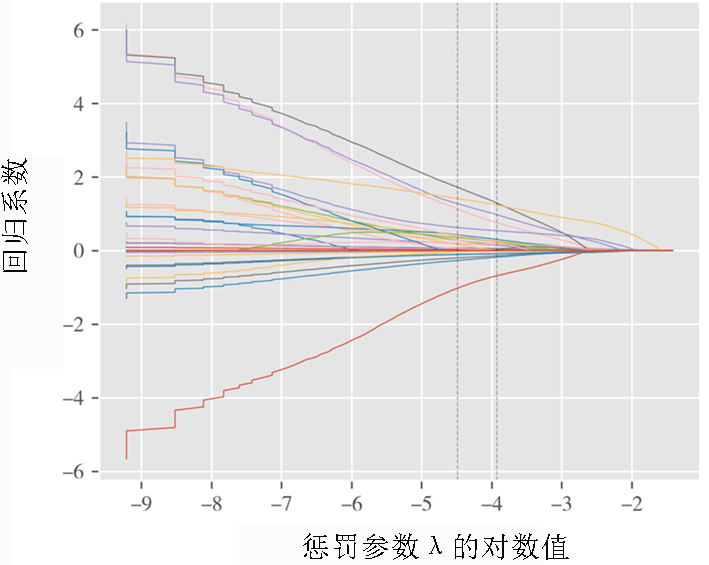
图2 LASSO回归系数曲线
Fig.2 LASSO regression coefficient profiles
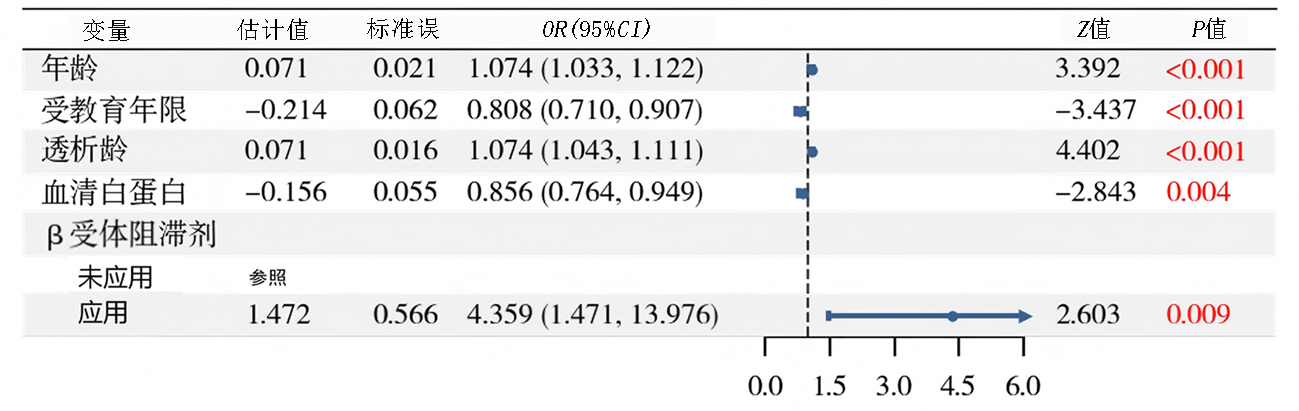
图3 多因素logistic回归森林图
Fig.3 Forest plot of multivariate logistic regression
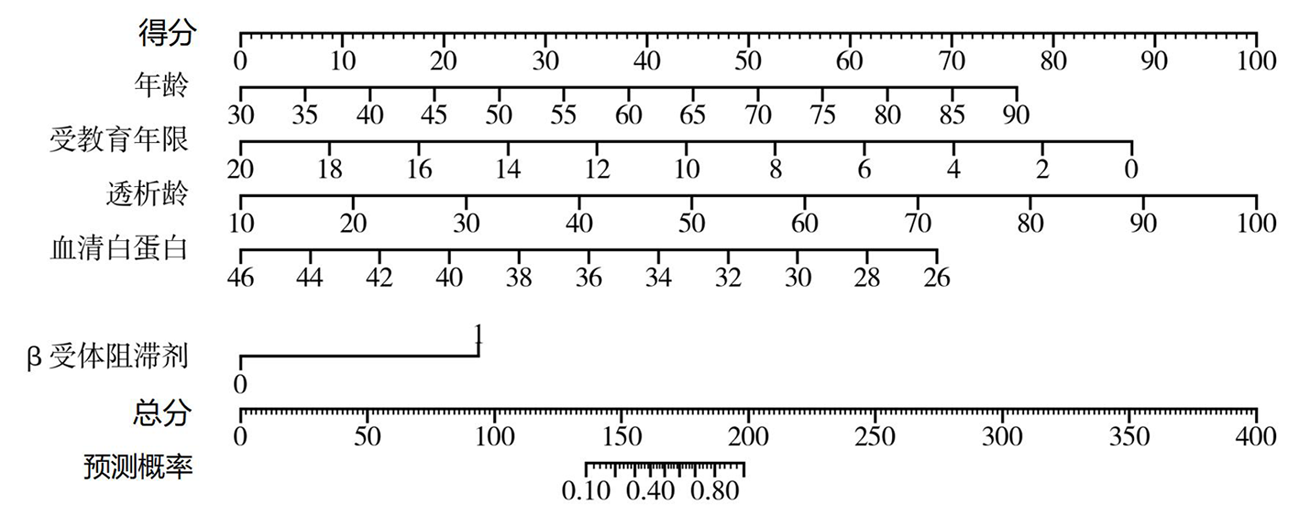
图4 CKD 5期血液透析患者CI发生的列线图 注:列线图顶部“得分”标尺上,根据患者各危险因素的实际取值向上作垂线读取对应分值,并将各分值累加获得总分。本模型总分为0~400分,对应底部"总分"标尺。随后,从总分点向下作垂线,与最下方预测概率轴相交,即可读取该患者未来发生CI的预测概率。
Fig.4 Nomogram for the occurrence of CI in patients with stage 5 chronic kidney disease undergoing hemodialysis Note: On the top “Points” scale of the nomogram, draw a vertical line upward from each patient’s actual value for each risk factor to obtain the corresponding score, and sum all scores to obtain the total score. The total score of this model ranges from 0 to 400 points, corresponding to the bottom “Total Points” scale. Then, draw a vertical line downward from the total score point to intersect the lowest prediction probability axis, where the predicted probability of future CI in the patient can be read.
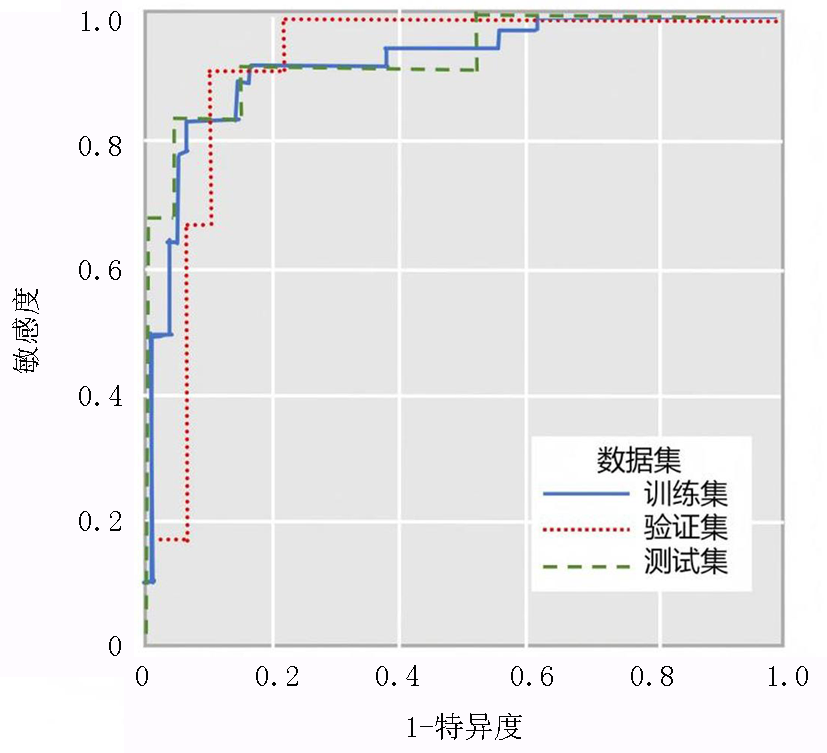
图5 不同数据集的ROC曲线
Fig.5 ROC curves across different datasets
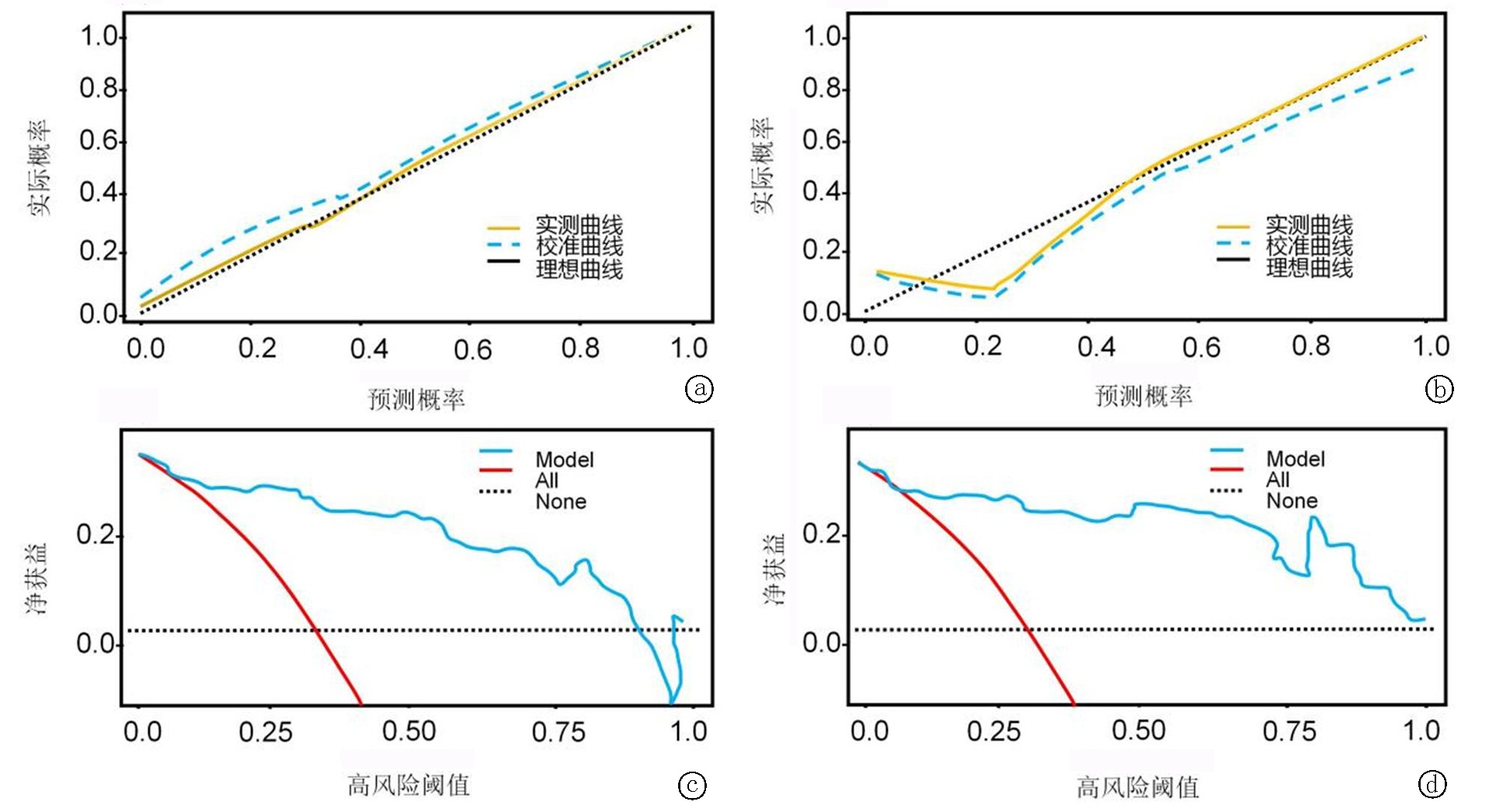
图6 不同数据集的校准曲线、临床决策曲线 a.训练集校准曲线;b.测试集校准曲线;c.训练集临床决策曲线;d.测试集临床决策曲线
Fig.6 Calibration curves and decision curve analysis across different datasets a. Calibration curve of the training set; b. Calibration curve of the test set; c. Decision curve analysis of the training set; d. Decision curve analysis of the test set
| [1] | Hassanein EHM, Ibrahim IM, Abd-Alhameed EK, et al. Nrf2/HO-1 as a therapeutic target in renal fibrosis[J]. Life Sci, 2023, 334:122209. doi: 10.1016/j.lfs.2023.122209. |
| [2] | Andrews TD, Day GS, Irani SR, et al. Uremic toxins, CKD, and cognitive dysfunction[J]. J Am Soc Nephrol, 2025, 36(6):1208-1226. doi: 10.1681/ASN.0000000675. |
| [3] |
Capasso G, Franssen CFM, Perna AF, et al. Drivers and mechanisms of cognitive decline in chronic kidney disease[J]. Nat Rev Nephrol, 2025, 21(8):536-552. doi: 10.1038/s41581-025-00963-0.
pmid: 40281076 |
| [4] |
Bobot M, Burtey S. New insights into mechanisms underlying cognitive impairment in chronic kidney disease[J]. Kidney Int, 2024, 106(6):1020-1022. doi: 10.1016/j.kint.2024.09.008.
pmid: 39577985 |
| [5] |
Chan FHF, Lim PXH, Zhu X, et al. Patient and health care provider perspectives of cognitive difficulties in dialysis[J]. Kidney Int Rep, 2025, 10(6):1771-1783. doi: 10.1016/j.ekir.2025.03.056.
pmid: 40630306 |
| [6] | 上海慢性肾脏病早发现及规范化诊治与示范项目专家组. 慢性肾脏病筛查诊断及防治指南[J]. 中国实用内科杂志, 2017, 37(1):28-34. doi: 10.19538/j.nk2017010108. |
| [7] |
Kidney Disease: Improving Global Outcomes (KDIGO) Glomerular Diseases Work Group. KDIGO 2021 clinical practice guideline for the management of glomerular diseases[J]. Kidney Int, 2021, 100(4S):S1-S276. doi: 10.1016/j.kint.2021.05.021.
pmid: 34556256 |
| [8] | Yu J, Li Y, Zhu B, et al. Research progress on the kidney-gut-brain axis in brain dysfunction in maintenance hemodialysis patients[J]. Front Med (Lausanne), 2025, 12:1538048. doi: 10.3389/fmed.2025.1538048. |
| [9] | Hermann DM, Kribben A, Bruck H. Cognitive impairment in chronic kidney disease: Clinical findings, risk factors and consequences for patient care[J]. J Neural Transm (Vienna), 2014, 121(6):627-632. doi: 10.1007/s00702-014-1160-z. |
| [10] | 张慧, 周紫娟, 杨薇, 等. 终末期肾病患者轻度认知功能障碍影响因素的探究——基于logistic和决策树模型[J]. 中国血液净化, 2023, 22(11):876-880. doi:10.3969/j.issn.1671-4091.2023.11.017. |
| [11] | 周雨婷, 林亚妹, 王娜, 等. 老年维持性血液透析患者认知功能障碍发生情况及影响因素分析[J]. 海军医学杂志, 2020, 41(5):568-571. doi:10.3969/j.issn.1009-0754.2020.05.027. |
| [12] | Chandana S, M J, Suresh S, et al. Cognitive decline in hemodialysis patients: A Cross-sectional study using addenbrooke's cognitive examination-III (ACE-III)[J]. Cureus, 2025, 17(9):e92326. doi: 10.7759/cureus.92326. |
| [13] | 蒋建新, 茹江丽, 焦宏宇, 等. 慢性肾衰竭病人血液透析后发生认知障碍的预测模型构建与验证[J]. 护理研究, 2023, 37(21):3838-3844. doi:10.12102/j.issn.1009-6493.2023.21.008. |
| [14] | Holm H, Ricci F, Di Martino G, et al. Beta-blocker therapy and risk of vascular dementia: A population-based prospective study[J]. Vascul Pharmacol, 2020, 125-126:106649. doi: 10.1016/j.vph.2020.106649. |
| [15] |
Evans AK, Park HH, Saw NL, et al. Age-related neuroinflammation and pathology in the locus coeruleus and hippocampus: Beta-adrenergic antagonists exacerbate impairment of learning and memory in aged mice[J]. Neurobiol Aging, 2021, 106:241-256. doi: 10.1016/j.neurobiolaging.2021.06.012.
pmid: 34320462 |
| [16] | 马万瑞, 李漫娜, 王立群, 等. ≥55岁高血压患者发生轻度认知功能障碍的影响因素研究[J]. 中国全科医学, 2023, 26(9):1075-1079+1085. doi:10.12114/j.issn.1007-9572.2022.0733. |
| [17] | 赵世亮, 牛艳国, 赵燕民, 等. 颅内动脉瘤介入术后认知功能障碍的因素探讨:基于PSM法[J]. 临床荟萃, 2025, 40(4):320-324. doi:10.3969/j.issn.1004-583X.2025.04.004. |
| [18] | 赵晓月, 王洁, 黄小睿. 慢性肾脏病5期患者认知功能障碍风险因素研究进展[J]. 右江民族医学院学报, 2024, 46(6):996-1001. doi:10.3969/j.issn.1001-5817.2024.06.028. |
| [19] | 王冰莹, 王楠. 维持性血液透析患者认知功能障碍预测模型构建的研究进展[J]. 临床肾脏病杂志, 2025, 25(9):798-802. doi:10.3969/j.issn.1671-2390.2025.09.010. |
| [20] | 廖萌萌, 吴小斌. 经皮穴位电刺激预防术后谵妄和术后认知功能障碍的研究进展[J]. 中国医学创新, 2025, 22(13):175-179. doi:10.3969/j.issn.1674-4985.2025.13.039. |
| [1] | 闵辉东, 李光清, 郑坤. 肺部CT引导下穿刺活检术后并发症发生现状及相关因素分析[J]. 临床荟萃, 2026, 41(5): 417-422. |
| [2] | 何颜祥, 王豪. 婴幼儿重症肺炎的临床表现及预后因素分析[J]. 临床荟萃, 2026, 41(5): 423-428. |
| [3] | 翟琳清, 张浩, 姚灿, 孟雪. IgA血管炎肾炎影响因素及生物标志物的研究进展[J]. 临床荟萃, 2026, 41(5): 468-474. |
| [4] | 姜少利, 闫国胜, 李丽丽. 终末期维持性血液透析患者营养不良-炎症复合综合征发生情况及其危险因素[J]. 临床荟萃, 2026, 41(4): 312-317. |
| [5] | 王艳, 杨珩. 疾病不确定感在尿毒症透析患者健康素养与焦虑水平间的中介效应[J]. 临床荟萃, 2026, 41(4): 318-322. |
| [6] | 任加银, 陈春芹, 刘发生, 申辉. 基于常规生物标志物的妊娠期糖尿病早期列线图预测模型构建与验证[J]. 临床荟萃, 2026, 41(4): 328-334. |
| [7] | 廖宇宁, 钟美兴, 林小芳. 重型颅脑损伤患者感染耐碳青霉烯类肺炎克雷伯菌的耐药性及列线图模型构建[J]. 临床荟萃, 2026, 41(3): 212-218. |
| [8] | 邵素荣, 郭燕. 甲磺酸萘莫司他体外抗凝在尿毒症患者连续性肾脏替代治疗中的安全性和有效性[J]. 临床荟萃, 2026, 41(3): 235-240. |
| [9] | 汪晶晶, 江茜茜, 高炬, 周叶苹. 基于LASSO-logistic回归构建维持性血液透析患者睡眠障碍风险预测模型[J]. 临床荟萃, 2026, 41(2): 148-154. |
| [10] | 郭伊凡, 任桦, 白婧, 刘三娇, 李燕娟. 类风湿关节炎患者睡眠障碍发生率及影响因素的meta分析[J]. 临床荟萃, 2025, 40(8): 677-683. |
| [11] | 肇雪婷, 白佳雯, 孙军. 代谢相关脂肪性肝病肝纤维化危险因素分析及构建预测模型[J]. 临床荟萃, 2025, 40(5): 417-422. |
| [12] | 王壮壮, 任欢, 刘彦廷, 田春雷. 基于Dryad数据库预测动脉瘤性蛛网膜下腔出血术后发生脑积水风险列线图模型的构建与验证[J]. 临床荟萃, 2025, 40(4): 313-319. |
| [13] | 赵世亮, 牛艳国, 赵燕民, 李俊青, 洪丽, 王献. 颅内动脉瘤介入术后认知功能障碍的因素探讨:基于PSM法[J]. 临床荟萃, 2025, 40(4): 320-324. |
| [14] | 马琴, 王志伟, 马晶, 张莉. 体外循环术后患者呼吸装置相关压力性损伤发生特征及影响因素[J]. 临床荟萃, 2025, 40(3): 231-236. |
| [15] | 崔志军, 马东红, 陈秀锋. 高流量透析对维持性血液透析患者睡眠质量的影响及相关因素分析[J]. 临床荟萃, 2025, 40(12): 1082-1086. |
| 阅读次数 | ||||||
|
全文 |
|
|||||
|
摘要 |
|
|||||
